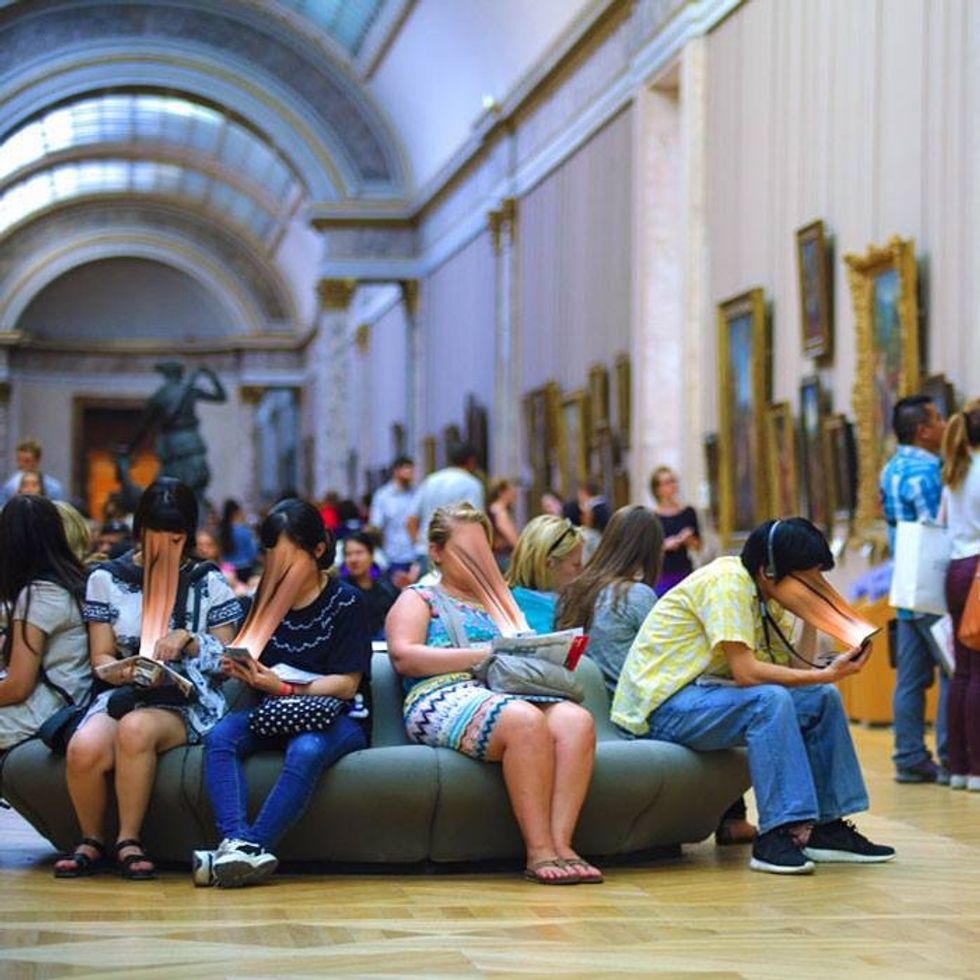
The urge is always there. Whether you're sitting in class, a meeting, an interview, a family dinner, in bed trying desperately to fall asleep or even in bed with a significant other. Smartphones have become a staple accessory, a necessary part of our human uniforms, the way a watch or belt seamlessly completes an outfit. With the rise of smartphones has come the rise of social media use, especially among teenagers who are already at an elevated risk for a whole host of mental health problems. Social media is used to entertain, to inform, to communicate, to share, to flirt, to call others to action, to brag, to bully, to distract and in countless other ways. What goes unnoticed are all of the ways using social media harms us and those around us.

You're harming yourself.
When you pick up your phone to check Instagram or Snapchat again, you're missing out an an infinite number of opportunities that are right in front of your face. You miss out on the chance to brighten the day of the barista who is making your coffee by making conversation, giving money to the homeless woman on the street corner struggling to live day to day, the one privilege you have as a student to learn from some of the most esteemed and accomplished professors.
According to a recent study of over 460 teenagers at a secondary school in Scotland, social media use in teens late at night due to the pressure to be available 24/7 may indicate higher emotional investment. Both of these factors have shown to be correlated with negative self-image, poorer sleep quality, anxiety, depression and lower self-esteem. While social media seems an obvious example of immediate gratification, its long-term effects can be truly detrimental to mental health.
You're harming others.
Social media becomes a place exclusively for casting oneself in the best light possible; the unspoken rule is that if you're not happy, don't publicize it. If you comply with these norms, you perpetuate a harmful kind of perfectionism. It's easy to scroll through a news feed teeming with smiles, expensive dinners, nights out, or world travel and assume that everyone else is in a constant state of euphoria. This is impossible to measure up to, and further stigmatizes the idea that if you're not happy 24/7, something is wrong with you. We inevitably compete with one another for likes, retweets and shares in an effort to keep up.
Few social media movements like #HalfTheStory truly encourage us to share disappointments and setbacks alongside our accomplishments, setting us up to constantly be comparing ourselves with what we see on social media. And what we see can harm our self-image or sustain sexism and objectification of women. The social media campaign #WomenNotObjects showcases the damaging effects of the idea that "sex sells" on the status of women in America. Unrealistic and airbrushed photos of nearly-naked models can cause eating disorders because of the impossible standard of beauty that seems to exist only in the media.

What are you accomplishing?
Social media can bring people together or help to rekindle or maintain relationships across immeasurable distances. But it can also provide a pathway to passivity. Changing a profile picture to support Paris or posting a status about a specific political issue promotes awareness, but this isn't enough to create tangible change. Actions still speak louder than words even in this digital age, a notion which seems to have gotten lost. Even in the case of wishing a friend a happy birthday, verbally telling someone how much they mean to you instead of posting a collage with the goal of getting X amount of likes can truly demonstrate the weight of your relationship. Intimacy and empathy can't be replicated in pixels or 140 characters, and our capacity to feel is constantly eroded by this addiction.
So the next time you feel the urge to check Facebook just one more time or to text your friend who's in the same room as you, remember exactly who you're harming when you use social media.