
Let’s all admit it—our country is going through a bit of a tough time right now. The 2016 election is still drunkenly stumbling through the increasingly tense climb to the conventions, partisan division rising all the while as factions within factions grow more and more extreme. Climate change continues to be the self-imposed wool over the eyes of the American political establishment, with the level of threat it imposes to modern civilization being inversely proportional to the urgency with which Washington is seeking a solution. We still lag behind other countries in terms of key policies that see to the well-being of a population, such as prioritizing education and putting more capital in the hands of working people. On top of all that, we’re on the cusp of a general election that could result in the most powerful elected position in the country being transferred to Donald Trump, a man who in the last week alone accused a federal judge of being biased against him because the judge “is a Mexican,” lied to the media about an alleged six million dollars in donation checks that were mysteriously never received by the organizations they were supposed to benefit, and actually used the phrase “look at my African-American over here” during a campaign event in California in 2016.
In times like these, we must be thankful for Beyonce's "Lemonade."
Now more than ever, Americans are receptive to pop culture that speaks to us and gives us a point to rally around, discuss, and argue about. Last year we had Kendrick Lamar and Taylor Swift’s "To Pimp A Butterfly" vs. "1989" to keep us firmly entrenched in musical debate until awards season, and, lest we forget, 2015 was also the year in which Lin-Manuel Miranda graced us with "Hamilton" (but he also taketh away—you’ll be dead before tickets are available).
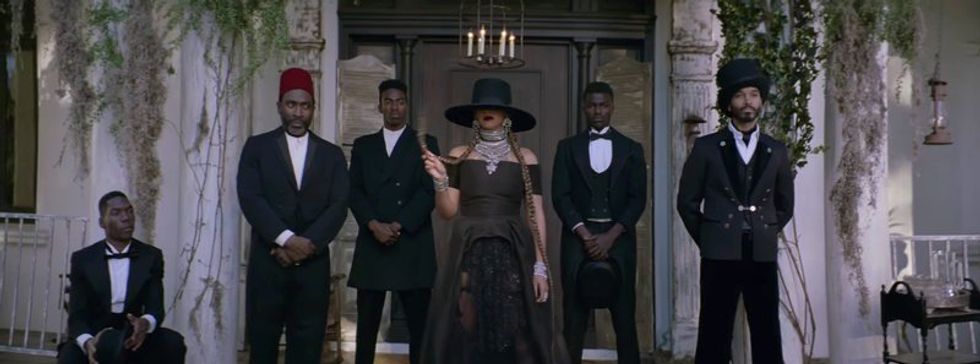
Beyonce happens to have captured the American spotlight for the time being, and with that spotlight comes all the typical complaints and rabble-rousing; she actually started the year off strong with a controversy caused by perceived anti-police sentiments being expressed by the singer during her Super Bowl performance this February, namely in her single “Formation.”
The song depicts Beyonce sitting on the roof of a police car sinking in a flooded street, and contains images that invoke the Black Lives Matter movement; clearly, it must be anti-police, at least according to the Miami Fraternal Order of Police, a law enforcement union that stated in February that it planned to boycott the first stop on the singer’s upcoming tour. Personally, I believe it to be more important to discuss the implications of why the police wanting to boycott the event at all is ridiculous, but first we should talk about why their reasons for wanting to do so are absolute malarkey.
“Formation” is not a music video meant to celebrate law enforcement, that much is at least true, but to call it anti-police is absurd. Beyonce and the director, Melina Matsoukas, clearly intended to call out what they see as injustices in the communities that police cultivate, but the singer has been very forthright in making the distinction between being “anti-police” and “anti-police brutality.” If the cops are planning to boycott a concert because they can’t grasp that distinction, then I don’t know how to help them, as it seems pretty easy to understand for me, but even the notion of a police boycott being socially acceptable and even laudable (according to conservative friends of mine at least) seems insane to me. Let’s be simple about it—if police commit crimes, sensible people believe they should be held accountable for those crimes.
I started wanting to write about this topic because of a conversation I heard at work; a colleague of mine was explaining how he feels that police in Pittsburgh, who were planning a similar boycott, were justified in refusing to work an upcoming Beyonce tour date because she does not “appreciate” what the police do, and they should not be required to work the event as a result. At first I thought this was just an outlier opinion, but after doing some reading in some of the most conservative comment sections I’ve ever seen, I concluded this is actually a pretty popular opinion. Let me be perfectly clear—this is completely asinine. Police aren’t going to work the event for Beyonce’s protection, although that is definitely a concern; no, police would be primarily serving as a security buffer around the venue and directing traffic after the event had concluded - in other words, they are there to protect and serve, and the citizens are the ones who benefit by having a police presence. Conversely, citizens are the ones being placed in danger if cops make good on their threats to boycott. But the point being made was about police appreciation, and whether cops should have the right to refuse to serve. In a word, absolutely not. If cops want to be thin-skinned that’s fine, but they should draw the line if their hurt feelings are going to end up putting thousands in a dangerous situation.
This notion about cops feeling unappreciated is especially bothersome for me because it implies that the cops proposing the boycott will only want to do their jobs for the recognition they get in the line of duty. I’m all for recognizing it when a police officer does something good; a common sentiment felt in the “you’re anti-police!” crowd is that the media will only highlight it when a cop does something bad, ignoring all the times they do things that are beneficial to society. What they fail to grasp is that we don’t have time to throw a parade every time a police officer doesn’t do something horrible. Unfortunately that’s what it looks like when everyone does their jobs correctly - it’s boring, and often people won’t thank you for what you do, but that isn’t why you got into this line of work, police. You are paid to protect the population in your community, regardless of their religion, color, or creed, and sometimes that doesn’t exactly elevate you to celebrity status.
The logic being employed by police and their sympathizers is very similar to that used by Kim Davis, the Kentucky county clerk that refused to issue marriage licenses for same-sex marriages on the grounds that she thought same-sex marriage is icky. In other words, she denied a crucial public service to a specific segment of the population because she disagreed with something they were saying, despite being elected and paid by those same people; when she began refusing to issue marriage licenses based on religious grounds, we were justifiably disgusted across America because this was an example of a person in power asserting their will on the public by outright refusing to do their jobs. The police are doing exactly the same thing, and we wouldn’t tolerate it from any other form of public servant; if I’m driving down the street bumpin’ “Fuck tha Police,” as I am wont to do, and get into a car accident, would it be okay if the police just ignored my injuries because they were offended by the song I was listening to? Could a post office employee refuse to give me my mail because I’m wearing a shirt that says “Fuck tha Post Office”?