
In person and all over Facebook, I've been seeing and hearing teacher friends say that when it comes to bathrooms, they want to do right by all of their students, but they don't know what right is.
Never fear! While the whole bathroom debacle has only gone mainstream recently, trans people have been hashing this out for decades–we've had time to figure out what works and what doesn't.
Here are my suggestions of what a school can do:
First off, let's start with a quick overview of what being transgender actually is:

Someone is transgender when they don't identify with the gender they were assigned at birth. This can be people who were labeled male at birth and identify as female, people who were labeled female at birth and identify as male and people who identify as a gender other than male or female. These people are "non-binary" transgender folks because they don't fall into the "binary" genders of male or female.
People exist that are not male or female?

One way I find helpful for explaining gender, is explaining how colors are named. In Japan, until the early 1900s, blue and green were both thought of as one color. It wasn't until Crayola came into the country that a separate color for green was introduced. Color exists on a spectrum. It is impossible to tell, for example, where yellow ends and orange starts. The names we have for colors are just humans defining where we think one ends and the next begins. Gender identity is kind of the same. Just because we didn't have a word for it yet, doesn't mean it didn't exist.

Schools should offer gender-inclusive bathrooms that are open to all students–transgender or not, boys, girls and everyone else.
Schools should also offer single-gender bathrooms and allow transgender students to use them should they choose.
Having both of these options is key!
The gender-inclusive bathrooms allow a space for a number of groups: transgender students, gender non-conforming students–kids who may identify with the gender they were assigned at birth, but who may dress or act in ways that don't seem to match society's ideas of what is expected of them, intersex students–students whose bodies aren't specifically male or female, and parents with children.
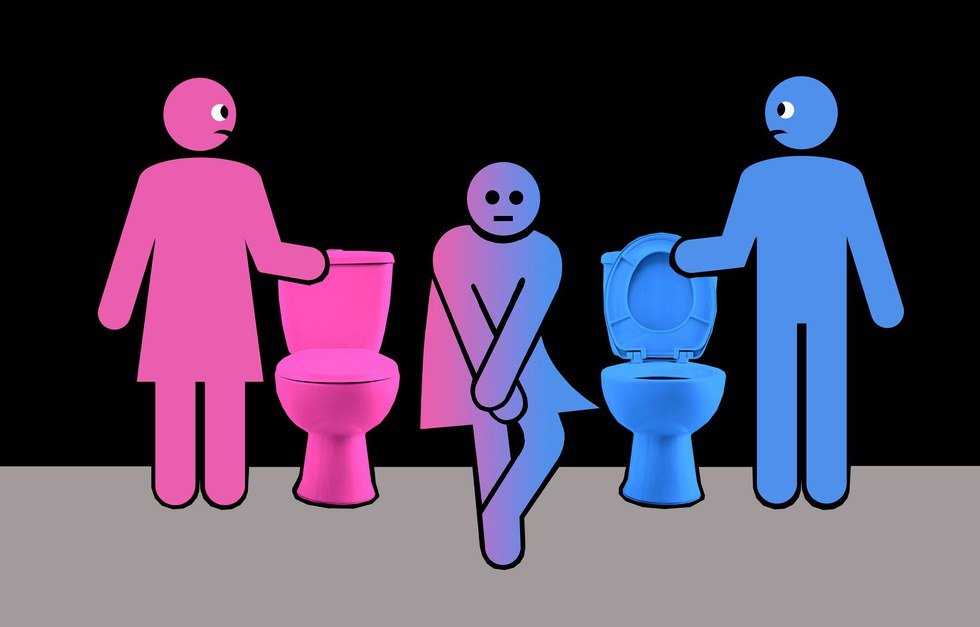
Some educators have proposed letting transgender students use the male or female bathrooms based on how they identify and calling it a day. This is simply not enough! Obviously, non-binary students are going to have to choose which binary gender it would be "easier to pretend to be" just to find a place to pee. This is incredibly demoralizing for students who are bombarded by this same imagery as everyone else of gender being only male or female. Only, for them, this way of thinking often goes wildly and even painfully against their sense of self.
Kids need space to grow and learn to understand who they are. It's not fair to make kids "pick" a gender just to go to the bathroom.
One other line of thinking I've seen is, "For their own safety, maybe it's just too dangerous to let transgender people use the bathroom. They should stick to the single stalls." Don't just ban people from using the common bathrooms! Let them decide for themselves whether or not they feel comfortable in a space. I know there is more at stake in a school setting, where children need to be protected, but this is just not the way to go about it. You wouldn't try to stop bullying by telling kids to be less dorky–you can't help marginalized groups by marginalizing them even further.