This interview was conducted via phone in the fall of 2015, but the questions and responses remain relevant, and will be so for the foreseeable future.
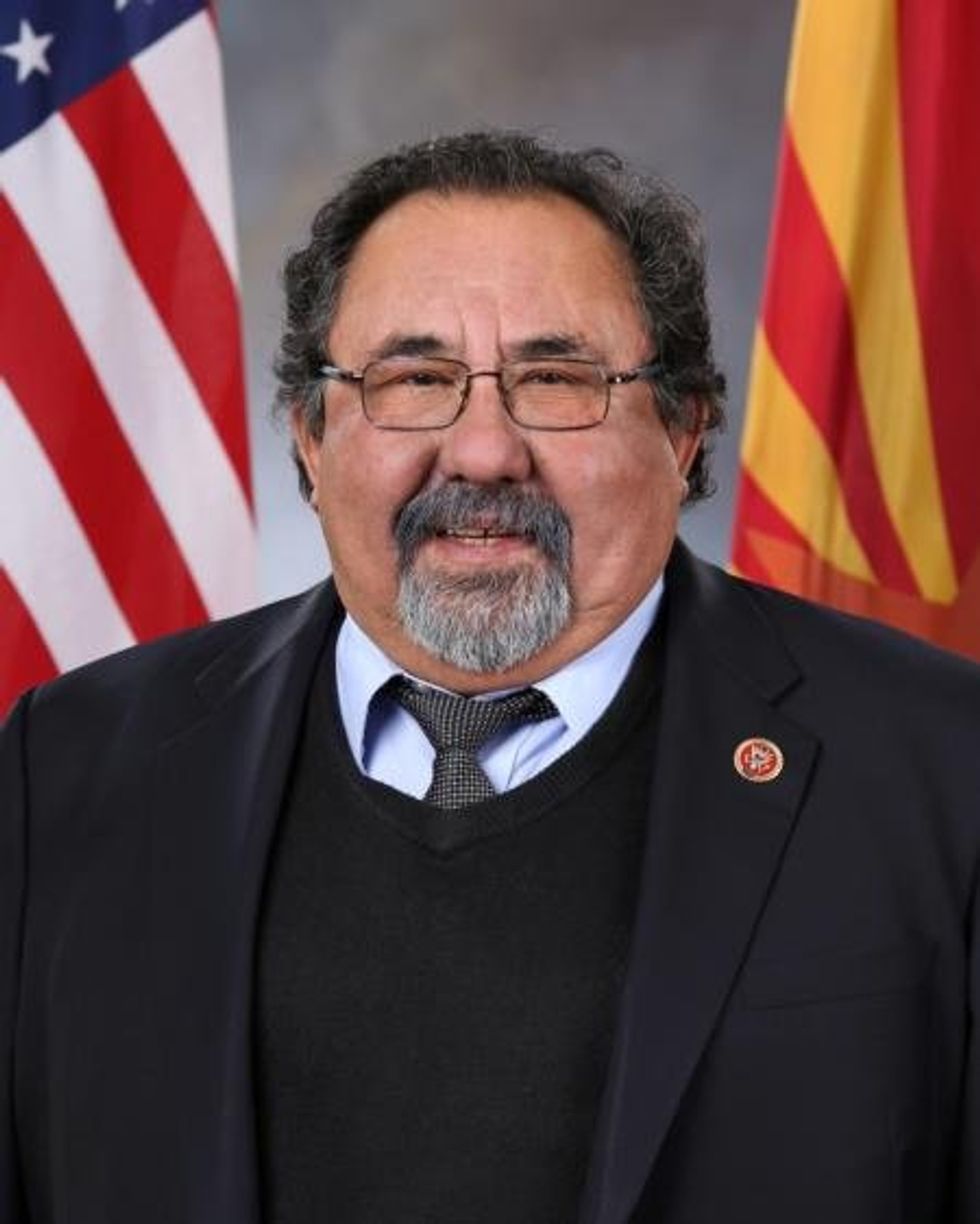
The Representative: Raúl Grijalva was has served as the Representative for Arizona's third district since 2013, and from 2003 to 2013 he represented the state's seventh. He advocates for mining law reform and other environmental causes. He attended the University of Arizona and earned a bachelor’s degree in sociology before serving on multiple boards within the Tucson area. He sits on the Committee on Education and the Workforce, and he is a Ranking Member on the Committee of Natural Resources. He spoke with us via phone.
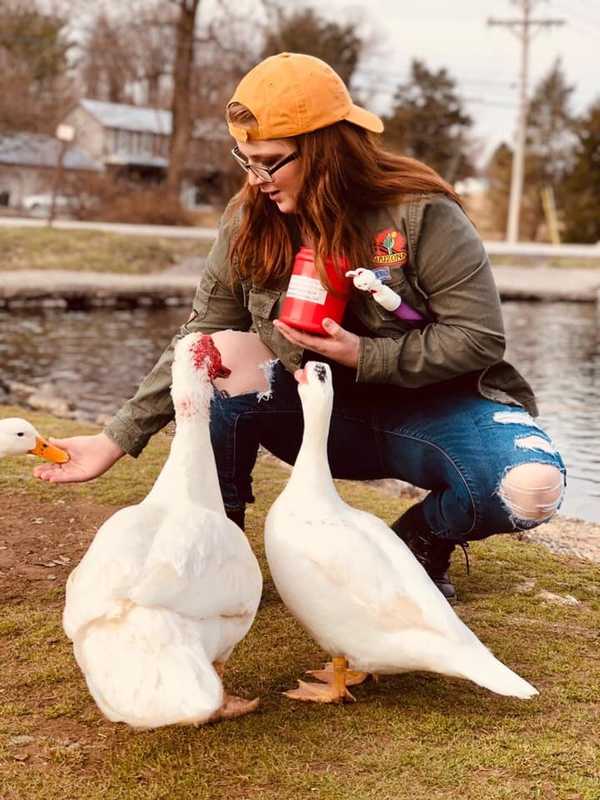
The interviewer: Katrina Duran is a graduate of the University of Arizona and studied History and Classics. She has to tell people that no, she did not study classical music.
Odyssey: What actions have you taken in Congress or causes have you championed to improve the lives of college students and recent graduates in your district?
Rep. Raúl Grijalva: Well, the whole idea, the philosophy that I hold in terms of not only higher ed but education in general, is that it’s an investment. And an investment requires resources, because the dividends paid by graduates is huge for our economy and huge for the lives. The area in particular is the whole idea of as we reauthorize higher education is that we have to deal with the cost of college, period. And that you know we need, I have promoted and on occasion, one time have been successful raising the level of Pell Grants from where they are now to a more realistic level that deals with the actual cost of college for those that qualify for Pell Grants.
On the student loans side, it's to make college affordable so the student loans don’t become such a burden on students after they graduate. You know, I think it's $1.3 trillion of owed student loans, right? And the rate of default continues to increase, and that is just part of the reality. Plus loans that the parents sign off, that in itself is a growing amount with more defaults, which then involves entire households. My point being, this is not only an economic strain, a financial strain on the individual student and family, but it's an economic bubble that if it bursts, it's gonna have a very, very negative impact across the economy of the United States. So let’s deal with the affordability issue, let's deal with the fact that you have states like Arizona that contribute little to nothing in terms of, in fact cut, the support they have for their land grant colleges there, and don’t make any investments.
Odyssey: Increases in college tuition have been outpacing inflation for a few decades, and now the amount of student loan debt has surpassed the credit card debt held by all Americans. What specifically can Congress do to rein in these costs, if anything?
Rep. Grijalva: So fundamentally it should be about investments, it should be about cost control, and it should be you should pass every cut you make in education. Whether it's at the federal level, whether its at the state level, every cut made to education, in particular higher ed, that’s been passed on to tuition to the student. And if that cost increases, so does the pressure of student loans, so does the pressure of those costs constantly rising. So there has to be a way, like either allow students refinancing it at the lowest interest rate in terms of any loans they owe to put a cap on interest so it's not an escalating interest that goes up and down, and make the institution more responsive and more responsible for the kinds of costs that students are incurring to go to college.
I believe in a debt-free college and I believe in universal college ability, and one of the mechanisms to get to affordability and access to college for all students is to deal with the cost. It shouldn’t end up being that those that have the means to be in college because of family circumstances are the only ones that have access to college. And you know I think we’re getting to that edge where that is becoming a problem in terms of who is getting a higher education and who’s not, so it is a combination of issues but cost control has been one of the issues that I’ve championed and affordability and access is one of the issues that I’ve championed.
And you know, the debt-free college as a goal needs to be, and we have a resolution in Congress that many members have signed on to it, I think over 100, promoting the idea of affordability and a debt-free college education, and you know that’s the investment responsibility that I don’t think the government is taking seriously.
There’s legislators in states and members of Congress who say, “I got my education so the hell with everybody else,” and I think is a very selfish way to look at what we need to do for this country in order to keep it as the richest and most powerful country in the world. And part of that is to have educated citizens and an educated workforce, and if we’re not, if we can’t meet that fundamental demand from the American people, then we have a problem. Like I said, the default rate continues to go up. You know, I’ll equate the student debt, the student loan debt to kind of like the housing bubble; if it were to burst, the consequences across the economy of this nation would be devastated just like the housing bubble burst.
Odyssey: Beyond college costs, which three political issues affecting 18 to 30-year- olds aren’t being talked about enough?
Rep. Grijalva: Climate change and the scientific reality of what is happening to our planet, and what is happening to our communities in terms of change, and what human beings can do about it being the major contributors to that climate change, what we can do about it. It’s not being talked enough about it, Congress is still dominated by deniers despite the fact that some 98 percent of all scientists in the world say that the science of the facts indicate that it is, that climate change is real and that man’s contribution to it and the industrialization of our planet are the majors contributions to it. But we continue not to talk about it, and we continue not to deal with legislation that would the process of litigating and adapting to climate change is real, and I think poses across all lines and all peoples poses the biggest threat both to the public health and the quality of life of every human being in the planet and certainly our nation.
We don’t talk enough about the future, we don’t talk about what this nation needs to do in terms of its infrastructure, in support for education, to prepare for the future to continue to make everything a philosophical, ideological argument in politics and ignore the reality that you know, our world is changing very rapidly and we’re becoming a very technological information-driven society and the adaption to that reality I don’t think we don’t talk enough about or prepare enough about. When you’re cutting research and you’re cutting the national institutes of science and you’re cutting your support for higher education, it points to another direction other than the fact that we need to prepare for the future. I don’t think we talk enough about the future. And I don’t think in this country we talk enough in a very direct and honest way about the changing demographics of our nation and the fact that we have to deal with an increasing diverse citizenship and people that live in this nation, and how we as Americans deal with the issue of diversity, and deal with the issue of race, and deal with the fact that it’s a real thing the demography is changing its an inevitable change, its not gonna go backwards, as much as Donald Trump would like that to happen. And so we don’t talk enough about it, we skirt the issue and pretend its not there and I think that’s a mistake.
Odyssey: Congress has a notoriously low approval rating among Americans, regardless of the party in control. Why do you think the branch that’s supposed to represent the people thought of so poorly by them?
Rep. Grijalva: Because I think we’re going through some of the reasons right now with some of these questions, but it’s become an ideological battleground. It’s become an institution that I respect very much that whose job is to work to try to do the best for the American people in terms of legislation and I’m not gonna get my way on everything that I want, but the process is about compromise and the process is about always moving forward. But we’re not doing that.
You know when you have a discussion right now that you’re willing to broker and shut down the whole United States government over the funding for Planned Parenthood, so that ideological point could shut down the government so that its services stop and that is why that is I think that is the best example I could give you of why the American people are disgusted with the inability of their lawmakers on a federal level to act like grown-ups and to deal with these differences we have as a people in an honest and open way, in a civil way. But don’t blackmail and make all the American people suffer because of an ideological point that really in the operation of government has no relevance. I mean, what are we proving here? That you can shut down the government over an ideological point?
I think that’s a good example of why the American people are angry. Guns! Weapon safety, gun safety, the inability to have background checks so that we can make sure the people that shouldn’t, either for mental or criminal reasons, not have guns in their possession. We can’t even get a background check legislation done. We can’t stop armor piercing bullets from being sold that every police agency in the country wants banned.
So, my point being that those are two good examples of why the American people get frustrated and the majority of the American people want sane weapon, gun safety laws. The majority of the American people want us to deal with climate change, a vast majority. The majority of the American people feel we shouldn’t shut down the government -- 71 percent -- over the issue of Planned Parenthood, yet those things don’t get done. You know, those things continue and you wonder why the American people question the ability of Congress to get these things done.
Unfortunately, you know, the country got gerrymandered so badly in 2010 that many of the most extreme voices on these issues: the climate deniers, the ones that don’t believe we should have any kind of weapon safety laws, and the ones that don’t believe that education should be the survival of the fittest or the richest. They get re-elected every time, and continue to wield that kind of threat and power here in Congress. So I think, I really believe that’s part of the reason that people see no change, and you know, part of the blame I think has to go to the people that I talk to that complain the most and legitimately complain the most also vote the least which is a problem in our democracy.
Odyssey: What is one specific policy issue on which you’ve bucked your party’s consensus?
Rep. Grijalva: There’s a couple. There’s the war in Iraq, I’m only one of 12 that voted initially not to fund that war. Time has proven me, you know, and I got a lot of hell for that, but time goes by and now that decision then seems almost prophetic, okay. I didn’t support the president on some of the budgets that he negotiated with the Republicans, because I thought that areas like education took too big of a hit. I did support the president on the recent trade agreement, I did support my party on that. And then there’s other kinds of issues that come up but those are the big ones.
Odyssey: In your current position, which vote do you most regret making and why?
Rep. Grijalva: I’m trying to, I think there was the one budget I voted for that I regret voting for because it appeared to have been a good compromise budget, but then once it was being implemented, the priorities that I felt needed to be part of it were not put put out that way by the administration and I regret supporting an open-ended budget without any real priorities as to where we felt the money needed to go and that’s when the Democrats were in charge. And so that’s the vote I regret. I won’t make that mistake twice -- if you know you’re supporting a budget, your priorities should be clearly laid out.
Odyssey: Since 1965 who was the best president not named Bill Clinton and why? [The question was asked this way to remove the most likely choices for the Democratic congressman. Republicans Odyssey interviewed were asked the same question, excepting Ronald Reagan.]
Rep. Grijalva: He's under-appreciated because of what happened in Iran and the takeover of the embassy, and I think history will began to correct that legacy, but it's Jimmy Carter, and not just because he’s a Democrat. He only served one term, but in that term he pushed on the domestic front, many legislative issues around the environment, many legislative issues around caring for the poor, and many legislative initiatives around research and science. He was honest with the American people about the fact that we needed to not to be so dependent on fossil fuels and his philosophy of home building so that people would have homes and I think that his really, really strong belief in education. I think those were under-appreciated and you know the embassy takeover in Iran clouded that election to the point that he couldn’t have won. That occupation was during his whole last year and the holding of all those hostages was during this last year and office and the whole campaign was about that. And I think history is now beginning to turn a different page on President Carter and look at what he tried to do and communicate to the American people which I think he was a genuine person and I don’t think we haven’t had too many genuine ones.Odyssey: Which interest group or lobby has the most undue influence on Capitol Hill, and why?Rep. Grijalva: I would say the fossil fuel industry, whether it’s gas, coal. I mean whether its oil, natural gas, coal, not so much natural gas. But those areas, you know, those areas have a huge influence on Congress. That’s why we don’t see any movement on issues of climate change, that’s why we see minimum movement in terms of the last 10 years on anything conservation or expansion of our conservation efforts in this country. So you know, yeah I think that has been an influence and that’s been an influence that’s been pretty strong. But you know, we talked about gun safety, NRA without a doubt has been able to effectively tap down through intimidation any effort at minimal, minimal commonsense gun safety like a waiting period and armor piercing bullets was an example I think should have some levels of safety, waiting period and a banning on armor piercing bullets that you can tap and keep that from ever happening.Odyssey: The gap between the rich and poor continues to get bigger. What statistical indicators do you use to analyze this and what is your solution?
Rep. Grijalva: Well, you know even the most, my solution is that income inequality in this country, stagnant wages, for two decades 80 plus percent of the American people have seen no rise in their income. You know and when you begin to consider the gas prices went down you see that as a benefit (chuckles). I mean but there’s been no real wage increases but that tells you where we're at. But when the one percent you’re seeing and the .01 percent their income increased by 70 to 80 percent and the .01 by over 100 percent, and when you see that concentration of wealth from there equals to 90 percent of the rest of the American people, you begin to look at that in a much different light.
Part of what you’re seeing in this election in 2016 is frustration and the reality that people have come to grips with the fact that, “I’m working hard trying to put my kid through college and nothing is changing, and I continue to pay more for everything and no matter how hard I work I can’t seem to get ahead.” And I think that’s the prevalent view. And the solution is simple: you've got to create jobs, the government has to be involved intimately in job creation you have to raise the minimum wage to at least $15 an hour so that it’s a sustainable wage so that you don’t have to depend on anything else for that. And you know you have to allow not just, you have to allow for the fact that education, retraining and career development all have to be part of this process as the scope of jobs change in this election we’re not investing in that. So it is about job creation; it is about corporations and the rich paying their fair share for the revenue for government not the average middle class, you know?
You know and the statistic I use? Twenty years ago, the middle class was [annually making] $57,000, okay? Right now its $52-55,000, so it’s been a net loss of income over these last 20 years for middle class folks. So I suggest that is the issue and it is going to continue to be the issue. Now you go below the middle class and the people that are out there struggling on a minimum wage job trying to hold two jobs together, their situation is even worse, and I think that is a defining both economic issue and social issue that 2016 politician is going to have to deal with.
Odyssey: What does the word “equality” mean to you and how do we achieve it as a country?
Rep. Grijalva: I think that you still have to protect equality enough to have strong voting rights laws so that games cannot be played and that people are not denied and the greatest ability we have as a democracy is to vote and choose the people that represent us. I think we also have to understand that education because of the change in demography, and it’s always been that way, is the great equalizer and it's also the great civil rights issue of our age. The access and ability of all people to be able to their abilities get the education that they need and want for their futures, and that’s not the case right now. And the fact that so, that has to fundamentally those, that has to fundamentally change in order for us to reach a level where we can talk about equality.
You also have to talk about equity in resources and equity in attention so that everybody gets a fair share and a fair chance, you know? And I think that, I describe equality as that I don’t, I as an American citizen of Mexican descent shouldn’t have to stand next to anybody and explain myself. That slice belongs to me as much as it belongs to any other citizen of this country. And so I think if I were to describe equality there should not be any other, any other criteria for full citizenship other than the fact that you became a citizen, you were, I was born in this country, you became a citizen and so that to lay other kinds of requirements on the fact that we are all equal I think that’s when the issue of inequality raises its head.
Odyssey: If you could have a drink with any non-politician dead or alive, who would it be and what would you drink?
Rep. Grijalva: Oh, that’s a good question. Either Mark Twain or Studs Terkel. And I’d have a beer and just have a wonderful conversation about the reality of our society, but in the process be able to laugh about it. I think would be a whole lot of fun.