I wrote an article recently, Yay! College? featured on The Odyssey, where part of my call to action was that college students should go to the lectures and activities offered by their campus. I took my own advice and witnessed the most moving story that I've ever heard.
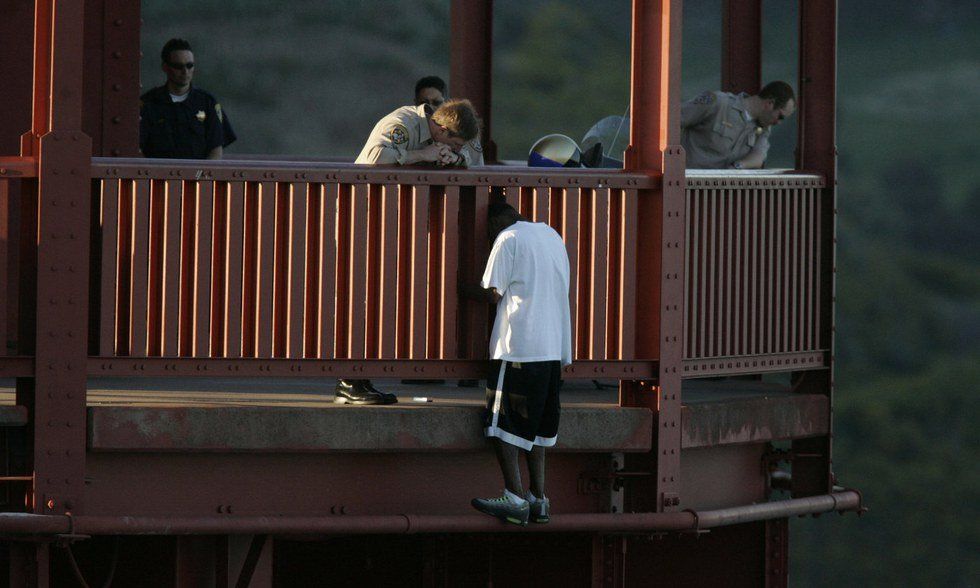
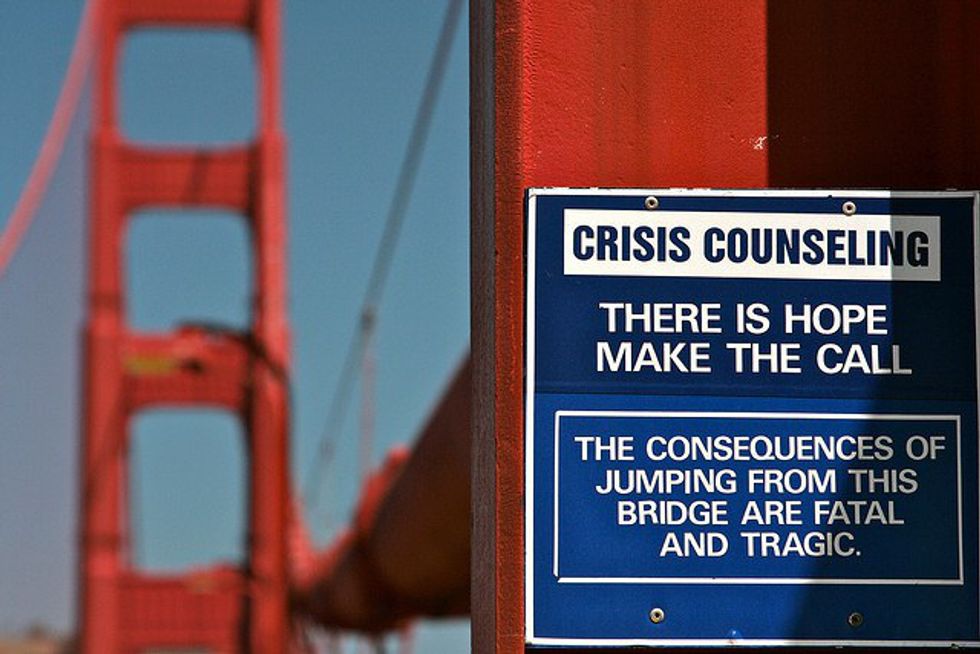
The speaker's name was Kevin Berthia. You may have seen his picture before. He is the man standing on the edge of the Golden Gate Bridge, being talked to by a patrol officer. In 2005, Mr. Berthia almost jumped off of the Golden Gate Bridge. The Golden Gate Bridge is one of the most popular suicide destinations in the world, with over 1700 people who have plunged into the bay. The Golden Gate Bridge is picturesque, and the fall has a 2% survival rate, making it ideal for those who want to end their lives.
Berthia's problems with mental health began when he was a small child. He was adopted, and struggled to find an identity. Though he wasn't officially diagnosed as depressed until he was nineteen, he knew that something was off about himself as when he was five years old. "I knew that I was different because I was crying at night...I knew no real joy as a kid," Berthia stated as he told his story.
As his life would seem to get better, it soon appeared that he would take two steps back, and fall into his depression yet again. He found sports when he was in middle school, which changed his life. He played so many sports that he didn't have the time to be busy. He even went to college and played soccer there.
Then when he was nineteen, he attempted to kill himself for the first time. He was then hospitalized for nine days. This did not help him very much though, mostly because he refused to acknowledge his need to be there.
"I'm normal," he kept telling himself. He didn't feel like he belonged there, in spite of receiving an official diagnosis of Congenital Depression Disorder, and Borderline Personality Disorder.
Berthia grew up in a very status-oriented Oakland, California. Reputation was more important than anything else. "We didn't talk about mental health, we didn't talk about suicide," Berthia exclaimed during his talk.
When Kevin Berthia turned twenty-one, he found out that his girlfriend at the time was pregnant, and he was overjoyed. At last, he felt that this would give his life meaning and joy. But then, his daughter was born three months early, and his feelings of sadness returned. They returned after he and his girlfriend were allowed to bring their daughter home from the NICU, when she was three months old.
Three weeks after Kevin brought his daughter home, he got a letter from his insurance company. The medical bill for his daughter costs $246,000, and he was expected to pay 70%. What he had claimed were the happiest weeks of his life were cut short, and he was left feeling hopeless once again. Two weeks after he got this medical bill, he lost his job. This was the final straw.
"I needed to get to my mom's birthday, February 15. She never knew this was our last dinner. This was goodbye." This relieved Kevin Berthia immensely. Finally, he knew what he was going to do. He had his solution. He felt that he was giving his family and friends peace by ending his life, as if he had been a burden to them.
The day came, and Berthia woke up feeling better than he ever had before. He used the $6.00 on his Visa and the $9.00 he had in cash to buy gas. He didn't even know where the bridge was, he had never been there before. He had to ask for directions. He even got lost on his way there.
He made it, and he climbed over the railing. He prepared himself to jump, when a voice yelled, "STOP." "Just that voice was enough to keep me from doing what I was doing," Berthia says. That voice belonged to Kevin Briggs, a 52-year-old Highway Patrol officer. Officer Briggs talked to Berthia for 89 minutes about everything that Berthia had been keeping to himself his entire life. Officer Briggs ended up convincing Berthia to come back to the other side of the railing, where his journey continued.
Though Kevin Berthia's life has never been perfect, it has improved exponentially. After he almost jumped off the Golden Gate Bridge, he saw things differently. It was then that he began to acknowledge his mental illness. He realized that people were inspired by his story, not revolted as he originally thought that they would be. He realized that the biggest enemy that he faced was himself. He had to be vulnerable in order to get help, and he had to accept himself.
What inspired me the most about this was Berthia's hopeful outlook on the future. "Everyone in this room is a first responder...trust that you're a human. Officer Briggs was just a human that day, just like you can be. The greatest gift you can give is support. You can all be heroes of each other."
His point was not that we could all be counselors and save the world, but more so that we need to listen to one another, and show each other compassion. Listening can be so much more valuable than talking. Berthia also expressed a plea to be empathetic to everyone, because, "no one looks like what they've gone through. We all look normal." Everyone has a back story, and no one's is harder or easier than anyone else's.
He advised that when someone tells you something, never say that you understand. No matter how much you think that you do, everyone's experiences are too different, and you probably don't understand.
Berthia's message lacked all of the stereotypical fluff that most speeches exemplify. It was the most honest, heartfelt story that I haven't heard in quite some time. It's challenging opening yourself up to others, but in doing so, you can change somebody's life. Kevin Berthia now speaks at conferences and campuses across the nation to spread his message. He is using something that almost destroyed him to build others up.
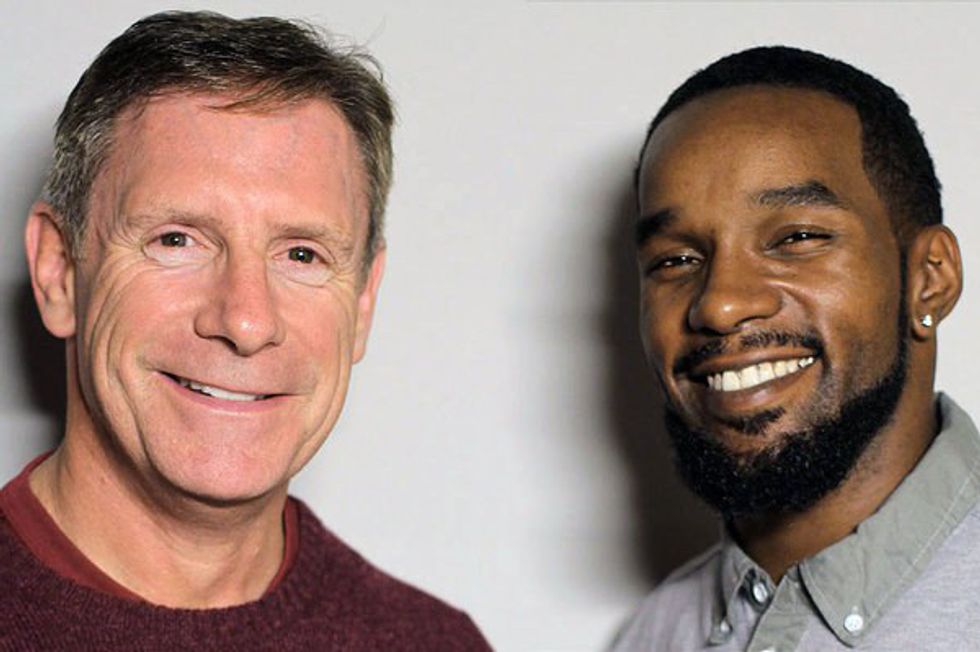
Ten years after he tried to kill himself, Kevin Berthia met with Officer Briggs for the first time since the incident. They talked as if they were old friends, and not once was the Golden Gate Bridge or his almost suicide mentioned.
It's okay to ask for help, you don't have to do this on you own because you are never alone. There are suicide hotlines, and just kind people like Officer Briggs around to help.