The body positivity movement is on the rise along with empowerment of people, especially women, through dismissal of societal beauty standards. However just how ‘positively’ this motion effects women is still highly dependent on whether or not they fit a certain mold. The way the message is relayed most often is more reminiscent of fat positivity or curve positivity than anything. Somewhere along the way anti fat shaming campaigns turned into pro skinny shaming and even fit shaming.
Originally the message of body positivity seemed like an undoubtedly kind one that wanted to resist the stigma that comes with physical appearance. A body that functions healthily as nature intends is certainly one to be happy with. It is evident throughout history that women in particular have been forced to believe otherwise due to mass manipulation from industries, media, art, and personal interactions. When we stop to question why we’re starving, engorging, purging, surgically modifying and comparing our bodies we start to become fed up.
To be body positive is to encourage people to get to a natural place of appreciation of self-love and promotion of health and happiness. Disease and trauma as a result of unrealistic expectations and undeserved ridicule are exactly what it intends to move away from. However eating disorders are still a growing epidemic as is obesity and other forms of self-harm. All of these killers result from irresponsible messages impressed upon young people. We need to differentiate between criticism or judgment and truthful statement of facts.
It is a fact that it is unhealthy to be obese. Obesity is a rising health epidemic, not a beauty epidemic. There is a direct correlation between carrying and extra one third of a person over a healthy body weight and potential for acquiring a lead killing disease like heart failure or diabetes. On the other end of the spectrum all too many people die from malnutrition and become emaciated on account of diseases like anorexia nervosa, bulimia nervosa, or an eating disorder not otherwise specified. Binge eating and calorie restriction are both mental diseases with physical consequences, but neither are being treated that way.
For some perspective we first need to address the fact that there is no more shame that ought to be associated with a cognitive inhibition than with a physical one. People cannot control if a disease like autism restricts them any more than they could if it were a disease like leukemia. The same goes for the visually apparent mental and physical diseases that are creating all of this body controversy. If somebody has a heart condition no empathetic person would tell them to suck it up and try harder or to stop being so unhealthy. When we know someone dying from cancer we don’t tell them cancer is beautiful and that they should be proud of their cancer and embrace it.
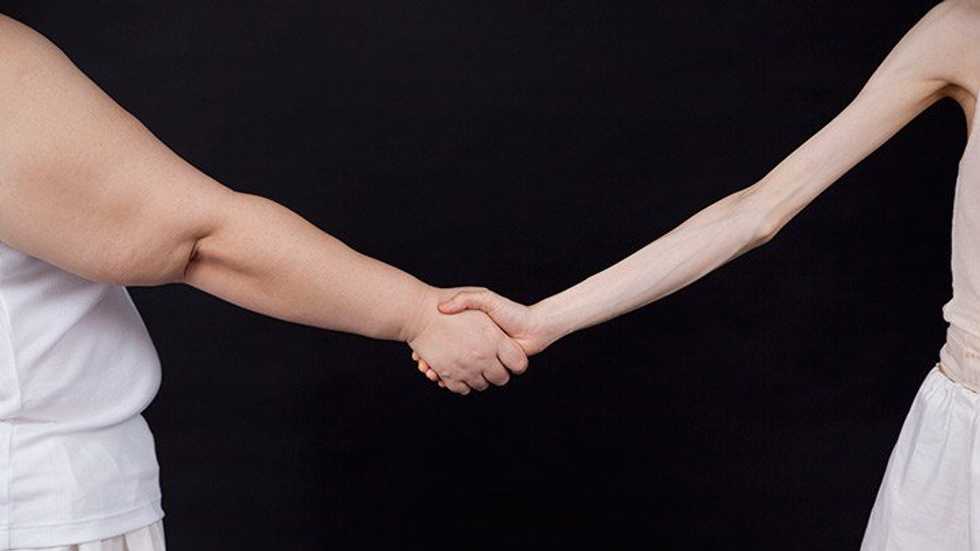
Body positive campaigns, specifically the ones that put down slim bodies to promote bigger ones, are still hurting people at both ends. We tell women ‘big is beautiful’ and that “men prefer curves.’ Slimmer women are referred to as ‘skinny bitches’ and told they’re not suitable as ‘real women.’ The truth is that if you are obese you need to get healthier or you will die, and if you are dangerously underweight you need to get healthier or you will die. It isn’t positive to lie to people about these facts and it isn’t positive to assume somebody has simply made a lazy or dangerous life choice when the reality is far more complicated.
Fat shaming is becoming increasingly frowned upon while people like model Ana Carolina Reston are still widely ridiculed for their gaunt frames. Reston died of anorexia in 2006 and still is not experiencing peace as her disease is being exploited for the fat acceptance agenda. People who are naturally thin are associated with eating disorders and constantly have to defend why they would ‘want’ to look like that. It isn’t any different from teasing somebody because they are overweight, except for the fact that it isn’t recognized as shaming. If somebody is made to feel like their healthily functioning body is less than good enough it is body shaming. If somebody is not praised for their unhealthy body it is not.
Pop stars like Meghan Trainor might insist boys like “more booty.” Rappers like Drake will tell you women should be “thick.” These aren’t the messages of positivity shaping how we ought to perceive our bodies they’re just more of the externally imposed standards on women and beauty that we’ve seen for ages. Eleanor Roosevelt said “nobody can make you feel inferior without your consent,” because it is up to each individual to worry about maximizing their health and happiness and how others perceive our bodies is not now, nor has it ever been, relevant.