

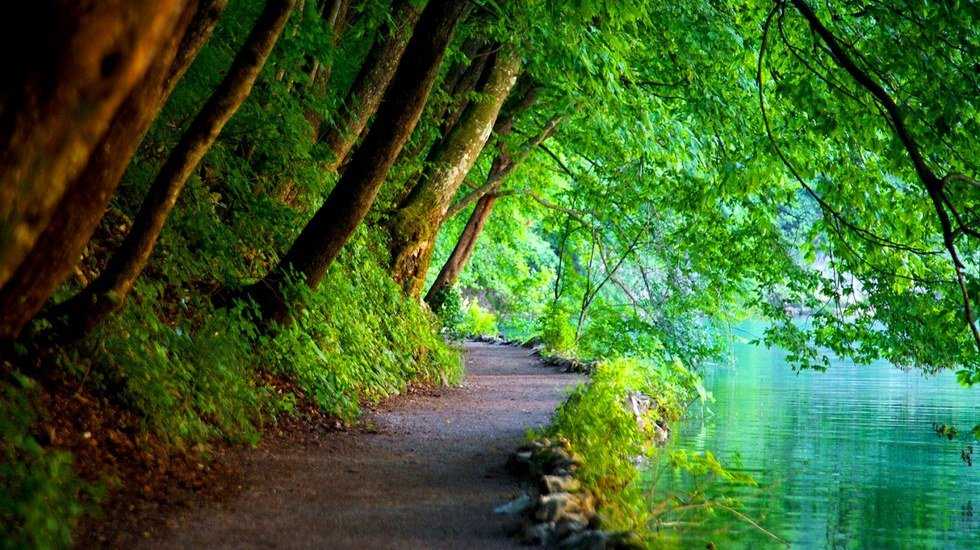
As I am writing this article it is raining, dreary, windy and gray outside. It may sound like a terrible day for the average person — but for a writer it's a day full of endless inspiration.
Whether it's a glorious summer day or the dead of winter (one so cold that your toes are about to fall off), there is inspiration to be found when you walk out your front door into the natural world. For me it's a writer's paradise. I have always found it difficult to write indoors as I am now: stuffed in a tight room, people walking up and down the hallways, the constant interruptions from family members that break what I call "the writer's flow." For me writing inside is difficult, nearly impossible, actually. It's like being trapped inside a box where ideas can't fester and grow, and that's why my best advice to someone whose suffering from writer's block is to just go outside.
My favorite thing to do once the weather hits 65 degrees is sit in my back yard with my laptop on the grass. No human interruption, but the inspiring interruptions of nature that help inspire my own writing. Being outside with your toes in the earth, feeling the breeze dance across your skin and hearing the birds' songs echo all around you is like being in your own snow globe — a constantly shifting and moving world where the spontaneity of the natural world is the oil that makes the gears turn in my writer's brain. As Ralph Waldo Emerson put it:
"Nature is a mutable cloud which is always and never the same."
It's not just me that finds inspiration in the lady bug that lands on my knee. Many of the great writers believed that nature transcends above our own human experience and that, for the writer, nature can be the inspiration that cannot be found in our man-made world.
William Blake once wrote: "The tree which moves some to tears of joy is in the eyes of others only a green thing that stands in the way. Some see nature all ridicule and deformity . . . and some scarce see nature at all. But to the eyes of the man of imagination, nature is imagination itself."
For Blake, not everyone sees nature as a source of inspiration, but as what it simply looks like — a tree that is a tree and nothing more. But for others that are in touch with their imagination, that tree could be the key to unlock their next great story, poem, song or even just thoughts.
For me, nature is the key to great writing and I urge other writers — the ones trapped in their homes, eyes twitching in front of their keyboards in the dark — to take the risk, step outside and unlock the door.