


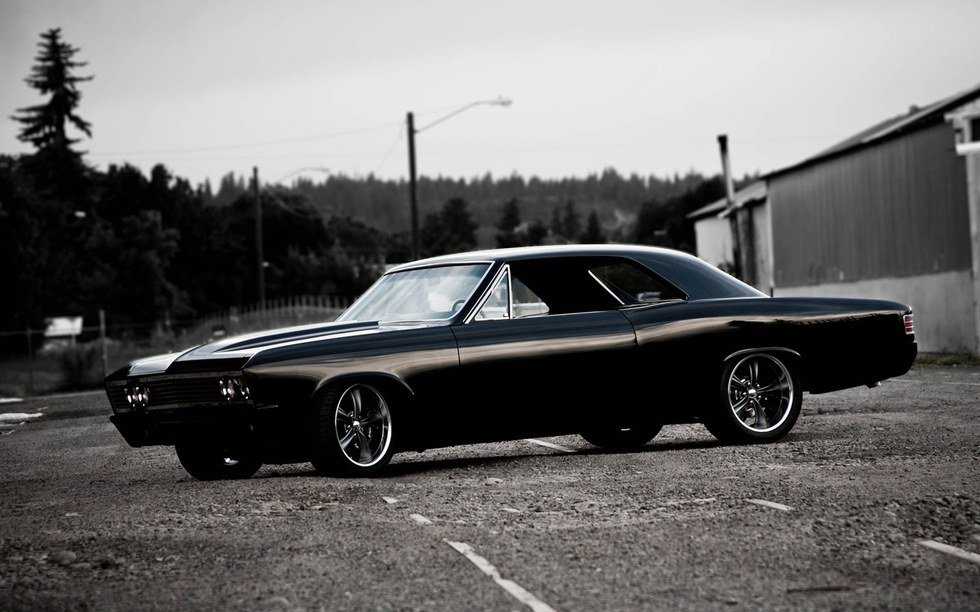
When you see old guys out on the road, usually they are either driving a Buick or driving slow (OK let’s face it, always driving slow). But every now and again you will see an older guy driving a classic American muscle car. Now, if you’re like me, you have to (almost) pull over and gawk. Muscle cars are definitely a guilty pleasure. They are like American Flag cowboy boots. You can’t help but admit that they are the definition of tacky, and that there’s no point to them, but you want still want a pair (yes I have some, laugh it up).
If you ask me, I think muscle cars are a microcosm for America. They are striking, fast, loud, and if you want to get really introspective, uncompromisingly simple. They are the kind of cars that give us insight into the world they were developed in. But the world keeps spinning forward, and these cars have followed suit. Let’s get you up to speed (apologies for that pun) and don’t worry, there will be pictures.

The '49 Oldsmobile Rocket 88. This is the beginning, the genesis if you will, of the concept of a muscle car. This car came at a time in American history where people desired one thing above all else -- speed. Well, when I say people, I mean bootleggers. Moonshiners were always looking for the best cars that would enable them to outrun the cops. This car fit the bill perfectly, the reason being what was under the hood. The Rocket 88 had an older Oldsmobile body but instead of the original inline six engine, it had a far more powerful V8 (all this means is two banks of four cylinders arranged in “V” formation). This large engine in a lightweight car would go on to become the formula for what would be known as the muscle car. Throughout the '50s and early '60s America would see a massive increase in competition between different manufacturers to create the most powerful vehicles.
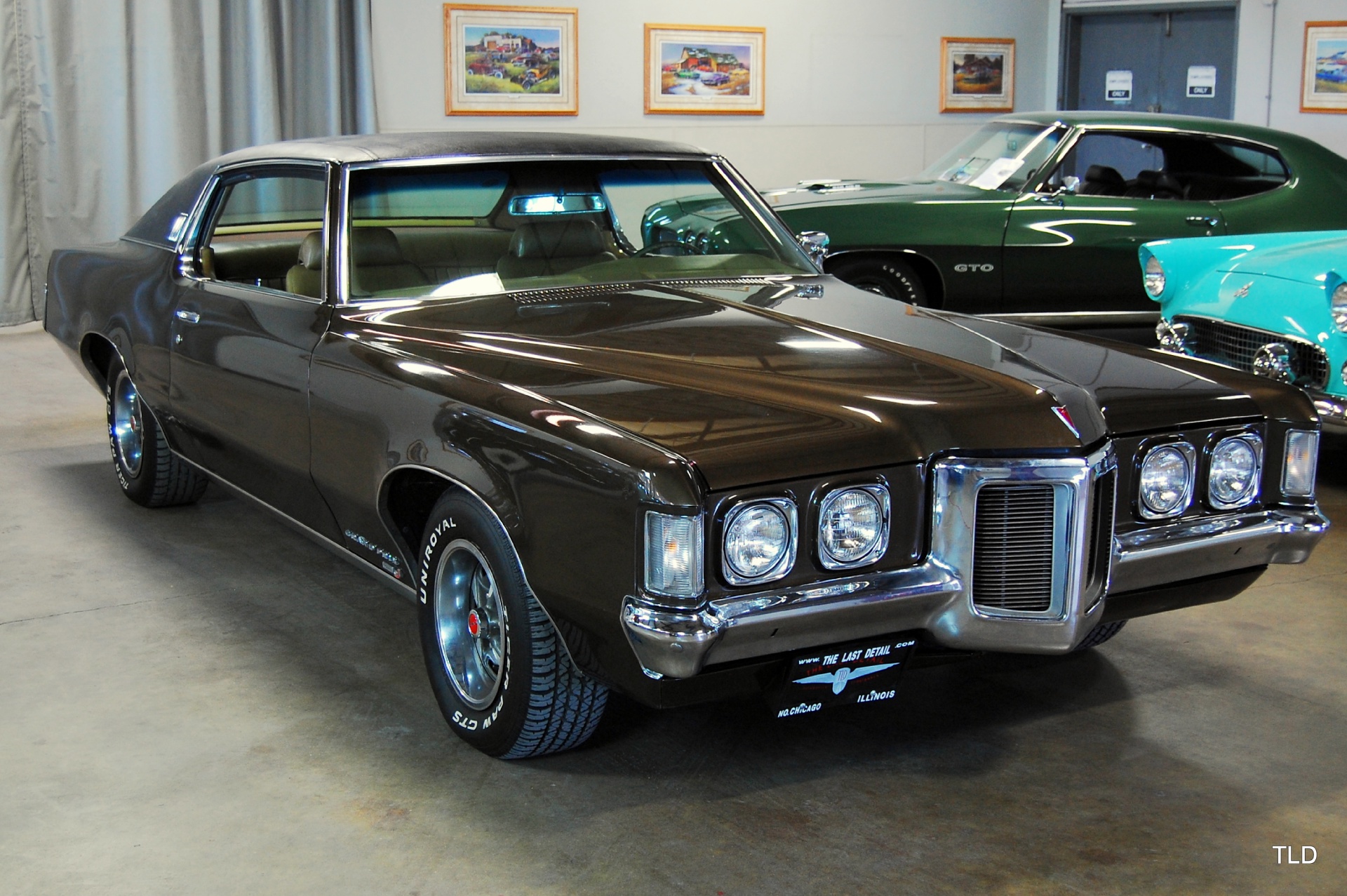
Then arguably one of the best years for cars came around, 1964. With the year came the Pontiac Tempest GTO.

The GTO was extremely powerful, and with a low price of around $3,000, Pontiac sold more than they ever thought possible. But then another player came into the mix from Ford that same year:

The Ford Mustang. Everyone knows one when he or she sees it (or at least they should). This car had sharp body lines and was affordable, but it lacked the same power that the GTO was putting down. As a result, companies such as Chevrolet and Dodge followed the same formula of a car that looked reminiscent of the more powerful cars but was also affordable for the blue-collar worker. These cars were known as pony cars (not related to the Mustang, but that does aptly describe the speed of Mustangs). Something to note: a pony car can be considered muscle thanks to modifications.
Throughout the '60s, muscle and pony cars reached their golden age. They became a fixture of people’s lives. However, in the early '70s, the government released new emission standards for the auto industry. And in 1973, an oil crisis meant that gas prices went through the roof. As a result, manufacturers had to limit power of their cars, and make them safer. So no one could afford cars like the Mustang or the GTO (which probably meant they became targets for car thieves) and those who could saw no point in buying them because they weren’t the loud, fast, death traps anymore.
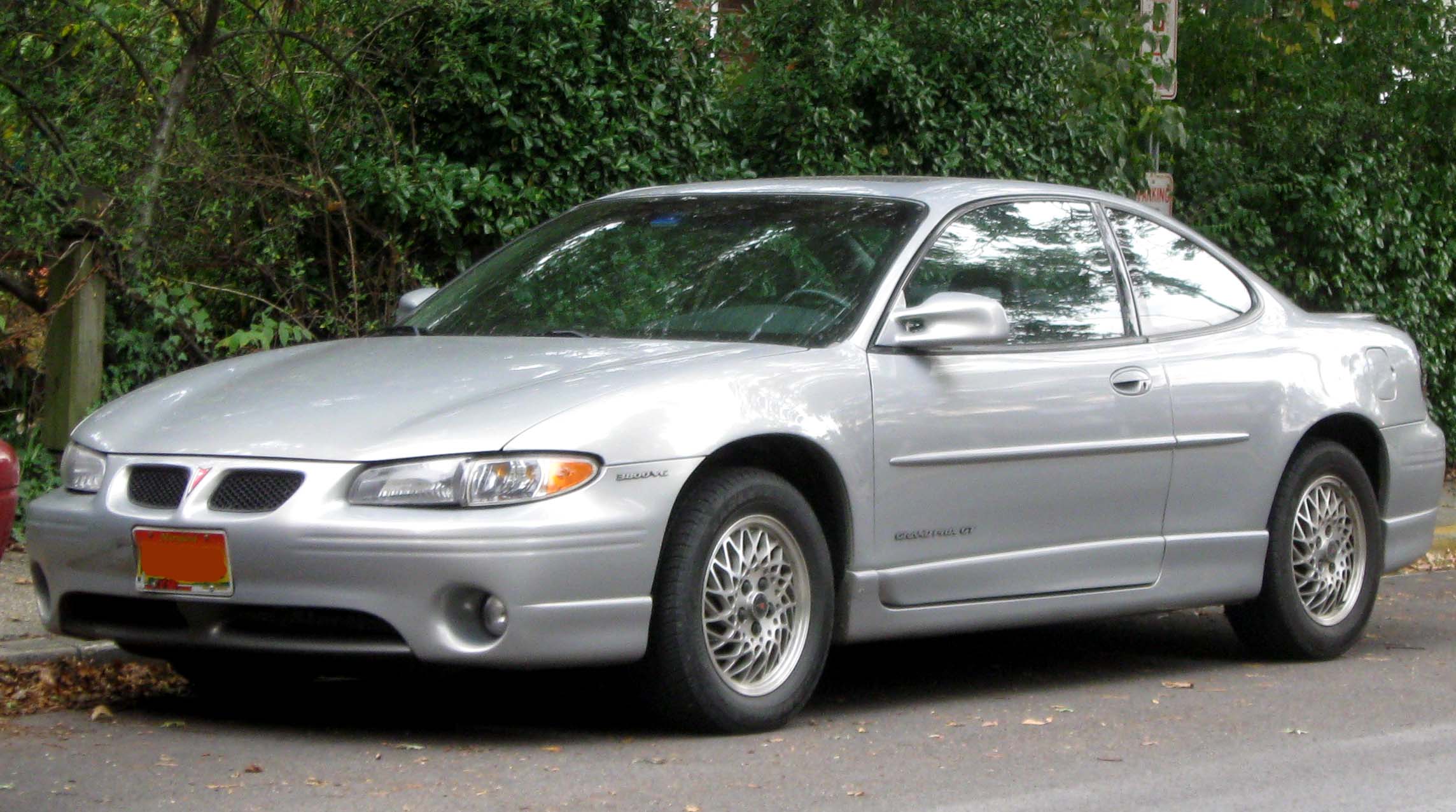
So, from the mid-'70s to the early 2000s muscle cars became a dormant species. Here are some examples.
Look at that Mustang above and then look at this one from 2000.

This became...this.
'69 Dodge Charger:

2015 Dodge Charger:
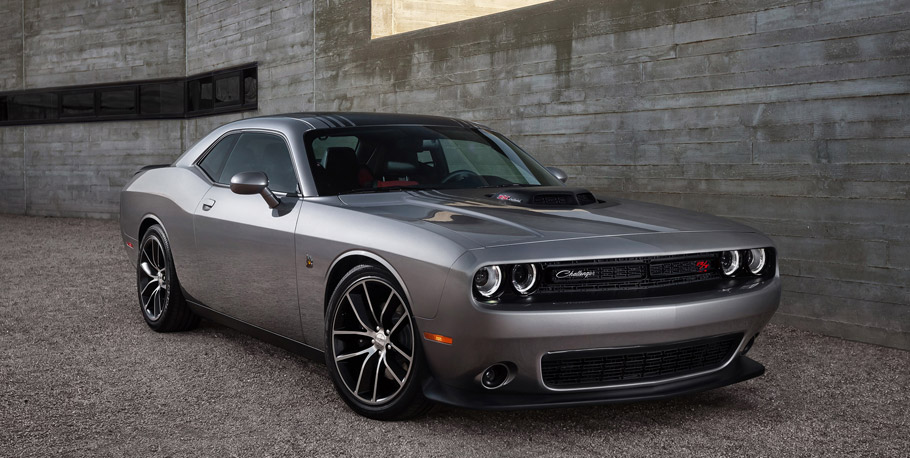
It’s sad. But I do think there is a light at the end of the tunnel. Muscle cars will never be what they were, but the spirit may live on. What do you think?
















