As a lifelong fan, Cleveland winning the NBA championship was a great experience; but being only 21 years of age I am 100% aware that this championship means so much more than I understand it to. In order to best capture the significance of this event, I asked my father, Dr. Julian C. Madison II, a 64-year-old Cleveland native to put it into words best he could.
______________________________________________________________________________
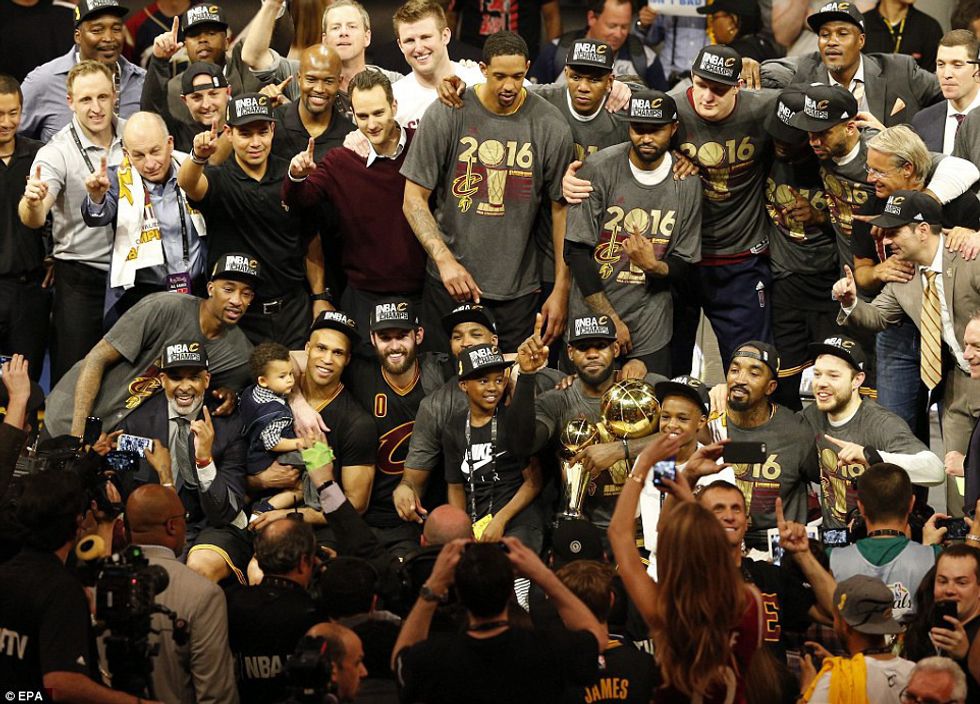
Seventh game of the NBA Finals. There were 10.6 seconds left and LeBron James was on the floor in obvious pain. I was standing at a sports bar at Washington National Airport and several hundred others at different venues within eyesight were also watching. Most were rooting for the Cleveland Cavaliers despite no obvious connections to the city or the team. Some were excited and screamed at every basket, turnover, or change of fortune. Unlike many others watching the game, I was stoic. You see, I already knew what the outcome would be.
If there is a city that has suffered from worse luck over the years, one would be hard pressed to find a place that could top Cleveland. Before the 1930s, the city was on the cusp of being mentioned in the same breath as New York and Chicago; It had money, leadership, and ambition. But the Great Depression changed all that. Like most American cities, Cleveland suffered from most of the ills wrought by a most difficult financial time. But Cleveland fell further than most. Moreover, state laws were passed to prevent Cleveland from annexing neighboring communities, something Columbus was allowed to do which led to its eventual position as the state’s largest city. Though home to over 500 major corporations by the mid-1960s, Cleveland stagnated. A population of over 900,000 in the 1950s dropped to about 400,000 in the 1990s.
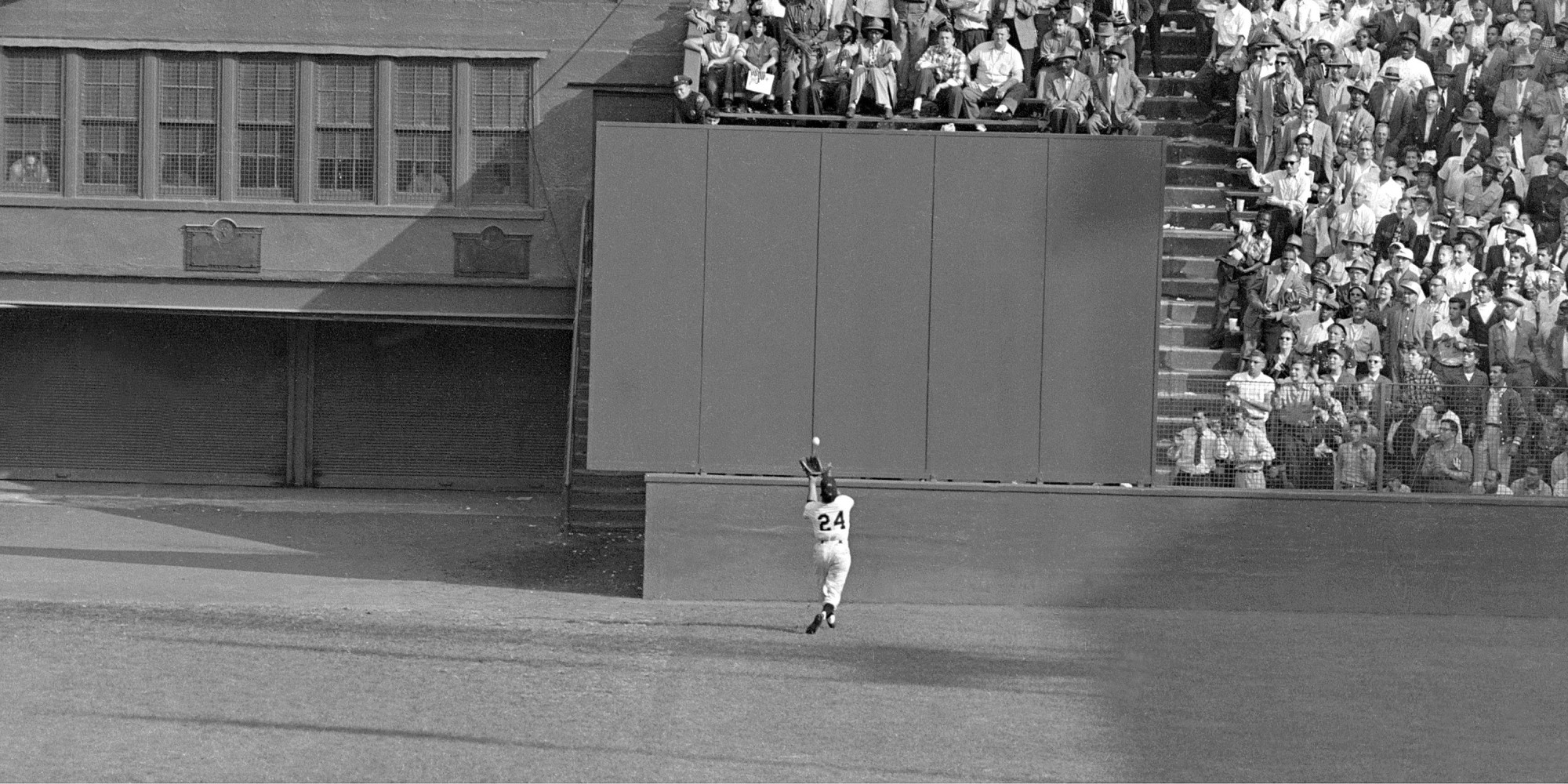
Burdened with generally poor politicians, loss of revenue as the moneyed masses moved to Cleveland’s incredible suburbs, and a city-wide loss of confidence, all Clevelanders had left that they could count on were its athletic teams. Even then, there were foreshadowings of things to come. Willie Mays’ incredible catch in game one of the 1954 World Series helped the New York Giants sweep an all-time great Indians team.
When the Cleveland Browns won the NFL title game in 1964 by defeating the heavily favored Baltimore Colts, 27-0, I was 12 years old. The next year the Browns lost the title game in Green Bay, 23-12. Except for appearances in the AFC title game, the Browns were done. At one time I was full of youthful optimism about the Browns. But gut wrenching losses to inferior Denver teams took the heart out of me. And Art Modell moved the team to Maryland. The Baltimore Ravens won the Super Bowls that should have been Cleveland’s.
Meanwhile Indians fans suffered through thirty years of mostly horrid baseball. Generally hovering around .500 in the 1960s, the Tribe had more than a few seasons of 90-100 losses in the 1970s and 1980s. Then it drafted well (something foreign to most Cleveland teams) and put together a powerhouse squad. But the 1994 team, the best in the America League, never made the playoffs as a strike in August ended the season. The 1995 team went to the World Series but lost to an excellent Atlanta Braves team helped by incredibly wide strike zones. Indeed, Albert Belle, a very disciplined hitter, homered on a pitch almost a foot outside. He had to swing. The umps gave those pitches to Braves pitchers the entire series. When the Indians made the playoffs I knew the outcome of their playoff fortunes and was not disappointed in my forecast. But I was disappointed. The same with the 1997 heartbreak. I hoped upon hope for a Tribe World Series championship, but not wanting to view my disappointments, refused to watch.
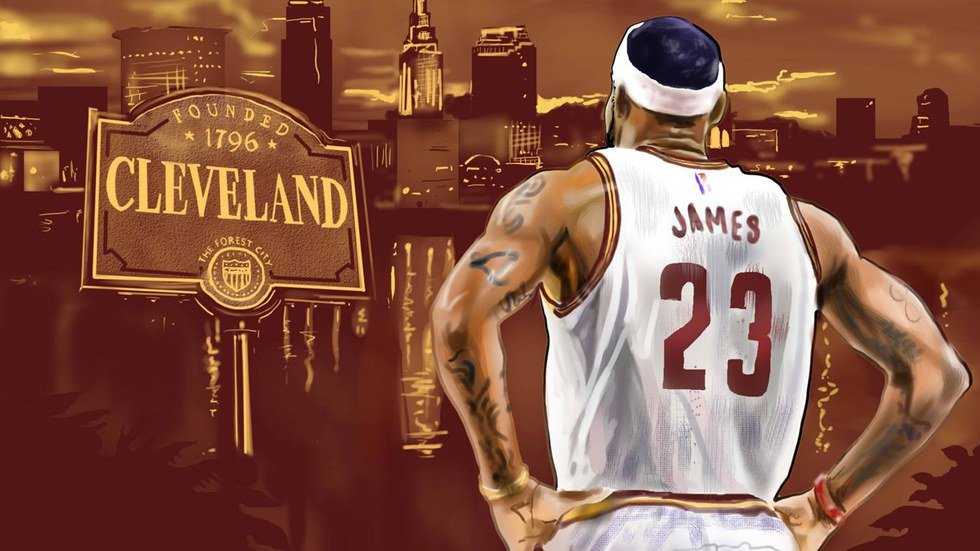
As LeBron got up, I thought I knew the scenario. He could not play anymore. Typical Cleveland luck. I had seen this scenario with the Cavaliers all too often. Despite my negativity, LeBron got up without injury. He went to the foul line and missed his first free throw. I knew LeBron would miss the second shot, Golden State would hit a three and send the game to overtime and win the title by hitting a shot at the buzzer. But LeBron hit the second. Hold em’, Cavs, hold em’. The Warriors missed the shot, grabbed a long offensive rebound, missed again, and the game was over.
Cleveland: 93
Golden State: 89
People around me cheered. I said nothing. I watched the celebration for a few seconds, turned around, and walked to the gate. The Cavaliers had given Cleveland its first major championship since I was 12. When I sat on the plane I thought about what just transpired.
I had decided to watch the game because, well, why not? No matter where I turned in the airport, television sets were showing the game and loud reactions from the crowds would not let me not watch the game in peace. And I really did not want to watch the game and suffer another heartbreak.
Living in Connecticut, I am surrounded by Boston and New York fans who arrogantly assume that what is good for their teams is good for the sport in general and Planet Earth in particular. A few years without winning a title in something is cause for great hand wringing. That I lived more than five decades without seeing my favorite professional sports teams win a title forced me to be more defensive about Cleveland in areas beyond athletics.
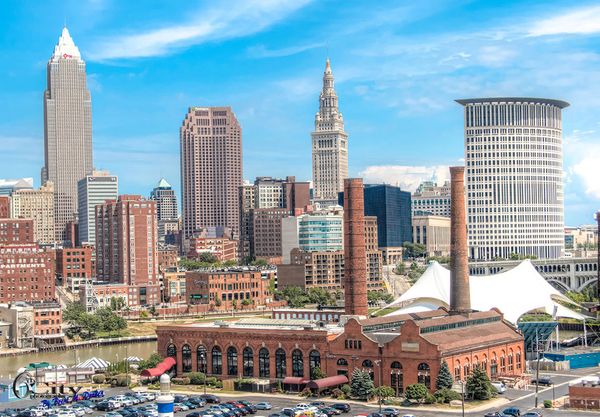
This is, after all, the city where the river burned. That no one outside the city knows the name of the river does not matter. Cleveland is one of the great cities of culture in the country. Some of the biggest names in entertainment – Bob Hope, Paul Newman, Halle Berry and others hail from this city. The Rock and Hall of Fame and the Great Lakes Science Center are here. World class colleges and universities, Case Western Reserve University and John Carroll University are but two of the many terrific colleges here. Cleveland’s theater scene is top notch, its public library system is among the five biggest in the country, the cultural gardens are beautiful and it has fantastic parks. Yet, people who have never stepped foot in the city feel free to mock it. And they always bring up the burning river though it happened over fifty years ago.
Several years ago I happened to mention to a colleague that my wife and I were considering returning to Cleveland to live when I retired. She scrunched her face and made a disparaging remark about the city. Turns out she had never visited.
On another occasion I told another colleague that Cleveland’s West Side Market is the best “farmer’s market” in the country, even better than Pike’s Place in Seattle. Understand that I earned a Ph.D. at the University of Washington and my wife and I love Seattle. One of my children was born there. We all but lived at Pike’s Place we enjoyed getting food there so much.
My colleague held his hand up and said, “What is better? Seattle or Cleveland?” My remarks had nothing to do with the two cities but, instead, the market places. He turned a deaf ear. Yet, visitors to Cleveland are surprised by how much they like the city. Still, I find myself constantly defending a city to those who have never visited.
I was born and raised in Cleveland. When I graduated from high school I left and except for a four- year stint teaching at a college in Northeast Ohio, have not lived there since. But I religiously follow (through the papers and internet) the Browns, Indians, and Cavaliers, and other happenings around the city. Of all the places I have lived in this country, the only city that rates with Cleveland is Seattle. There is something about the Cleveland, for all its warts, that I cannot get over or forget. There is one explanation. It is home and a place like no other.
So here I am. That the Cavaliers won the NBA title did not hit me until 12:45 pm on June 21st, two days after the final game. At 12:45 I thought about the game and felt chills go up and down my spine. I closed my office door and cried.
Thank you, Cavaliers. I am no longer afraid of seeing my teams lose. I am no longer looking at games through a pessimism that built up year after year. When the Indians go to the playoffs this year I will watch every inning possible. And when they win the World Series this November I will be there to celebrate.
In the end, I am proud of being from Cleveland. I am a Clevelander despite having lived there for only four years out of the past forty-six.
And I will return to live. I have to. Why?
Because I may have left Cleveland but Cleveland never left me.