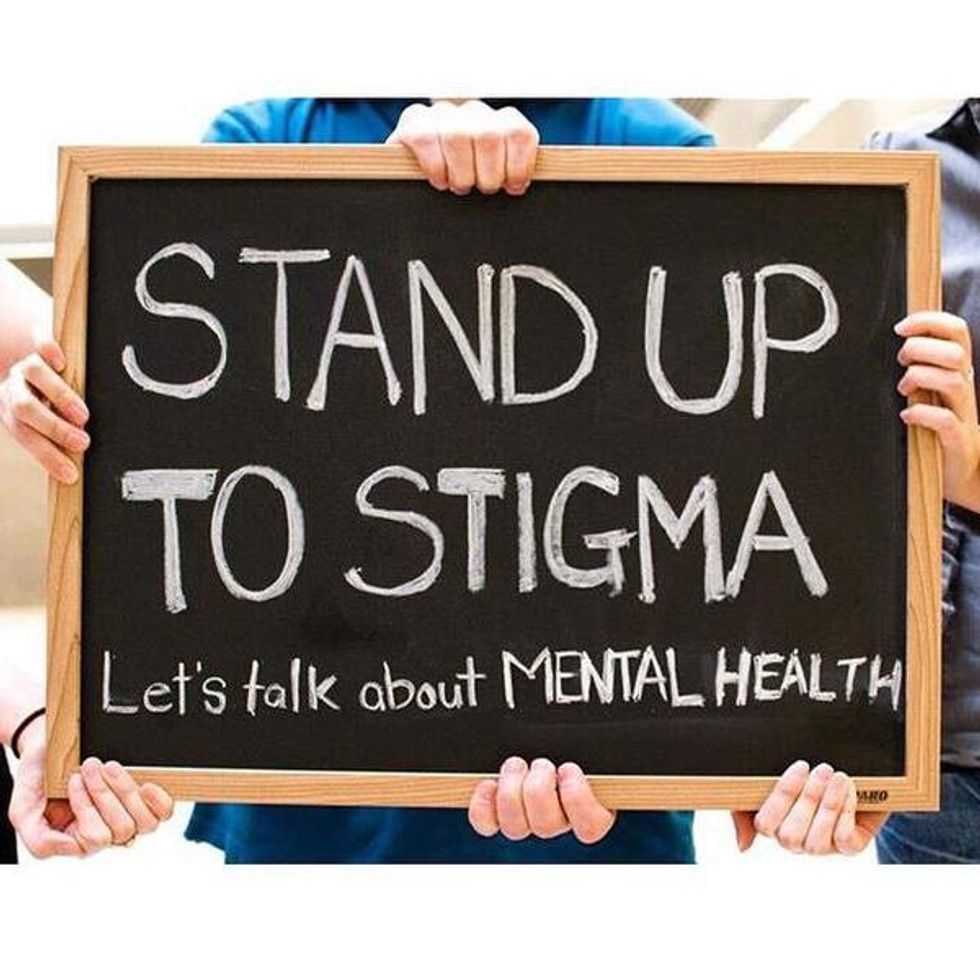
One of the issues in my personal life that I have always been passionate about is mental health. As a political science major, I have encountered the vast majority of news outlets discussing vital issues that have become very political such as healthcare. In my years of studying political news, I realized that I have been shying away from one of the largest interests in my life, which is advocacy for mental health.
I want to preface this article by declaring that I do not consider myself an expert in healthcare policy by any means. However, I am aware of the lack of resources there are for those who do not struggle with physical illness, but who do struggle with mental illness. As a human being, I know this isn’t right. As a person who struggles with their own mental health, I know this is damaging to people like me.
People who suffer from mental illness often go undiagnosed because of the lack of resources. The stigma around discussing mental health does not make the process of reaching for assistance any easier. The stigma has always been around. The phrases “insane” and “insane asylums” are normalized. They are seen as consequences rather than building a safe community for those who struggle with their mental health. To put it simply, mental illness is spoken about to bring out fear in people. This is called fear mongering and I will explain how.
It is everywhere -- it's prevalent in movies, on television shows and in music. Whenever there are evil characters in television shows and in horror movies, mental illness has been the number one cause to justify these actions. Evilness is shown as inherent as it is equated to being “crazy.”
Because of this stigma, individuals are discouraged to admit that they are dealing with personal issues that could be a rational response to a difficult time in their lives (i.e: a traumatic event) or just a feeling that is gnawing at them, hindering them from performing activities that would otherwise be easy to complete normally. After all, no one wants to be lumped in with the “crazy” or the “insane” and “inevitably end up like the lunatics in the insane asylum,” This is common in any horror movie that you watch nowadays. Seriously, nearly any “psychological thriller” is about a man murdering people just because. Until, plot twist! He’s actually been suffering from bipolar disorder all this time! Oh, as well as x, y, and z disorders. You never know what wild thing mentally ill people will do next!
First of all, this plot line is played out. Honestly, when will writers realize that this is literally the most boring plot line for a horror movie? The premise of the audience suddenly finding out that the psycho man is evil is so incredibly cringe-worthy at this point. Objectively, it’s not even entertaining anymore. Following that point, it’s no wonder that the stigma around the mental health conversation is hindering any real progress. We are seen as violent people, all the same, with only one common goal -- to hurt people with out evil doings.
It is imperative to remember that mentally ill people are still people. Our struggles are just as valid as those with physical disabilities and chronic physical illnesses, although our impairments are often times invisible. Mental illness is lifelong. Resources need to be readily available, especially for those who cannot afford to see a doctor. This policy needs to change and I expect to explore the field of healthcare policy to decipher the exact policy regarding mental health in the future. There aren’t any cures but with the support, guidance and possible medication from a therapist, it can be the start to a better life. It's also as simple as receiving empathy from a family member or a friend, which can make a world of difference to a person who is struggling with personal issues.
Mental illnesses exist in a variety of forms and is not black and white at all. The most tricky part about psychology is that there is new information constantly being tested and discovered. The human mind is the most complex concept in this universe and we must remember this if anyone is dealing with personal issues and overall mental health.
I am so tired of seeing those who I love and cherish feel alone because they think their conditions are impossible to live through. The lives of many are lost in this way, unfortunately. Collective action goes a long way. I expect to write more about my personal endeavors with mental illness and dealing with this stigma. Personal stories of success are an effective way to inform and to become informed. I would like any and all readers to visit the website Bring Change 2 Mind which showcases personal stories, blogs and positive affirmations. This nonprofit organization strives to eliminate the stigma of mental illness by means of collective action.
If this is a cause that interests you, I strongly encourage you to pursue this cause for the quality of life and respect to those who may be suffering quietly around you.
A final note:
Please do not dismiss the changing behavior of any person in your life and do refrain from using outdated language that may feel them isolated in their valid concerns. The stigma around the discussion of mental health is one that is difficult to unlearn but for the sake of a human’s well being, I implore you: do not give up on those who are seeking help. There may be a life saved.