
The world today is full of problems, and I won't lie, many of them are caused by humans.
It may be terrible to think about, but we're causing more damage to this planet, whether it be to humans, nonhuman animals, or the environment, than we will ever have the ability to reverse. We're at a point now where we will never be able to resolve many issues that we have, nor make our situation any better, especially if we continue our destructive practices. For example, one of these practices is offshore oil and gas drilling, which is now supposedly being revolutionized by seismic blasting, a new propsed phenomenon that is sure to cause us massive issues in the future if it is approved.
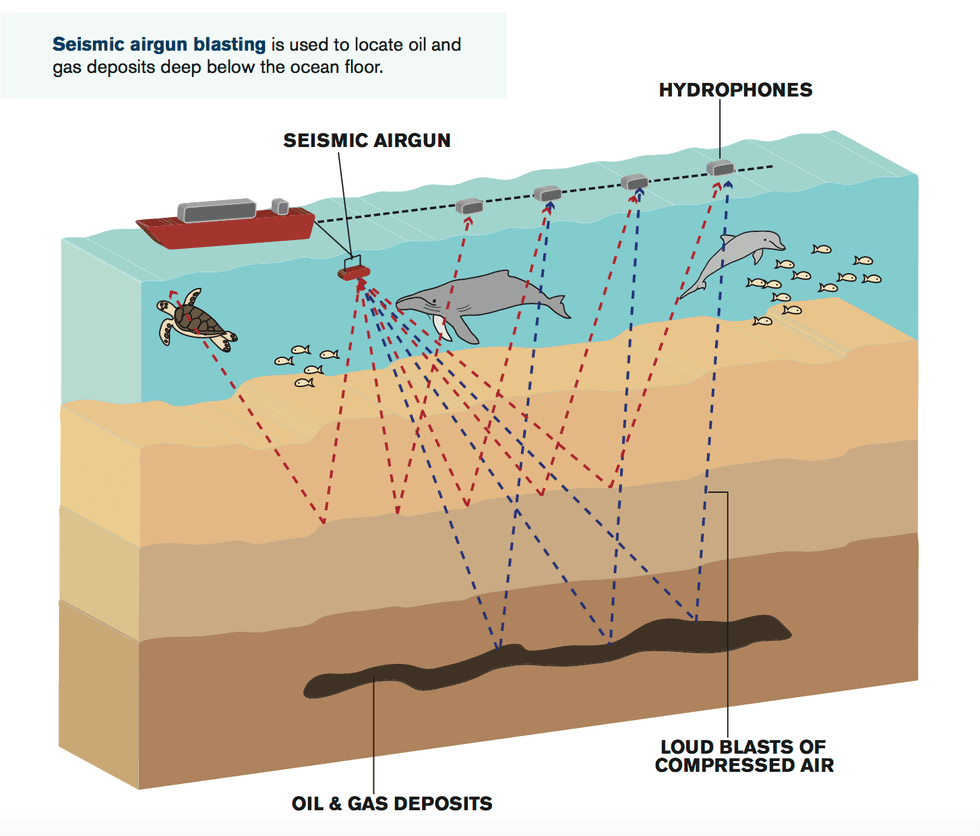
The blasting is a new method for searching for oil and gas under the ocean floor. These blasts come from airguns that are towed behing ships and shoot loud blasts of compressed air miled into the seabed, which are then reflected back to hydrophones floating on the surface of the water. The blasts relay information about where exactly and how much oil and gas there is in one location, kind of like a sonogram for the ocean. However, the process is extremely destructive. The blasts are sent off every 10 seconds, 24 hours a day, for up to weeks at a time. This means the ocean will be subjected to non-stop noise, and according to Oceana, the blasts are 100,000 times louder and more intense than a jet engine. Plus, the area to be tested is all along the East Coast, which is an extraordinarily large area.
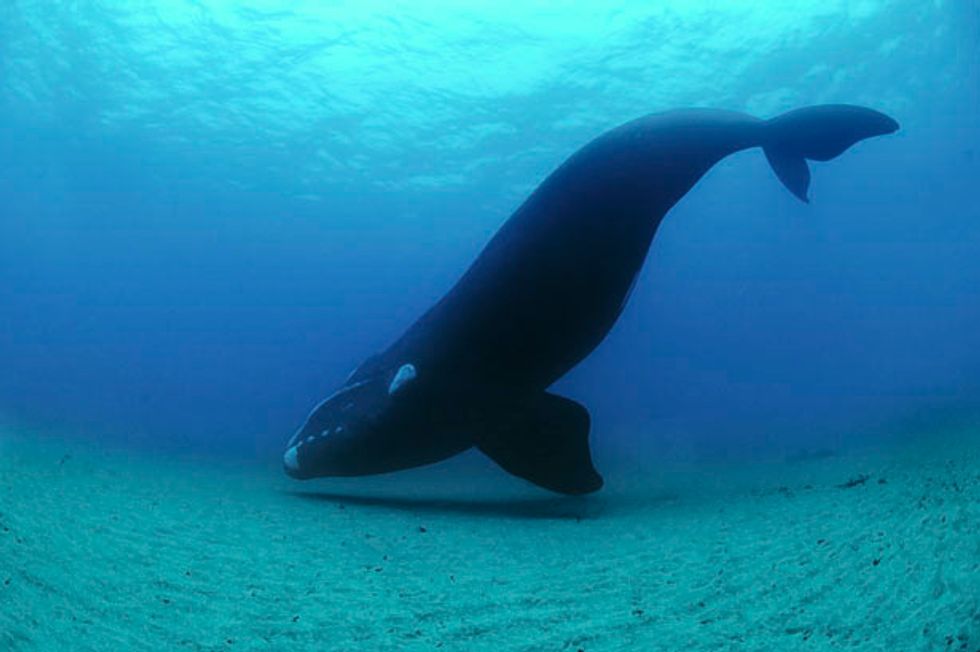
As you can imagine, seismic blasting will definitely not be positive for anything that lives in the ocean. Whales and dolphins, whom depend on hearing to survive, are now faced with the extreme possibility of deafness. Whether this hearing loss is temporary or permanent, neither scenario is good for these animals. Also, Matthew Huelsenbeck, a marine scientist for Oceana, is trying to make the world aware that even if the whales are thousands of miles away from the blasts, they still have the possibility of becoming extremely impaired. The low frequency sounds can travel thousands of miles away from the blast sites and disrupt whale calls, which can then disrupt their migration and behavioral patterns. Huelsenbeck even warns us that this seismic blasting could be extremely detrimental and even species-ending for North Atlantic right whales, whom are extremely endangered. There are less than 500 right whales left in the Atlantic, and seismic blastic is being called the "tipping point" in their extinction.
Likewise, other ocean life is in danger. Commercial fishing could be, as the blasts could disrupt schooling patterns and kill off fish eggs and larvae. Additionally, all species of turtles could be severely impacted, as their ears could be damaged, which affects nesting. Not the mention, all species of turtles in the United States are either endangered or threatened, so affecting nesting is not helping their populations at all. Overall, the U.S. Department of Interior’s Bureau of Ocean Energy Management's (BOEM) review of the proposed seismic blasting surveys stated that about 138,000 marine animals could be injured in some way. Likewise, they cited that about 13.6 million could be otherwise affected, whether it be because the blasts disrupt their migration, feeding, or other behaviors in some way.
As you can see, seismic blasting may find us more than just oil and gas: it may find us millions of dead and impaired marine individuals... Is the oil and gas worth that risk? Do we want to be the country that negatively impacts this many animals, on top of the ones that we are already putting in danger?
Do your part in speaking out about these harmful possibilities. I promise, the ocean will thank you.