
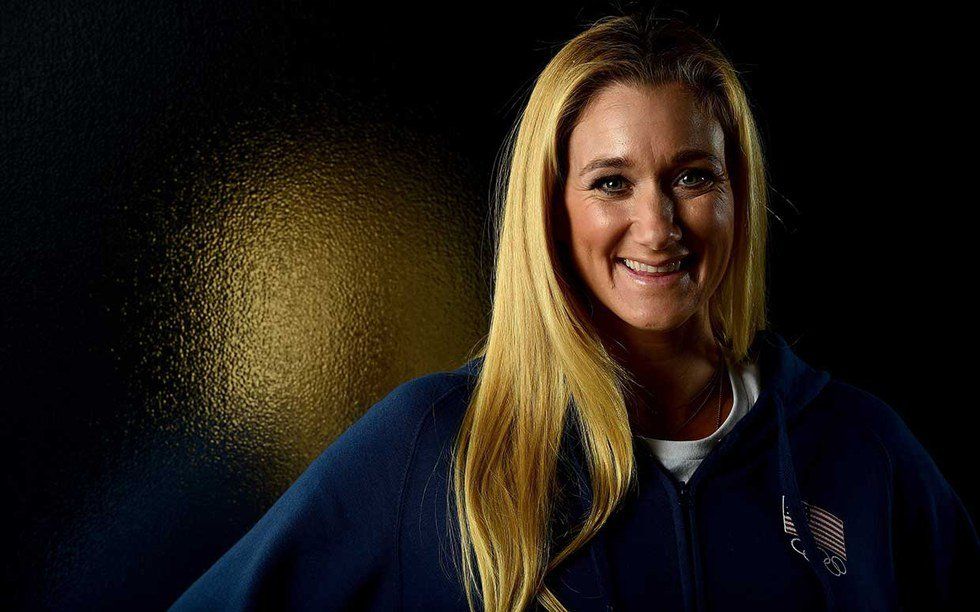
"I feel like I was born to have babies and play volleyball," Kerri Walsh Jennings remarked in a a recent NBC interview. The renowned beach volleyball player's summation of her life purpose sparked a wildfire among feminists around the nation, especially on Twitter, who feel that Walsh Jennings' quote suggests that a woman's purpose in life is to bear children.
Walsh Jennings enjoys motherhood so much that she's earned gold medals back in 2012 while carrying a child in her womb. Her kids clearly motivate her, as indicated by this quote from a recent NBC interview.
"Before I had more kids, I was like, this feels trivial. I’d been playing for so long, and I was like I need balance. All my eggs are in this one basket and it’s very self-centered and self-focused. They gave me that perspective and balance I thought I was missing. It took my game and my desire and my passion for life to the next level. I am hugely indebted to my children."- Kerri Walsh Jennings in a recent NBC interview.
Feminists seem to take Walsh-Jennings' statement out of context. The family lifestyle isn't for everyone and it is okay for a person to remain a single man or woman for the rest of their lives. Walsh-Jennings is not targeting women who do not desire to raise kids. Rather, she describes how she feels that she does not have to abandon one of her dreams and can enjoy motherhood and her favorite sport at the same time. She is a rare breed — a person who knows what she wants and takes every step necessary to fulfill her dreams. Walsh Jennings has always worked hard to achieve her dreams and loves a good challenge, as indicate by the words she wrote on her United States athlete biography.
"The balancing act of motherhood and a career, and being a wife, is something that I don’t think I’ll ever perfect, but I love the challenge of it," - Kerri Walsh Jennings in a recent NBC interview.
In this interview, Walsh Jennings seems to indicate how she felt like playing volleyball was her only purpose in life. Everything she did was for volleyball or herself. However, things changed when kids became part of her life equation and she now plays for someone other than herself. Her life no longer revolves solely around what she loves but now includes both her passions and family. In addition, she seems to believe that she has something to go home to other than volleyball at the end of the day, knowing that life is more than the amount of beach volleyball matches she wins or loses.
Walsh Jennings' words may also upset feminists because they may feel that they are self-centered if they also wholeheartedly love a hobby but do not have to balance the duties of motherhood on the side. This is not the case, and the athlete was simply stating how her kids affected her life personally. It is possible to have passion for a certain activity without kids and still care about others. However, these other people become friends, family. and co-workers instead of kids or spouses. They can even include random people on the street.
For example, an single female athlete could venture to the gym for practice and encounter someone who tripped over a curb and spilled all their groceries. Instead of walking past them and waiting for someone else to help, the hypothetical athlete could take a couple minutes out of their day to assist the pedestrian. Single women can still serve as altruistic and benevolent people without looking after young children.
Twitter users around the nation also appreciate the extreme determination Walsh Jennings' displays as she plays volleyball while pregnant. This potentially could bother feminists because they may feel like it is not possible to do great things outside a maternal role. However, a female athlete who plays with a hurt shoulder, bionic knee, or an extreme health condition is just as remarkable as Walsh Jennings.
Single women can accomplish just as many great things as married women or moms around the world, but they should not put down those who choose to marry or adopt a maternal role. Each person holds their own beliefs about personal lifestyle and it is important to respect each person's decisions, whether they choose the single or married life. Similarly, feminists should not take Walsh Jennings' ideas out-of-context and realize that she addresses her own personal life, not others' lives, when she discusses her passion for volleyball and her family. It is acceptable for the Olympic athlete view child-rearing as one of her many different purposes in life.