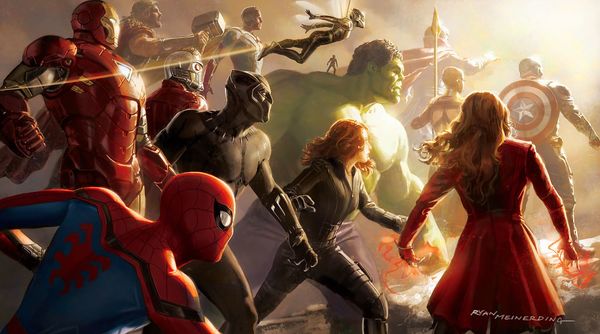

Ask a normal person on the street the question "Who’s your favorite superhero?" and you usually get something like Batman or Captain America. There are sometimes some Superman, Spider-Man, and Iron Man fans spread around too. In other words, they go for the mainstream ones.
Now, there’s absolutely nothing wrong with that! All those heroes are great! There’s no wrong answer to favorite superhero. But I will argue there’s a new player in town. Well, new would be an exaggeration.
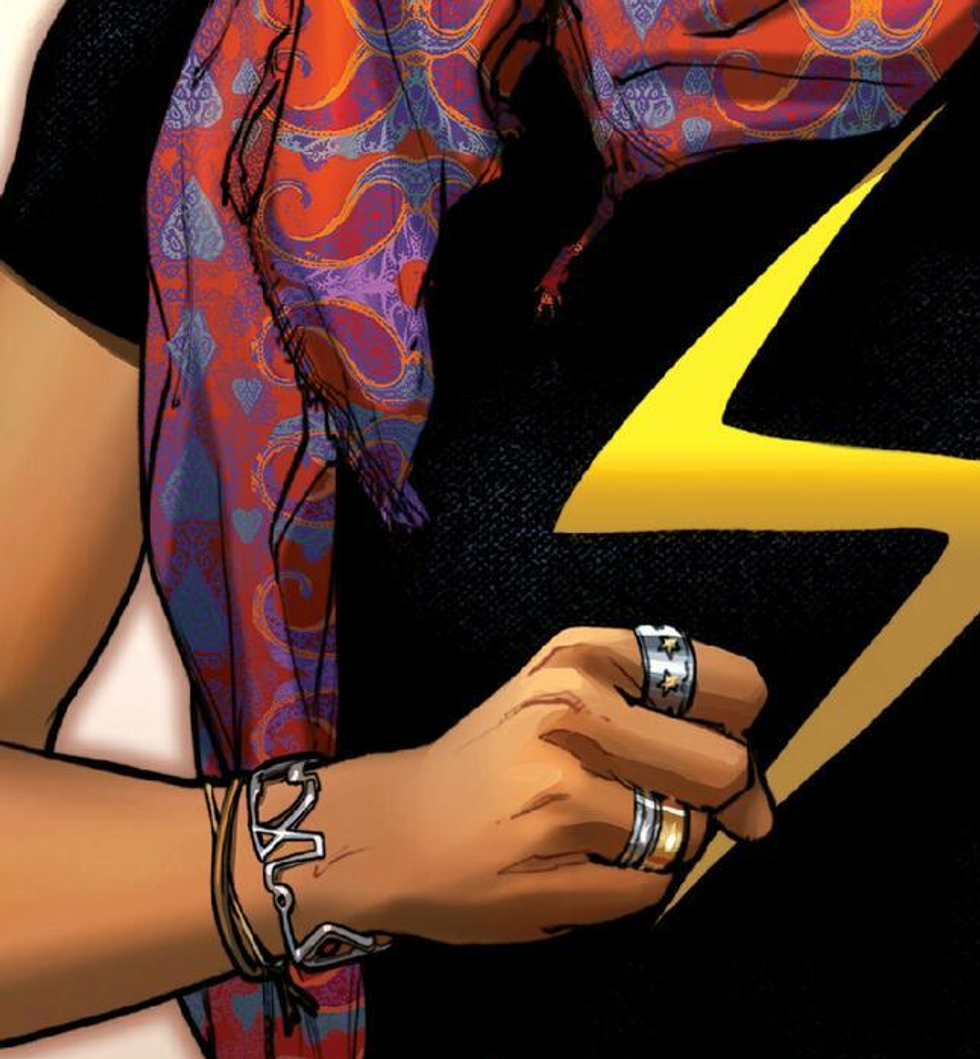
In the comic book reader circle, Kamala Khan has been around for a couple years now, since October of 2014, in fact. Known as “Ms. Marvel,” she is a Muslim teenage girl who has gotten superpowers from alien DNA.
The writer of the Kamala Khan comics, G. Willow Wilson, is a Muslim herself and wished to bring that to the comic world. But she knew it would be tough, not only because Kamala would be the first leading Muslim superhero woman, but she was to be a member of the Millennials. She was a teenager.
“It would have to shatter decades of conventional wisdom,” G. Willow Wilson says in her TED Talk. “We had nothing to lose. I wanted to create a hero for a generation that is often misunderstood and maligned.”
As it turned out, not only was Kamala Khan to be a teenage girl, but she was to be a longtime fan, a fangirl if you will, of the Avengers and an author of fan fiction.
Ms. Marvel is this generation’s Spider-Man.
A teenage superhero who struggles with relationships both romantic and platonic, Kamala gets her powers in this first issue when walking home from a party to avoid drinking. She is from Jersey City. She writes fan fiction. She obsesses over the Avengers.
Kamala Khan is the geek where Spider-Man is a nerd.
She struggles with other teenage problems too. In “No Normal,” the first issue of Ms. Marvel, she struggles with her appearance.
“I want to be you,” she says to an image of Captain Marvel, her idol, as the Terrigen Mist infects her and gives her powers. Little did she realize that her new powers included being able to shapeshift. Without control of these powers, she ends up stuck looking like Carol Danvers.
The issue ends with her standing there, saying “Is it too late to change my mind?” This mirrors how hard many millennials, especially young women, don’t love themselves or the way they look.
She may not have bulimia, or anorexia, extremes of this feeling, but she wishes she was someone else. Someone more powerful, someone more likable.
Half way through Issue One, Kamala Khan has a disagreement with her father over whether or not she can attend a party. She complains that if she was a boy, her father would let her go out by herself to parties. Sent straight to her room, she climbs out her window and goes to the party where eventually she gets her powers.
Nothing terrible happens, no vengeful reason for becoming a superhero. Instead she wants to fight injustice because that is what is right.
Just like Katniss in the "Hunger Games," or the protagonists of the "Maze Runner" or "Divergent," top sellers among Millennials because of the way they mirror the millennial mentality themselves, Kamala Khan just wants to help people.
In fact, this is seen in the new Captain America movie when Peter Parker just wants to “help the little guy.” Both the old and the new teenage hero is there because that is what is right.
The first comic issue, No Normal, became the best-selling digital comic in Marvel of all time. It mirrors the way millennials view the world and makes Kamala Khan this generation’s Spider-Man that became popular because of its real world issues that teenagers deal with.
Ms. Marvel is now not known as the “first Muslim leading lady,” but simply a great leader in comics.
Watch out Spider-Man! Kamala Khan is coming for you.