

Drenched clothes. Biting wind. Numb hands. We’re low on groceries—despite the beloved Internet reminder to get the bread and milk. Delivery? Not an option for food or alcohol, thanks to this most unruly entry into the Jonas family.
I helped my roommate shovel out his girlfriend’s car as I muttered swears and occasionally pelted a snowball at the hood of his ski jacket. The Toyota Sienna was liberated. Notwithstanding a few complaints and grievances, many of us had it rather easy. Others endured legitimate hardship thanks to Jonas.
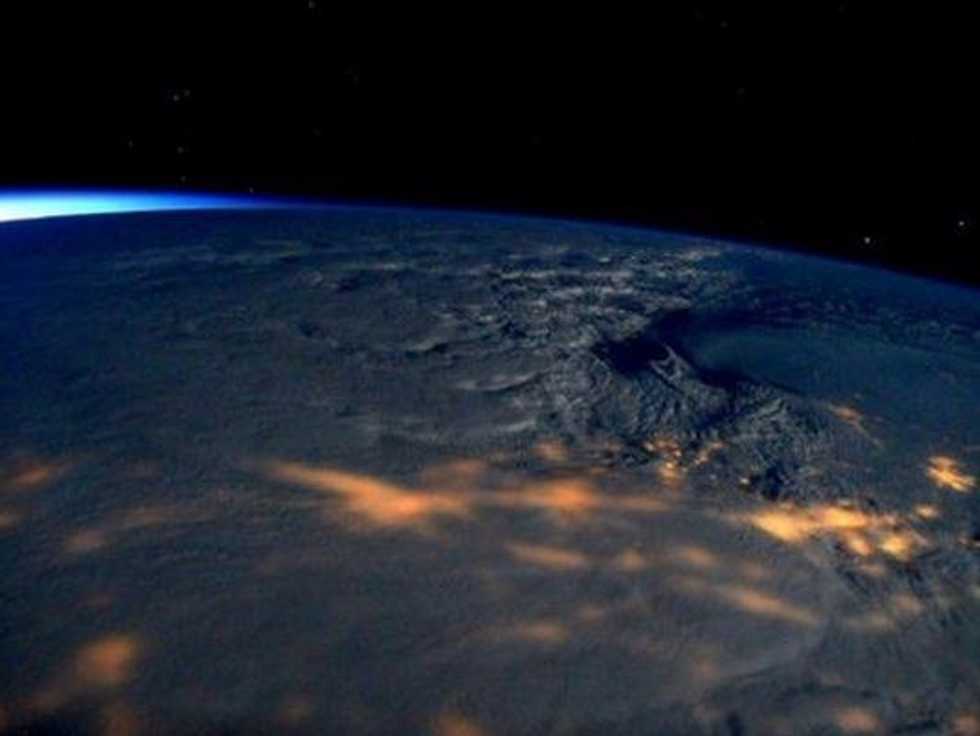
However, even with all the suffering imposed by this winter storm, there was beauty too. The images that were captured of Jonas from space are magnificent. In fact, this article’s cover photo was a picture taken—then tweeted—by NASA astronaut Scott Kelly.
There are so many distractions in the daily life of a college student—the obvious concerning academics: quizzes, homework, exams, group projects, papers, and studying. There’s also the social dimension: friends, Facebook, parties, clubs, organizations, day drinks, et cetera. Not to mention, searching and applying for internships and then jobs.
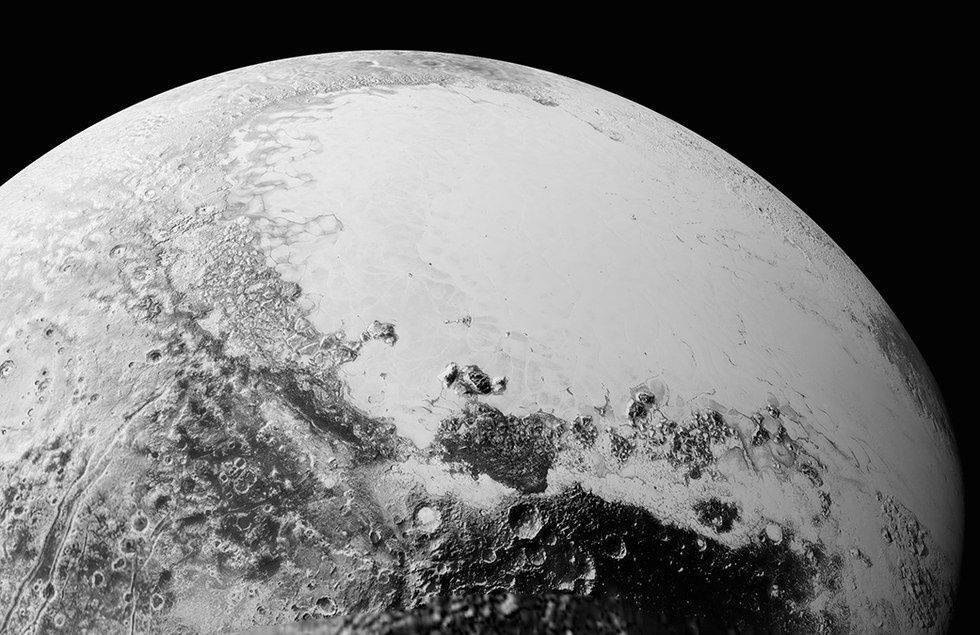
Considering this, it’s easy to forget about the constant majesty of the universe and the renaissance of discovery sparked by NASA. New Horizons obtaining images of a previously unexplored Pluto, the discovery of a possibly habitable, Earth-like planet, Kepler-186f, and the realization that present-day Mars has flowing water, among uncountable other discoveries, have just recently occurred.
Image of Pluto from New Horizons:
(via nasa.gov)
If you have a moment, try ruminating about the cosmos. If one is looking for some inspiration, consider this mind-warping quote from the famed physicist, Lawrence Krauss:
Every atom in your body came from a star that exploded. And, the atoms in your left hand probably came from a different star than your right hand. It really is the most poetic thing I know about physics: You are all stardust. You couldn’t be here if stars hadn’t exploded, because the elements - the carbon, nitrogen, oxygen, iron, all the things that matter for evolution and for life - weren’t created at the beginning of time. They were created in the nuclear furnaces of stars, and the only way for them to get into your body is if those stars were kind enough to explode. So, forget Jesus. The stars died so that you could be here today.
If you were too lazy to read, here's a clip of Dr. Krauss saying this quote aloud:
That’s what the image of Jonas from space reminded me of: the majesty of the cosmos and the insignificance of the human species in its context. One weather event, on one small planet, in one solar system, in the corner of one galaxy—of which there are billions—that took place in 2016, in the background of approximately 14 billion years of existence. What rumination could further enforce humility?
Not to undervalue our species too much—the universe also reminds us how special we truly are. In all of our searching, we still have yet to find actual microbial life, let alone life of a complex and intelligent nature. Indeed, life in this vast vacuum may be so rare that we are the only intelligent beings. Arthur C. Clarke put it best, “Two possibilities exist: either we are alone in the Universe or we are not. Both are equally terrifying.”
The word “awesome” gets thrown around rather promiscuously as meaning “excellent” or “extremely good.” However, the definition of the word “awe” according to the Oxford dictionary, is, “A feeling of reverential respect mixed with fear or wonder.” Attempting to contemplate different aspects of the universe is a daunting task—and I can’t think of anything that inspires awe in such a way and is so deserving of the description.