

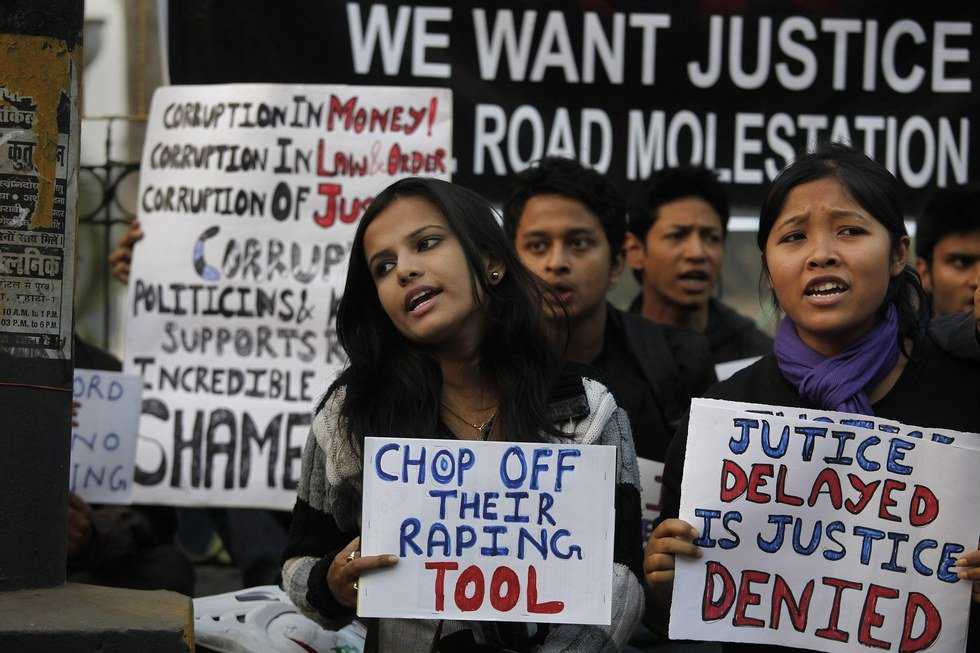
Picture this: you’re out for a run at your local park when, suddenly, something catches your eye. You see the body of an unconscious woman sprawled all over the bushes, and the rest of the locals are passing by the scene as if nothing unusual were happening, as if she were invisible.
Last week, on July 14, 2016, a 21-year-old passerby in the city of Rohtak, India was in a similar situation. The body belonged to a woman who had been drugged and gang-raped twice -- once the night before, and another time three years ago. And two out of five of her attackers were a part of both of her assaults.
The second-year college student says that her assault was similar to what she experienced in October 2013 in Bhiwani, an hour away from Rohtak. “They were in the car. I saw them and got scared. They forced me into the car and then they strangled me,” the woman told a reporter from CNN affiliate channel, News 18. She is currently in stable condition at a hospital in Rohtak, but she continues to remain in a state of shock and trauma.
After the first attack, the two attackers involved in both assaults were arrested and incarcerated, but the victim’s family moved to Rohtak when they received threats from the suspects and their friends to pressure them to withdraw the case. The suspects were released on bail last month and had specifically targeted the college student.
But, she wasn’t raped because her shorts were too short. She wasn’t raped because she was drunk. She was raped because she belonged to the lowest caste in Indian society, her assailants (who were from a higher caste) aiming to physically and emotionally assert their dominance over her -- trying to "remind her of her place" in society.
Because rape isn’t about sex. It isn’t about an individual trying to satisfy a sexual tendency ignited and aroused by someone else’s beauty. It’s about power. It’s about hearing the word “no” and swelling with rage and fury. It’s about dominating someone else. It’s about pinning someone down to the ground and violating their dignity and self-respect, empowered by the fact that the other person cannot fight back.
Yet, everyone thinks that wearing full-sleeved T-shirts and roofie-detecting nail polish can fully prevent sexual harassment, sexual assault, or rape (yes, there is a difference between sexual assault and rape -- read about it here). While these methods of prevention are well-meaning, they are misguided. Why do we place the burden of preventing rape on the victim when we should be holding perpetrators accountable for their crimes? Why don’t we teach people to respect each other, regardless of gender?
Is this why our society doesn’t take sexual crime seriously? Is this why racially and socioeconomically privileged swimmers are only sentenced 6 months for a crime worth 14 years in prison? Is this why musicians diminish a woman’s consent, telling women “you know you want it” because of “these blurred lines?" Is this why news reporters, covering trials involving rape, supporting student athletes charged with rape and label their victims as “intoxicated party girls” and “career wreckers?”
Rape culture is alive and well; don’t let anyone tell you otherwise. It ruins lives. It permeates our mindsets, manipulating us to believe that girls “allow themselves to be raped.” It makes us forget that one in five women are victims of rape or attempted rape during their first three months on college campuses, that 97 percent of rapists don’t spend a day in jail -- let alone a month. It is cancer that courses through the veins of our society, making our world less safe for everyone.
I’m ready to fight. Are you with me?