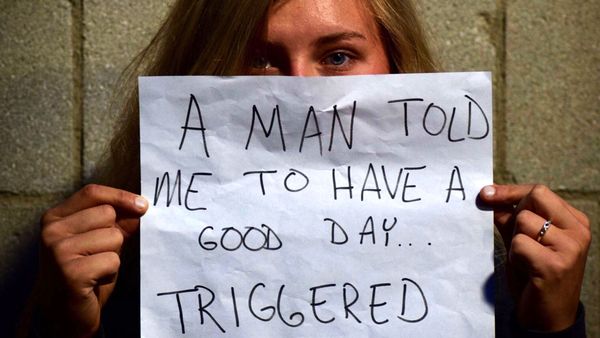


Society tells us that as women, there is a specific set of social attitudes we must adopt to value our American sisters. Vocally oppose the interpreted patriarchy, accept the problematic data gathered on the pay gap, and rally behind the pro-choice cause. But by blindly adhering to these and other ideals, the organization that began as a nonconformist movement is demanding conformity. The very platform that preaches feminine autonomy has somehow morphed into the notion that we must comply with the liberal belief system in order to support women.
The feminism sparked within the age of Susan B. Anthony is a far cry from the feminism present today. Today’s feminism is directed at society, not the government. The fight for equal rights has ended. We have them. We have the right to vote, to be educated, to own property, to marry someone of our choosing, and many more. Why, then, do we still witness discrimination? Because true equality cannot be distributed through legislation only; it stems from intrinsic goodness.
In defense of the conservative woman, the solution to sexism may not reveal itself through political means. Our nation’s governance is guided by noble legislation but enacted by imperfect human beings. Even though men and women do share equal rights under the law today, America’s apparent prioritization of equality is not always reflected at the local and personal level—where it matters most. In defense of the conservative woman, maybe modern social progress requires no loud mobilization effort but a genuine, unspoken understanding that it has already been happening—that it is happening. After all, progress itself is imperfect.
While the perceived wage gap garners furious passion, there isn’t an official consensus on whether or not it actually exists. Many political scientists claim that the gender pay gap is deceptive. Data collections typically measure pay discrepancies between men and women working “full time,” but “full time” is a minimum of thirty-five hours, and men typically work more hours. If we, as conservative women, reject our trusted sources of information for the purpose of aligning our ideologies with what is socially deemed as “progressive,” we are acting irrationally; we are women, not brainwashed followers.
As if the abortion controversy isn’t complicated enough, equality can never be measured when comparing incongruent objects. A women’s issue is a women’s issue; it can’t be an equality issue, as well, for men and women are biologically incongruent, and abortion legislation does not affect the sexes equally. The pro-life/pro-choice debate does not concern the universal sentiment that a woman deserves autonomy over her body—that is our common ground. The debate concerns whether the prenatal life deserves the same rights granted to a postnatal life. A conservative woman’s advocacy of the pro-life stance is not an act of self-damnation or a failure to separate church and state but a consideration of a second involved party—that isn’t anti-woman.
Well-intentioned legislation practiced by ill-intentioned people is counterproductive. Maybe modern social progress is no longer most visible through policy, but through simple human interaction. If this is true, then anti-Trumpers can take a deep breath and put their faith in the impact of humanity’s goodness.
In defense of the conservative woman, we are wary of politicians over-exploiting small-scale issues for the coy purpose of supplying them with our votes. We are not political ploys, and we aren’t one entity. Liberalism does not hold a monopoly on the valuation of women—no one does. As Americans, we need to stop competing for who can claim the most just cause and assess our social climate for ourselves. As Lincoln’s Secretary of the Navy once wrote in his diary, “…captious men [and women] will blame me, take what course I may. I must, therefore, follow my own convictions.”
There is something to be said for the tenacity of a fervent movement, but when the tenacity outlasts the movement, one isn’t to blame for adapting the means to fit the end. In defense of the conservative woman, the feminine identity is enduring, personal, and a collaborative definition—it is not owned.