

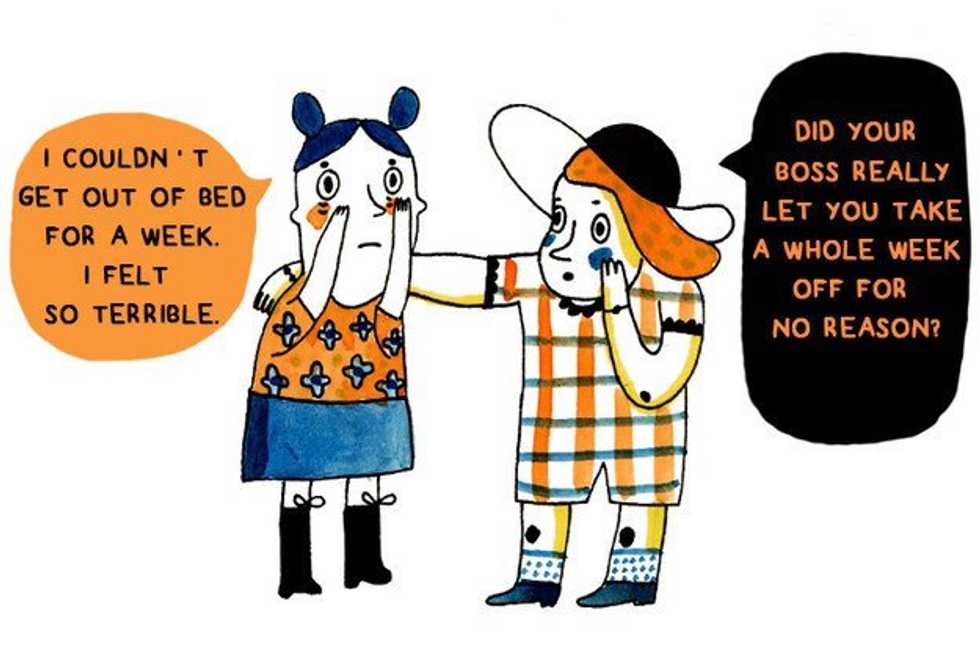
Life is hard. Life seems unfair. Life is life. Recently, there have been more and more discussions about the importance of mental health. Depression and anxiety spread through schools and various other regions like the common cold. It's like our own little stigmatized epidemic. In some ways, the common cold is the physical equivalent of mental illness.
We blame the victim of the cold for getting sick.
Everybody knows to wash their hands. Sometimes, people don't wash and get sick. Sometimes people do wash their hands and still get sick. Kids are told that they got a cold because they didn't zip their jacket up when they were outside in the chilly weather. Even if a person has a weakened immune system or is just in a crowded environment that is filled with infectious people, the person is considered responsible for getting sick. People tend to have the same attitudes about mental health. People are told that if they just had a positive perspective or calmed down, then they wouldn't be sick. They could have prevented it. Society is taught to blame the victim instead of thinking about the environment that the person is in or the chemical imbalances that may be taking place. Sometimes, you just can't help but feel sick.
We tell the person to "suck it up" and get back to work.
Everyone knows that having a cold leaves a person feeling tired and weak. The space underneath their nose gets red and raw as tissues are continually scraping away at the skin. Yet, employers and teachers still expect the sick person to show up and have the same amount of energy as when they are in full health. After all, it's just the sniffles. Unfortunately, however, the same behavior is transferred over to the treatment of people with mental health issues. Mental issues leave a person feeling a wide variety of both physical and mental states. Although a person with depression may not have a raw red spot underneath their nose, their emotions (or lack thereof) may still leave them in a hopeless or pained mental state, as if the tissue was scraping away at their brain and thought processes instead. However, it's probably just a lack of sleep or a case of nerves.
The illustration below depicts the advice that many people with mental illnesses receive.
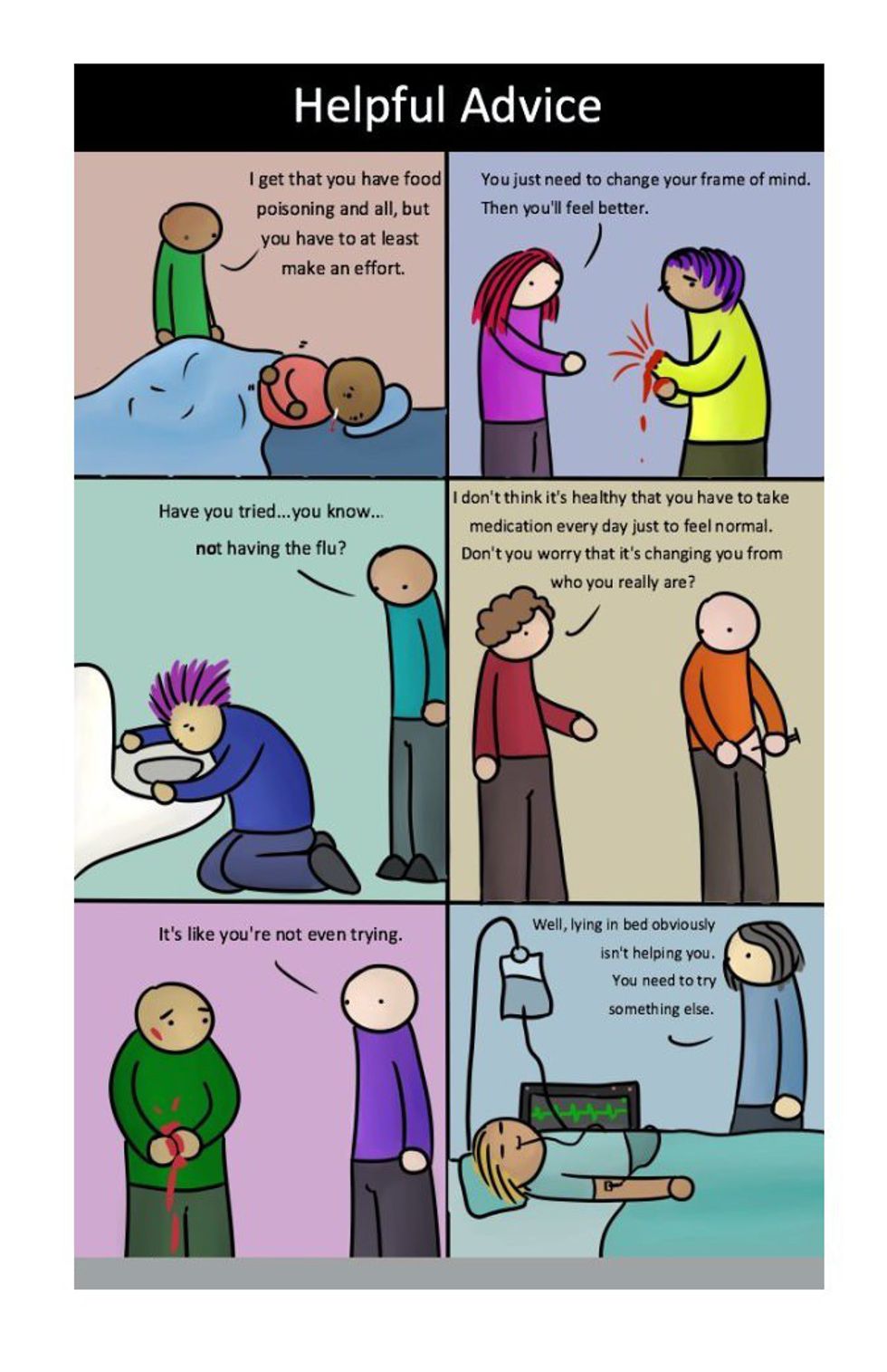
Society treats mental illness like a physical problem, like a common cold. "Just get better." "Just get over it." Unfortunately, illnesses like depression and anxiety have become just as common as the common cold. However, this sort of illness doesn't just go away in a week. If you or anyone who you know is struggling with a mental illness, think through the words that you say to them, try to be understanding, and give them time to get better. Being sick is not their fault.