
When Lance Armstrong continually denied doping for decades, we wanted to believe him. A story of success and perseverance against all odds made such a heroic story that we wanted to keep that faith in the human condition. The people accusing him of doping were spiteful attention seekers. Fast forward to 2012, however, and Lance Armstrong had made his confession of doping to Oprah Winfrey after a USADA investigation of his USPS team. The mirage was shattered.
In the athletics world, we want to believe that our idols have attained their accomplishments cleanly. I want to believe that some of my favorite runners, Moroccan Hicham El Guerrouj and Ethiopian Kenenisa Bekele, who ran world records in the mile and 10000m (respectively), were clean.
Recently, Russian track & field athletes have been banned from competing in the 2016 Rio Olympics due to a state-sponsored doping scandal. In many Western societies, it's easy to separate ourselves from the same problem just say, "Of course, it's Russia." But it's not. Kenya, the home of some of the best distance runners in the world, missed two WADA (World Anti-Doping Agency) deadlines to pass anti-doping rules. Jama Aden, who has ties to the 1500 meter and 5000-meter women's world record holders (Genzebe and Tirunesh Dibaba) and Mo Farah, recently had his compound raided for PEDs.
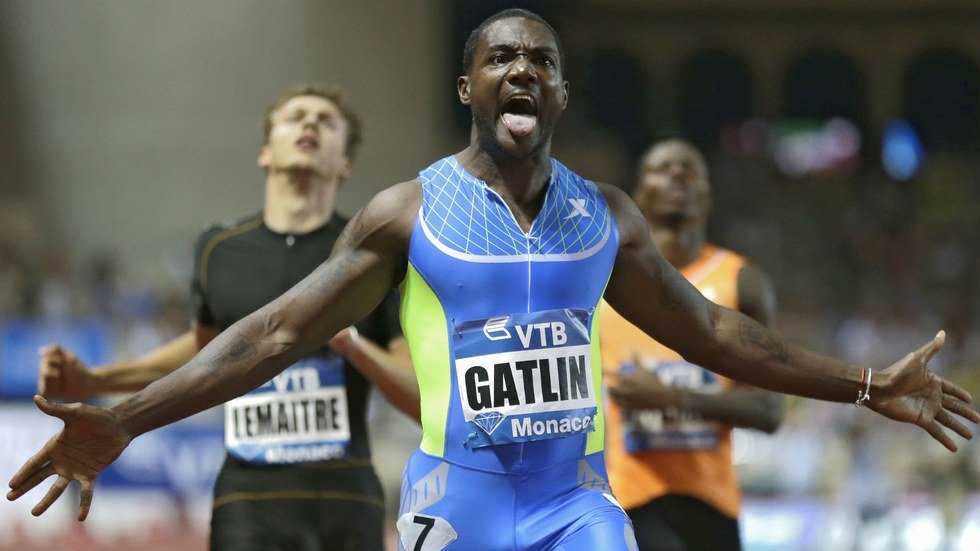
Of course, the United States is no exception. The 2012 Olympic 100 meter bronze medalist Justin Gatlin tested positive for the use of PEDs twice: once in 2001 and once in 2006. Granted, his first ban in 2001 was the result of taking an amphetamine contained in ADD medication, and Gatlin has a documented diagnosis of ADD. His second ban, however, was for taking testosterone. He had blamed his massage therapist Christopher Whetstine for rubbing a "cream-based substance" which sabotaged his testing, which Whetstine denied.
Gatlin had run a then-world record time in the 100 meter of 9.77 seconds. This time was annulled in 2006 because of his ban. Gatlin's 2006 ban lasted four years.
Now, however, Gatlin is the favorite to win the 2016 Olympic 100 meters, with world-record holder Usain Bolt recently suffering a grade 1 hamstring tear. He has dominated the U.S. Olympic Trials with victories in the 100 meter and 200 meters, and will go on to represent the United States in both events in Rio.
The difference now, however, is that Gatlin is 34-years-old. He has matched his previous personal best from when he was taking PEDs at an age when most track and field athletes are well past their prime. In most respects, he is a better runner, now, than when he was when he was cheating. Although many are extremely skeptical of Gatlin's revitalized performance, he is "clean."
In addition, there is heavy speculation to cheating in the American distance running powerhouse, the Nike Oregon Project. The Oregon Project, coached by legendary marathoner Alberto Salazar, currently trains some of the best distance runners in world, including 2012 Olympic 10000 meter silver medalist Galen Rupp, 2013 World Championship 1500 meter silver medalist Matthew Centrowitz and even 2012 Olympic 5,000 meter and 10,000-meter gold medalist Mo Farah.
My friends and I look up to the Oregon Project athletes as our idols. We've re-watched the London 2012 10,000 meter at least five times, seeing a brilliant race by Galen Rupp and Mo Farah. We've watched Matt Centrowitz win the Millrose 1,500 meters numerous times. We look at the marathon workouts that Galen Rupp does with ease, and we wonder, How the hell is this possible?
As Kenyan and Ethiopian runners dominated the sport, Americans had largely been non-factors in races such as the 1,500 meters, 5,000 meters and 10,000 meters, 3,000-meter steeplechase, and the marathon. Now, American runners consistently are in medal contention in these races. The Oregon Project and its athletes are the essence, the gold standard, of American distance running. Along with athletes of the Bowerman Track Club, they are what most high school and college distance runners eventually aspire to be.
However, even they have come under heavy scrutiny amidst cheating allegations. Salazar allegedly encouraged prescription drug abuse, pushing runners to heavy exertion before asthma tests to increase the chances of obtaining inhalers. Steve Magness, a former Oregon Project assistant coach, claims that Salazar had Rupp take testosterone at an amount lower than what could test positive at a drug test. This technique of taking low doses of banned substances is known as micro-dosing, which was frequently used by Lance Armstrong to avoid positive drug tests. Popular American marathoner, Kara Goucher, claims that Salazar gave her a prescription for a thyroid drug to lose weight after having a baby.
Along with Magness and Goucher, 15 other former Oregon Project athletes and staffers have spoken out against Salazar. It's also important to note that in most of these cases these people have nothing to gain from speaking out against the Oregon Project. Alberto Salazar is one of, if not the, most powerful people in U.S. track and field. Goucher has become one of the most unpopular athletes on LetsRun, with some blasting her for being an "attention seeker" and "drama queen."
Salazar gave a very convincing 11,000-word rebuttal to Magness, Goucher and other accusers, including doctor's notes and emails from four years before the letter. Galen Rupp had 21 out of competition drug tests in 2015, the most of any U.S. athlete. This makes me lean towards the side that the Rupp and other Oregon Project athletes are clean, that perhaps Goucher, Magness and others were just looking for publicity.
Maybe I just want to believe that Gatlin and the Oregon Project were entirely clean and free of any wrongdoing. Right now, athletes like Rupp, Gatlin and Centrowitz have serious potential in bringing home gold medals at Rio. In the running community, they're celebrities. If it turned out that they were cheats, well, the entire revitalized running culture in the United States would be devastated.
So how pervasive is cheating in U.S. athletics? I don't know, and frankly I wouldn't even want to know.