
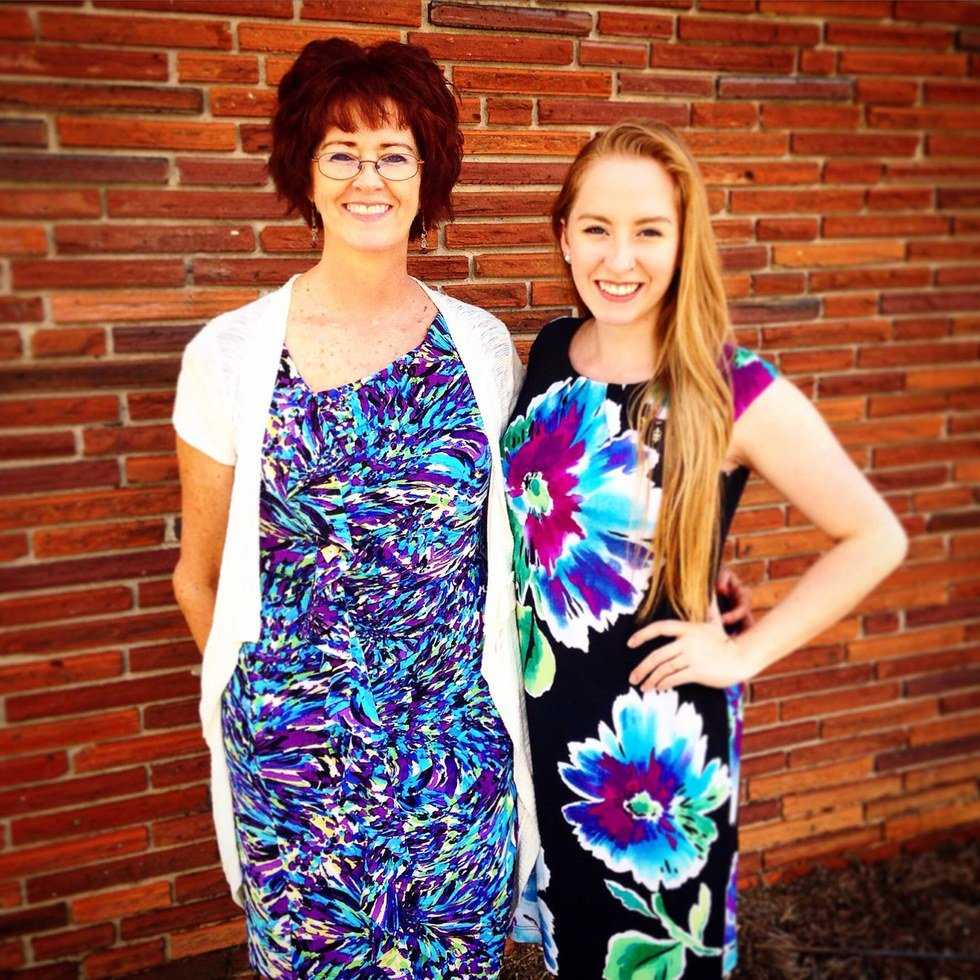
From a very young age, I have known what it means to be nervous about my health. While other kids only missed a few days of school each year, I was often missing classes due to my appointments. Much of my childhood was spent in doctor's offices being measured, examined and studied to see if I had inherited a disorder that had already seriously affected my experiences. I watched my mother fight to thrive in a body that sometimes failed her. I spent way too many hours in front of the mirror comparing my distinct features to those of my peers. I later had to make a decision at 16 about having spinal fusion surgery to correct scoliosis, a common symptom of Marfan Syndrome.
I remember as a young girl wondering why my mother had to undergo so many surgeries and why she had such a beautiful scar on her back. I wondered a few years later if she was OK and why I kept hearing the words "disorder" and "syndrome" but could not see anything wrong with myself or my mother. As a teenager, I began to wonder why I was being so closely watched if I had not been diagnosed. I wondered what I had done to deserve wearing a back brace to high school. When I learned about my aunt, whoI never had the privilege of meeting, who suddenly died at 22 years old because of the disorder. I wondered how such a subtle disorder could have such major effects on a family.
But as I got older, I realized that the real danger of Marfan Syndrome was the ignorance surrounding it and the lack of awareness. I realized that although a major surgery at 16 and countless hours of self doubt throughout puberty was rough, I would do it all again. Because even though it was annoying and embarrassing at some times of my life, my mother and I are alive and well. The fact that my mom and I are proactive about our appointments, exams and surgeries have kept us healthy and able to lead normal, fun lives. So as a young woman now, I feel that it is my responsibility to spread awareness and prevent further tragedy.
So what is Marfan Syndrome?
Marfan Syndrome is a connective tissue disorder which is often passed genetically, but can also occur spontaneously. It most commonly affects the function of the eyes, the heart, skin, or the structure of the spinal cord and limbs or other major bones. However, since it is a connective tissue disorder, Marfan Syndrome can truly affect any area of your body. For example, my mother has struggled with the elasticity of her colon simply because that tissue was affected. Thankfully, there is now testing available that is usually at least partially covered by insurance. My mother and I are actually currently in the process of being tested, so I will know about my personal diagnosis soon.
The good news is that this disorder is very treatable, and in most cases, patients live happy, healthy lives with the aide of medicine and regular checkups. Although this disease used to mean an instantly lower life expectancy, modern medicine and early awareness of having the disorder can now change that. I cannot encourage everyone enough to ask their physician not only about Marfan Syndrome, but other obscure genetic disorders. The annoyance of being tested is nothing in comparison with the satisfaction of knowing what your body needs or precautions you may need to take. If someone had told my family about Marfan Syndrome earlier, I would probably have an amazing relationship with a woman that I have been told I resemble in many ways. Please don't hesitate. Talk with your physician and let others know: If you stay on top of your health, you will avoid heartbreak and know more about your body in ways that could save your life. I know it may be an uncomfortable conversation, but if it were your life, wouldn't you want someone to speak up?
For more information, you can visit the Marfan Foundation Website or find the Marfan Foundation on Facebook.