I would rather throw my guts up and experience severe bowel trouble than visit a hospital. I am aware that hospitals aren’t most people’s favorite place in the world, but they are particularly terrifying for me because of their implications.
Crazy people, like my sister, see hospitals as spa-like sanctuaries where everything is taken care of. Half of this is true: you’re in an elevated bed with a nurse in a soothing monochromatic uniform who is there at your every beck and call. I mean, talk about being at the top of the pecking order. But the other half is the depressing nature of a hospital: the sick (potentially life-threatening so) people, the medical professionals who are trained to resuscitate you if you keel over, and most importantly: the heart monitor that makes sure you’re still alive and breathing.
I was six years old when hospitals became the one place for me to avoid in this world. My family and I were leisurely driving through Truckee, California on our way back from a thrilling vacation in Tahoe where sand castles were made and sunburns were prevalent. My twin sister, Nicki and I had just learned how to swim and decided to practice in the freezing cold Lake Tahoe. While we were reminiscing about the trip in the car, my mom became silent. She then suddenly gripped the chair told my dad that she was sweating profusely and that her chest was tightening and aching; she thought she was having a heart attack.
The EMTs wanted to take Mom away on a stretcher, but she refused and chose to walk in order to avoid scaring her already terrified children. As the flashing, red lights of the ambulance vanished into the distance, my sister, dad and I stood in the road in a state of incredulity. My dad, impressively so, maintained a curt smile on his face and kept assuring us that everything was ok when I knew it wasn’t. A crowd had gathered, and I remember this short, stout, curly-haired woman came barreling her way through to give Nicki and I free chocolate chip cookies from her bakery down the street. Even at age six, I looked at her dumbfounded. Did she really think I wanted a fucking cookie when my mom was being towed away on grounds of a possible heart attack? I took a bite of the cookie out of politeness, but chucked it to the flock of birds on the grass when the woman walked away. My dad told me that Mom decided to take a detour to the hospital on the way back to San Francisco. He thought I was that naïve but really, I knew what a heart attack was, and I knew that it often lead people to a hospital, and that it often meant death.
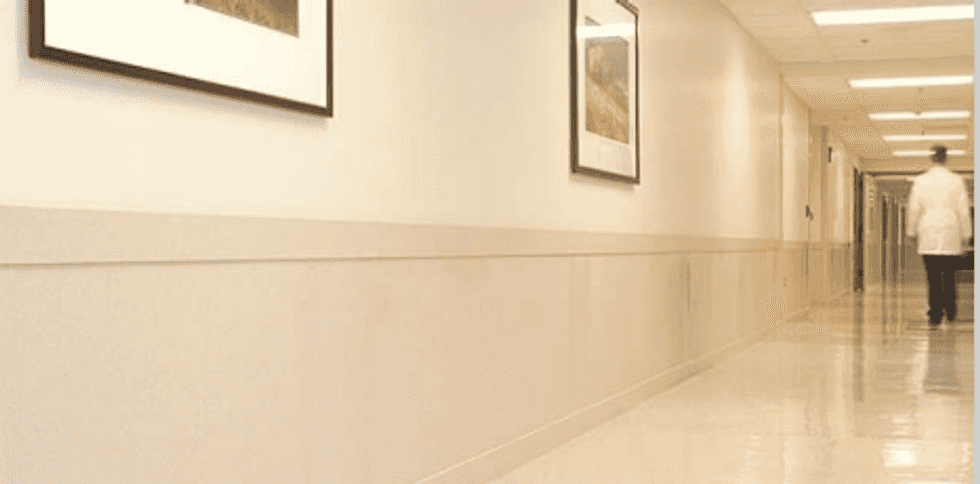
Death was just as elusive to me back then as it is know. It’s untouched territory that, because of its indefinability, allows me to conjure up a plethora of existential questions. Are you aware of death when it happens? Do you maintain the same mind that you had here on earth after you die? As we walked into the Truckee hospital, my sister and I holding tight onto my dad’s sweaty hands, I decided that since the people who worked in hospitals had the closest relationship to death as any one mortal can have, they frightened me. The stark white, sterilized walls only increased the fear in me, mimicking the white lights of heaven that I had read about in stories. I felt completely out of my element, and even more so when we finally reached my mom’s room. The woman that I had known all my life, the indestructible superwoman of a mom now laid powerless in her hospital bed. Although nothing was attached to her, she had an oxygen mask on and emoted a certain serenity that seemed inhuman. “Hi, mama,” I offered, in attempt to combat the extreme awkwardness of me seeing her in this weak position. “Hi, honey. I’m fine,” she said in a groggy voice. She then explained to me that she had not had a heart attack, which allowed me to breathe a little easier. She had been diagnosed with panic disorder which is essentially an over-active nervous system that can offset attacks that have similar symptoms to heart attacks, but aren’t. Even with this knowledge, I still wanted to get her the hell out of that hospital. I don’t know what it was, but for some reason, I felt like if she stayed in there any longer she would somehow get extremely ill and die. Perhaps it was because of what was happening around me that was making me feel this way.
The old man in the room next to her was coding, and I could hear the swift work of the paddles coming on and off his chest and the doctors yelling “CLEAR,” patiently waiting for his pulse to return. Or maybe it was the young thirty-something year old who was on her last leg of life, shallowly breathing as her family crowded around her to say their goodbyes. Goodbyes have never been easy for me, whether it was my mom going off to work in the morning or my nanny closing the door, assuring me that she’d see me the next day. Because I don’t do goodbyes, having death surround me like it did that day made the hospital my own personal hell.
The experience in Truckee had scarred me and made me weary of getting too close to people. What was the point of building a relationship with someone and loving him/her to no end when you knew that person was going to die? The torture of thinking that my mom could have died was unbearable, and made me question why human beings even go to the effort of loving at all.
The day my opinion of hospitals went from negative to extremely negative was when my twin sister was rushed to the ER back in 2010. Both of us had just come back from one of those germy high school outdoors trips and had contracted the flu as a lovely parting gift. We were severely dehydrated and Nicki even more so since she was carrying a 102° fever. On one of those sick-filled mornings, I was in the hall playing with my dog. It was about 2pm, and Nicki had still not woken up from the night before. With seventeen hours of sleep behind her, she finally emerged from her room and looked as though she had been through war. Her muscles were shaking and quivering, struggling to keep her standing, and her face was as pale as the white paint on the wall. It was as if she was drunk, mumbling unintelligible sentences and leisurely drooling. She began to move, and suddenly, as though she lost control of her limbs, she walked into a wall and collapsed into my mom’s arms. As my mom tried to urgently coax Nicki back to consciousness, she yelled at my dad to call 911. I ran into my parents’ bedroom, slammed the door and fell to the floor crying, pulling at the soft yarn of the rug and dreading having to live with the memory of my sister dying right before my eyes.
When I walked into Nicki’s hospital room, she was hooked up to all of the typical life-supporting machines, including that loud-ass heart monitor that I want to personally destroy. Turns out that the fainting was due to severe dehydration from the virus. Had the dehydration persisted for a couple of more hours, Nicki would have been on her way to the grave. When she reoriented herself to where she was, I asked her,” were you scared when you realized you were in the hospital?’ and she looked at me as a matter-of-factly and said, “ I love hospitals – they’re comforting.” I’m glad she thought so since she was the patient at the moment, but her answer made me even more uneasy.
As I watched pints of saline being pumped into my twin sister’s delicate green veins, I began to hypothetically ask myself what I would have done had she died, how I would have reacted. I believe that in that very moment, I had a mental breakdown that only I could see or hear. My heart began to quicken and I felt a shot of adrenaline run through me as though I were on a rollercoaster. As the doctor was explaining Nicki’s condition, I felt a wave of nausea hit me out of nowhere. I turned around and vomited quite loudly. The doctor stopped talking and my mom rushed over to hold my hair while my dad walked out of the room, repulsed by the smell of throw-up. Little black circles began to cloud my vision, creeping in slowly at first and then quickly. I could tell that I was about to faint so I told the hospital personnel and they had me lay down on a stretcher. As I laid down, the blood rushed back to my head and my vision was clear again. They soon after admitted me to the hospital and I asked to be pumped with the same fluids as my sister. After I was rehydrated, I realized what had just happened: I hated hospitals so much that I had made myself physically sick.
Luckily, since the incident with my sister, I hadn’t been to a hospital in a solid five years. That was until my uncle collapsed on the elevator up to his oncologist’s office in July of 2015.
My uncle had been battling stage four Non-Hodgkin’s lymphoma for seven years when he collapsed. My family and I were not aware of how sick he was, because he tended to hide lab and exam results from us in order to save us from the hurt. When I got the news that he had collapsed in the elevator and had then been resuscitated, I was at the hair salon. My mom and dad were already at the hospital in the critical care unit, and I knew that I had to join them since this could have been my uncle’s last day.
I ran out of the salon with dripping wet hair, which I got some evil glares for, and drove to the hospital. As I walked up the hill to the entrance, I knew that I would have to somehow sedate myself in order to get through being in a hospital, so I popped an Ativan and felt my nerves calm down immediately. My chest relaxed and unfurled the knots that had been accumulating there the whole car ride. I greeted my teary mother with a warm embrace, and tried to maintain a calm front for her even though all I could do was think about how badly I wanted to get out of the hospital.
This experience in the hospital was different because I knew my uncle Steve was dying. Although he was conscious, his organs were shutting down naturally from the cancer, and this made me even more depressed because I knew the last things he would see would be his daisy-clad palliative care nurse, the mesh curtains that failed to conceal his room and give him privacy, and of course, those sickening white walls that are so functional it hurts.
Don’t get me wrong, I admire the nurses and doctors that dedicate their lives to helping people. Those people are made of iron, and possess a strength that I can’t even fathom. They are face-to-face with death on a daily basis, so hell, they’re practically friends with it! It’s just a mindset I don’t possess.