The pursuit of American voting and political equality has been full of victories and defeats, with specific demographics gaining privileges and rights at different times in history. In this piece, I will be addressing the three main narratives that paved the way to the level of political equality we have today. This includes the transition of parties that happened after the New Deal was implemented, the path to Native American voting, and the path to African American voting rights.
One of the first historical events that profoundly effected today’s voting and political climate was the shift that occurred in America’s major parties after the New Deal was announced. This shift brought about much change, most prominently the Dixiecrat shift from the Southern Party of Democrats to the GOP. Jelani Cobb, a journalist for the New Yorker writes:
"The rise of the Dixiecrat Party, like that of the Tea Party sixty years later, was ostensibly the result of one faction within a political party coming to believe its policy interests had been neglected. But on a more fundamental level, it was the product of demographic changes in national politics. The rebel Democrats wrote a defiant advocacy of racial segregation into their platform precisely because the national Democratic Party understood that its future lay with Northern black voters. Southern whites had formed the party’s base since the Civil War, but by the middle of the twentieth century, the great migration of blacks to Northern cities had thrown that alignment into flux. Franklin Delano Roosevelt is remembered today for guiding the nation through the Great Depression and the Second World War, but his greatest political achievement may have been holding together the irreconcilable Northern and Southern elements of the Democratic Party for as long as he did."
This transition had a great effect on the populations of each party; creating a portion of each party’s present day constituencies. Thomas Sugrue, published in The Journal of American History on this shift, depicting it as a great opposition of the New Deal, a move that was almost entirely populated by southern whites—disaffected Dixiecrats, and die-hard traditional southern Democrats. These groups “constrained liberalism from [the New Deal’s] inception…Yet beneath the seeming progress of the New Deal order were unresolved questions of racial identity and racial politics. Eating away at the ‘liberal consensus,’ just as it reached its postwar apotheosis, was a newly assertive working-class whiteness.”
This largely influenced the effect of the New Deal, impacting party standards toward minorities. Franklin Delano Roosevelt’s New Deal was undermined by this shift. As Sugrue puts it, “The local politics of race and housing in the aftermath of World War II fostered a grass-roots rebellion against liberalism and seriously limited the social democratic and egalitarian possibilities of the New Deal order.”
The second key transition was the path of attaining rights for the Native American populations of America who had been oppressed since the landing of colonizers back in the 15th century. Besides being forced to walk the infamous Trail of Tears, this population was further oppressed, being further pushed out of their land by the US government and even citizens. In 1836, Chief John Ross wrote letters to Congress pleading for their rights to be upheld, saying, “We are overwhelmed! Our hearts are sickened, our utterance is paralyzed, when we reflect on the condition in which we are placed, by the audacious practices of unprincipled men, who have managed their stratagems with so much dexterity as to impose on the Government of the United States, in the face of our earnest, solemn, and reiterated protestations.”
This was to no avail, other than for the purpose of leaving a documented trail of eloquently written unheard supplications. Finally, in 1924, an act titled the Indian Citizenship Act, which was proposed to be an all-inclusive act, was officially passed. This act was to give all rights of citizenship to the Native American populations of this country, including voting.
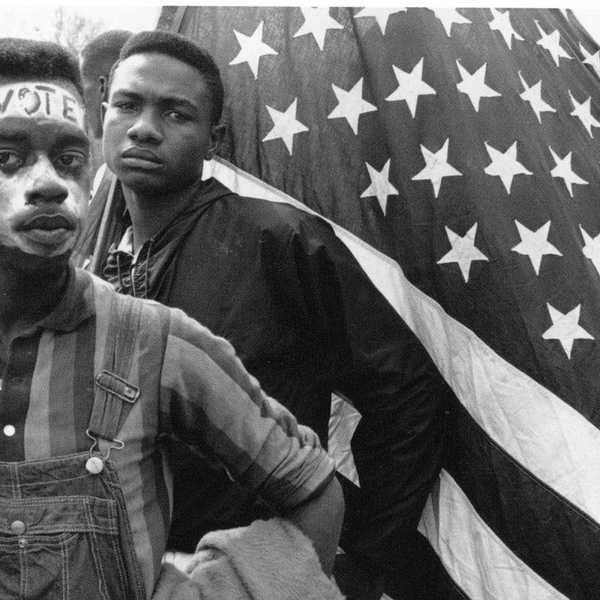
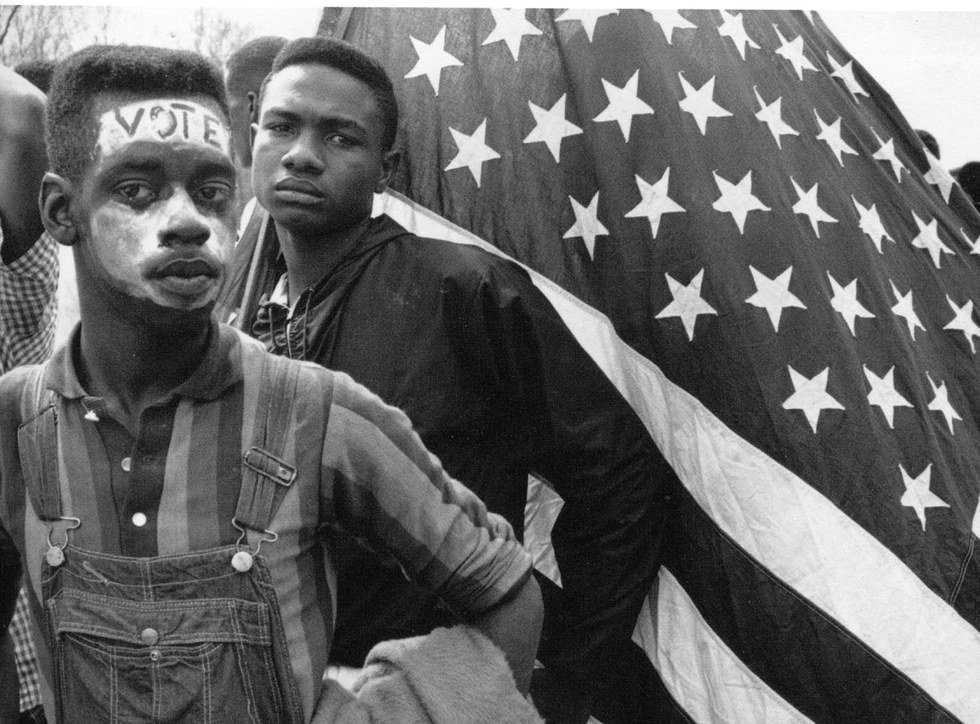
The final and most recent narrative of rights attainment which was withheld from black Americans for centuries was changed by the Voting Rights Act of 1965. This took effect only after centuries of activism and appeals had been made. Long before Dr. Martin Luther King, Jr., there lived a woman named Mary Church Terrell, who was named, “the greatest woman that we have” by Lewis Douglass, the oldest son of Frederick Douglass. She had “committed to civil rights and feminism." As an undergraduate, she had written that white bias against blacks had inspired their “struggles to resist the oppressor.” Similarly, she wrote, men who did not value women for their intellects had inspired women “to improve their minds.” In a way, she paved the way for Dr. King’s main decade of hard earned success, and yet her name is largely unknown to Americans.
Dr. King was able to powerfully step into continuing the Civil Rights Movement, inspiring individuals, and eventually pushing the Voting Rights Act to be passed. Dr. King gave his famous “I Have a Dream” speech, to two hundred and fifty thousand people of differing skin colors and demographics. In this speech he said:
"I have a dream that one day every valley shall be exalted, every hill and mountain shall be made low, the rough places will be made plain, and the crooked places will be made straight, and the glory of the Lord shall be revealed, and all flesh shall see it together. This is our hope. This is the faith that I will go back to the South with. With this faith we will be able to hew out of the mountain of despair a stone of hope. With this faith we will be able to transform the jangling discords of our nation into a beautiful symphony of brotherhood."
His speech inspired multitudes, and eventually the passing of the Voting Rights Act, after years of negligence in doing so by former President Lyndon B. Johnson. This act says, “No voting qualification or prerequisite to voting, or standard, practice, or procedure shall be imposed or applied by any State or political subdivision to deny or abridge the right of any citizen of the United States to vote on account of race or color.” Finally, after much hardship and appeals, African Americans had attained the right to vote.
All in all, these three historical narratives impact today immensely. There are both implications and ramifications of these events on the current political climate, both good and bad, that perpetuate the historical contexts and ideologies of their day and circumstances. Today, the pursuit of equality in the political and voting sector continues, but with new frontiers to be overcome.