Sometime last year it was brought to my attention I was in the middle of a war. In September 2015 "The Atlantic" released The Coddling of the American Mind, a call on an impending threat (somewhere in the same vein as their 1860 publication of “Paul Revere’s Ride”) that I, concerned at the time with syllabuses and Fall Opening, did not hear coming until two months later, when Princeton’s Black Justice League brought to light the racist legacy of Woodrow Wilson (namesake of Princeton’s school of public policy). So short is the distance from Rider to Princeton—at its shortest five blocks, from our smaller Princeton, New Jersey campus—that following the developments with the Wilson School was intertwined with my twice-a-week drive to Westminster. I was unaware, however, that I was following something much more than a discussion of racism. I also did not realize that by being a millennial in college I was the medium through which America vented its paramount national debate: the right to be outraged. It was a delayed revelation considering Rider, my own battleground, one of thousands, has been left untouched.
Lukianoff and Haidt’s article warned of a movement among American college students towards “oversensitivity.” The gravity of this tag ties the progressive college student to the image of the upper-middle-class, indoctrinated-by-radical-professor social justice warrior: that the only people who talk about “privilege” have been brainwashed by an intellectualized elite. These students are offended by this depiction—they call out their accusers as being the actual enablers of “privilege constructs,” the actual impediments to America’s progress—and their accusers are armed with even more ammunition, because the concept of privilege is not made real, only constantly imposed and now seemingly forced. A cycle develops. The left pushes itself towards the left, and the right pushes itself towards the right. The semantics form “political correctness,” the exact weapon that has given way to Donald Trump’s rise: that somehow being intentionally offensive, aggressive and loud will be the force that can unite a now-divided country.
The debate of higher education faces extends beyond conversations on race: rather it questions whether these conversations have any merit at all. Should Woodrow Wilson’s place in Princeton’s self-image be contested, or is the very contest a narrow-minded twist on history? Should universities begin to embrace trigger warnings, or are they only enabling college students to hide from what they don’t want to hear (further reinforcing their “oversensitivity”)? Are gender-neutral bathrooms necessary, or is the prospect itself catering to a fantasized problem? Polarization breeds miscommunication and causes people to get offended. People being offended reverts us to arguing about constitutional law and what freedom of speech means. Scattered dialogue now complicates what exactly is being fantasized, and what exactly is the problem.
This jump from addressing issues to why we address issues comes at a time when the value of higher education itself is being called into question. As the percentage of Americans who enroll in college has increased, so have tuition rates, room and board fees and institutional expenditures that are forcing universities to compete both as places of higher learning and luxury resorts. The American family expects a return on investment for sending their student to college, and colleges have to match these demands either by increasing spending across the board, or cutting funding to areas deemed superfluous to the university’s mission.
And at a time where the United States is embittered over police brutality, transgender rights, feminism and xenophobia, it makes an interesting coincidence that whenever universities are forced to cut programs, liberal arts majors—which typically deal with these perspectives first-hand—are the first to go. This is not to say that university administrations eliminate these programs maliciously. Universities often select to cut programs based on low enrollment numbers compared to high costs, and oftentimes it's programs like cultural or gender studies that hold disproportionately low percentages.
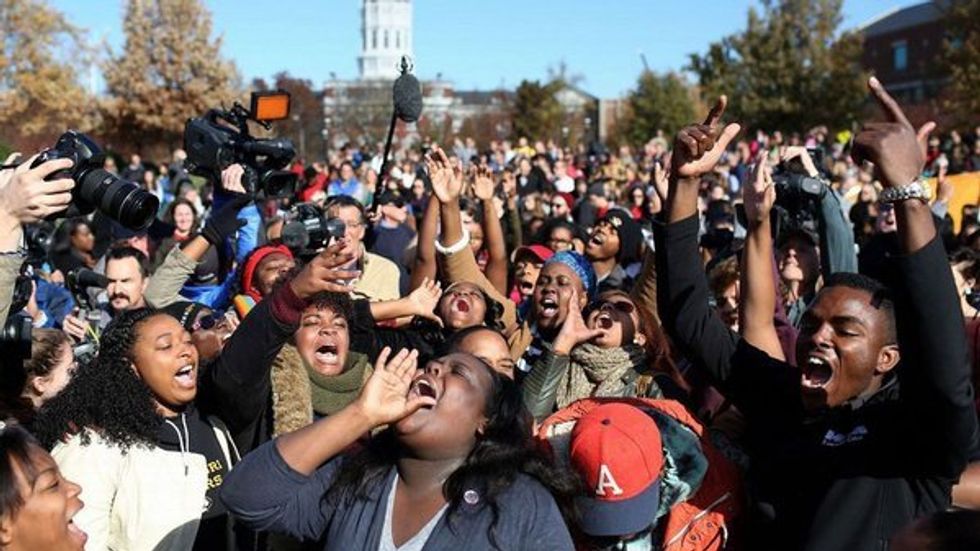
But not all schools face these circumstances. Other universities across the nation continue to have rapidly growing departments in the liberal arts; and more specifically, departments that are at the center of the social issues sweeping America and it’s college campuses. The University of Missouri, where the Concerned Student 1950 protests took place, has major offerings in Watchdog Journalism and Peace Studies. The University of Miami recently opened a department dedicated to studying atheism. Princeton University offers certificate programs in African American, Ethnographic, Gender and Sexuality, Latino, Near Eastern and Urban Studies, alongside Translation and Intercultural Communication (to name a few).
Academic programming composes the greater vision of a university’s social conscience. If a student body isn’t “oversensitive,” by Lukianoff and Haidt’s definition, then it must be passive. I’ll consider my own experience with Rider University. The university has never faced institution-wide outrage (if on any level) with students being “triggered.” Never has there been an organized protest calling for a transgender inclusive housing system, or the use of preferred names on official university records, or preferred pronoun usage in the classroom. When protests erupted in Ferguson, and then on campuses across the country, the only type of spontaneous demonstration Rider saw was a single student who held a #BlackLivesMatter sign out of her car, and the closest we’ve gotten to a #BlackLivesMatter movement beyond that was a calmly orchestrated rally that prompted little-to-no-response and a handful of casually racist remarks on Yik-Yak.
So if the American mind really has been coddled to the point of oversensitivity, why, then, has this not engulfed every college campus across the nation? Where is the uprising? The Million Man Marches? When I look at Princeton, and then at Rider, why are two private universities, separated by only five blocks, not both experiencing the revolution? Comparing Rider’s case to the schools where these debates are occurring, I attribute this to two causes: because there is an underwhelming lack of resources helping students conceptualize these issues, namely resource centers for historically underrepresented students, a presence of minority faculty (there are only five black faculty members throughout all of Rider University), and classes across all academic disciplines which directly address issues like racism, and because of this lack of resource, the reactions of students at Princeton and Mizzou seem extremist, and actually cause an avoidance to talking about racism because the average student feels either uninformed by comparison or totally repelled.
Thus breeds the stigma surrounding socially progressive movements, especially on American college campuses: that solely intellectuals initiate them. When knowledge is reserved only to a handful of students whose schools provide them with empowering resources, the problems they talk about seem far-removed, and social “progress” is associated with being thin-skinned. Colleges themselves have the power to close this gap, and help shift the national conversation not only on the relevancy of higher education and the liberal arts, but also on hate, and what it means to be hateful.
The solution is simple, cost-effective, and a counterpoint to the progressive mission: rather than eliminating it across campuses, we must expose every single college student to hate.
Journalist and gay pariah Milo Yiannopoulos, famous for his unrelenting mock commentaries on feminism and sexuality, was scheduled to present a talk at DePaul University when the students started a petition against his appearance. The students justified their reasoning by saying Yiannopoulos’ statements would “bring harm to the students on our campus” (even citing the name of his tour—the Dangerous Faggot Tour, no less aptly named—as belligerence).
The immediate rejection of Milo’s talk is only one example of students responding harshly to exposure of harmful ideas. Tara Shultz at Crafton Hills College called for one English professor to remove a set of graphic novels for their depictions of sex and violence. Comedians ranging from Chris Rock to Jerry Seinfeld have removed themselves from performing at colleges because of harsh responses from students to “off-color” jokes. This article by the Foundation for Individual Rights in Education goes through a laundry list of events where students not only found offense to things that were not even grounded in hateful intent, but were backed up by administrative action (like the professor who was fired for having an in-class discussion about the origin of the word “wetback”). The trend of these examples receiving media attention is what has bred the image that Lukianoff and Haidt wrote about back in September. When socially progressive intentions have gone too far, the image of those students now encompasses every attempt at students trying to advocate for a more inclusive campus.
Well-intended as these students are in trying to wash out sexist or racist voices, colleges are not the place where viewpoints of any kind are to be eliminated. They are special in that they are “protective” spaces, but this protection is not from differing perspectives. In fact, universities, if anywhere in our nation, should be the place where freedom of speech should be upheld the strongest. If a type of communication exists somewhere in this world, a university would benefit from having that perspective represented.
The world of higher education already has this embedded: the culture of the “safe space.” Classroom doors and administrative offices each show off little signs claiming that all students, regardless of any defining characteristics, are welcome to express themselves as they are within that space. It’s a reaffirming gesture of community that many campuses have, but fail to fully realize.
A story surfaced out of Brown University last year about students creating a safe space in response to a debate on feminism and rape culture that included “cookies, coloring books, Play-Doh, calming music, pillows, blankets and a video of frolicking puppies.” The response made the college “safe space” the butt of jokes across the nation, not because the idea of therapy for traumatized students was laughable, but because it became emblematic of students trying to soften the intellectual space of a college campus.
We must, however, disassociate the idea of a safe space from being just a padded room that college students retreat to when they feel “triggered.” Safe spaces are not only integral to making students feel welcome on their own campus, but also lay the foundation for having the mature, in-depth conversations that every college student needs to experience.
Foremost, students of historically underrepresented groups—blacks, Latinos, Asians, Muslims, queers—must be afforded spaces on campus dedicated solely to their empowerment in the form of multicultural resource centers. Princeton’s Lesbian, Gay, Bisexual, Transgender Center is a prime example. Physical spaces in the form of offices and community events are provided as a way to give students a sense of belonging and purpose in their identity as queer individuals; resources are provided both in person and online on the university’s non-discrimination and inclusion policies, hotlines and other tip centers for students struggling with coming out and homophobia, and even educational materials for students on the outside who want to learn more about queer identities. This solidifies a queer presence on campus, reaffirms the queerness of the students present, and provides support for queerness to be addressed outwardly and confidently.
Obviously there are colleges and universities who lack the resources like Princeton to make these centers possible in a grand physical sense, but even replicating online centers like Princeton’s provide some sort of representation of the university’s support. By this simple gesture, the university culture and its demographic awareness will begin to shift; but it does not come without reinforcing the second half of making a university a “safe space.”
Students of all perspectives must be encouraged to speak freely, regardless of the position they speak from. Just as making historically underrepresented students uncomfortable suppresses their voice, impressing ignorance on students who have never directly addressed social justice issues is just as suppressive. Safe spaces assume the equality of its participants, and professors must encourage students to say exactly what is on their mind in a way that is both vulnerable and articulate. It would be easy for us to judge the response of an upper class white male entirely unaware of his privilege as ignorant, but an intellectual space must foster his growth just as much as anyone else’s. This is a concept that many progressives seem to abandon: universities are safe spaces for anyone to say anything, so long as they adopt an open mind to learn and grow through honesty.
Providing disadvantaged students equity through resource centers, and then all students room to speak through safe space initiatives, opens the door to our final question: how can we rebuild the dignity of the American college? We must become the antithesis of the "over-sensitivity" argument. We must engage students in conversations that people on the outside are too afraid to face.
The movement towards a core that reinforces this for students of all disciplines is an uphill battle of its own. But administrators and faculty can start taking the steps now by drawing on the identities of their own institutions, and seeing that their student bodies need to be active critics of the world (just as the world is an active critics of us).
I would find interest in a seminar, like Princeton’s, on the legacy of racism in Lawrenceville, New Jersey. Is the rumor that Andrew J. Rider owned slaves true? How would knowledge like that transform the way a school like Rider understands itself? And would a time come where students demand the university change its name—or is the issue not that sensitive?