

It's been 82 years since a rugby pitch has been displayed in the Olympics. In 1924 the United States took gold, beating out France in the final 11 to 3. While it's been a minute since that result, and things have changed a bit in the International Rugby scene, The USA is still looking to make a strong showing. Video of the 1924 final can be seen here:
While it is entertaining to watch old footage of Sevens, things have sped up. Plays have become crisper, players are faster, teams hit harder. If you are going to stay up with the action, here are some points you'll want to know:
A game is started with kickoff. The kicking team has to get the ball 10 yards on a dropkick (the nose of the ball is bounced off the ground and then kicked), and then can compete for possession in the air.
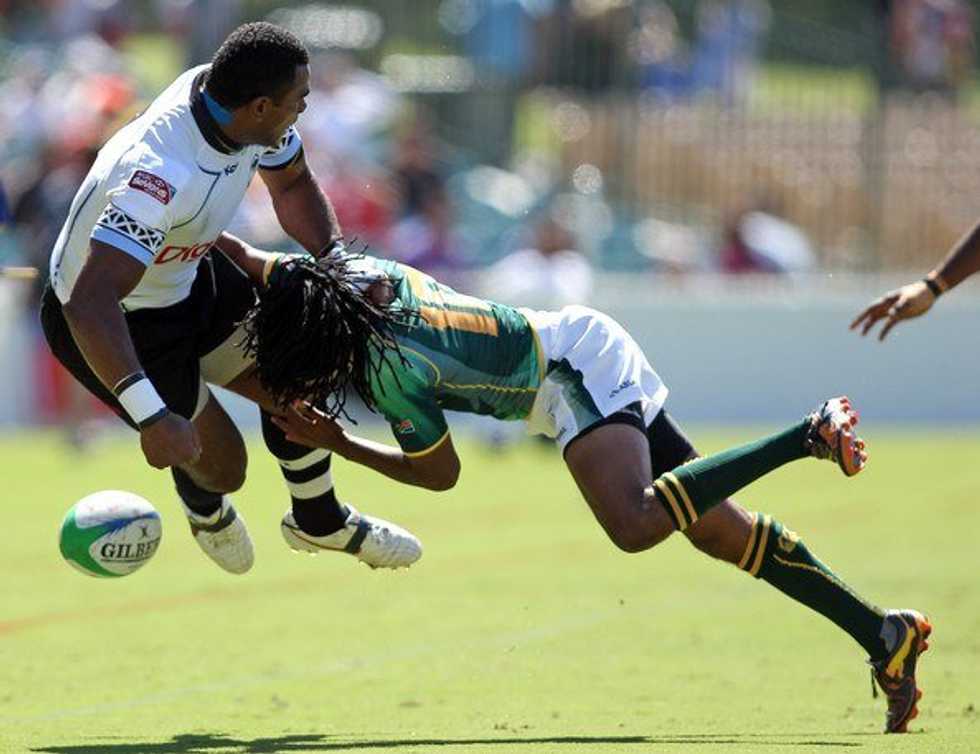
When a ball carrier is tackled, a ruck forms over top of them. The ruck is a way for the offensive team to maintain possession and set up the next play. Like soccer, the game is live after a tackle, so if no players from the offensive team get there in time, a defensive player is free to grab the ball and become the offensive side. The ball cannot be grabbed by the tackled player or the tackler until they are standing, and once a ruck is formed the players in the ruck are not allowed to manipulate the ball with their hands.
A score in rugby is called a try. Just like football, you have to get to the opposing team's endzone. Unlike football, you have to touch a part of the ball down. If a player can wrap you up and prevent the ball from touching the ground, it comes out for a 5-meter scrum (we'll get to that in a moment). A try is worth five points, and again just like football you get a chance for extra points from a kick. This subsequent kick is worth two points. You have to kick in line with the spot you where scored, so if the try comes in the corner the two points is harder to score, but if the try comes in the middle it is a straightforward kick. A dropkick or field goal from a penalty is worth three points.
If the ball goes out of bounds it is similar to a soccer throw-in, but is called a line-out. A player throws it in overhead down a middle lane between two teams. A jumper is lifted by two players on both sides, and the team coordinates a play to know where the ball is going.
If a penalty happens, the team awarded the ball get to choose two options: kick or scrum. If a kick is awarded several things can happen:
1. The team with the ball can kick deep and out of bounds, and the following line-out is awarded to them at the spot where the ball went out, as long as it does not touch the ground. This is a convenient way to eat up field position. The captain can choose to kick to goal.
2. The ball is placed where the penalty was awarded, and the kicker tries to put the ball through the uprights, like a field goal in football. You get 3 points for a successful conversion, but if you miss the ball is live.
3. The captain can tap the ball and run. Anyone on the opposing team that didn't retreat 10 meters is considered off-sides until passed by the ball carrier. If they tackle the ball carrier while offsides, another penalty is awarded at the spot of the tackle.
If a scrum is called for in Sevens, three players on each team bind together and push against the other team to try and gain possession of the ball. A player on the team awarded with the scrum feeds the ball in and has to grab it at the back end. There are tricks that can be used to gain possession, like falling back so the ball squirts out or having a player dig in while the other side wheels the scrum.
The games can vary from smash mouth defensive games to high scoring, high octane games filled with brilliant passing and beautiful plays. If you've never watched rugby before, then get ready for high intensity collisions and the most aggressive sport in the Olympics. If you are a player or fan, well, after 82 years it's finally back. Get hyped.