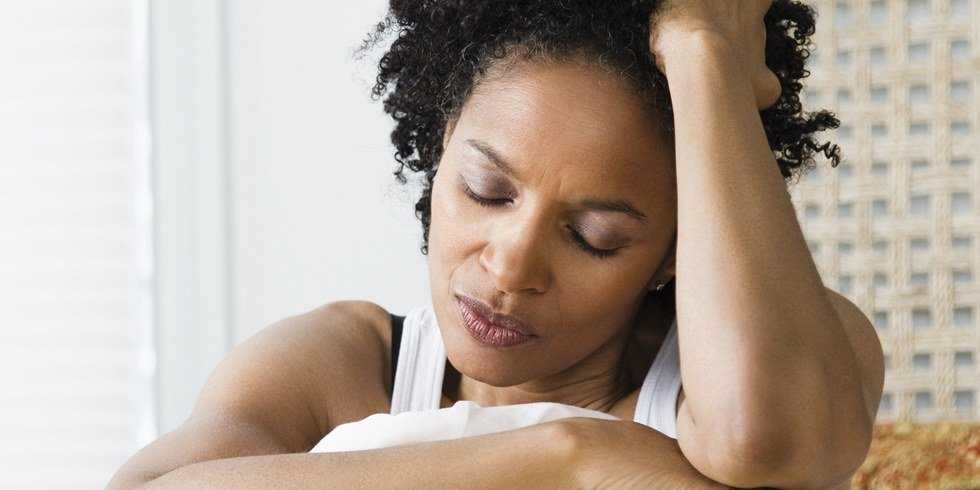
May is Mental Health Awareness Month. During this month, you will see green ribbons, hashtags such as #mentalillnessfeelslike, and a number of other tools designed to raise awareness of mental illness. About one in four adults 18 and over suffer from a diagnosable mental illness. About one in 17 people suffer from a debilitating mental illness that stops them from performing their everyday tasks. Nearly half of those with mental illness suffer from more than one disorder. Black folks are 20 percent more likely to report having psychological stress and be diagnosed with mental illness than white folks, yet they are the least likely to seek therapy or antidepressants for treatment. Not receiving proper treatment for mental illness does have adverse effects, because young black mentally ill people are more likely to attempt suicide than their white counterparts.
I was diagnosed with generalized anxiety disorder at 19. After months of panic attacks causing sleepless nights, I decided to go to the doctor. Although I mistook the tightness in my chest, heart palpitations and shortness of breath as asthma or heart disease, the doctor told me that I had anxiety. When I heard my diagnosis, I felt like it was a death sentence. Even though he assured me that many people with anxiety can carry on their daily routine just fine, I didn't believe him. I felt alone, and the more I tried to tell people what was going on or what I was feeling, I felt misunderstood. When I told my family, they were far from supportive. They told me that prayer and alcohol would be better than counseling and medication and that I somehow "caught anxiety" from being around white people all the time. At least part of it had some truth.
Historically in the United States, those who had been diagnosed with mental illness were rich white people. For black people, economic adversity, such as slavery, segregation and sharecropping, excluded them from attaining access to proper healthcare nevertheless proper mental health care. So while rich white people had the resources for a proper diagnosis, black people did not. This is why in minority communities, mental illness is often thought of as only something white people have, because white people were the only ones who could be diagnosed. Even today, mental illness is stigmatized because many people do not believe that minorities can have mental illness because they lack a family history. Oftentimes those family members were not properly diagnosed and instead struggled with mental illness resorting to drugs and alcohol to cope.
When I was 7, I was placed in the gifted and talented program at my school. We called it Bypass. The name was later changed to Quest because some people felt that Bypass meant we got to Bypass our regular work. We didn't; we just had extra work. Although we were made to feel that being in Bypass made us feel special, I was terrified. It was the first time that I was placed out of my comfort zone of fellow black girls and into a class full of white people and just one other black person. I clung to this black person, looking to her as an example of how to navigate in this white classroom. She seemed to be fine, not as shell-shocked as I was. It didn't help that every two seconds my white classmates would ask me a number of questions about my skin or my hair, constantly pointing out that it was different than theirs. That I was different from them. This went on for years although the number of black people in advanced classes slowly dwindled down to just me sitting alone clinging to the only black person there: myself. This feeling of isolation still occurs at the predominantly white institution (PWI) that I attend.
I thought that after 11 years of being one of two or the only black faces in a white place, I could endure four more. I was wrong. After a semester of attending Millsaps and constantly witnessing the invalidation of my thoughts and opinions by my white peers, I felt insignificant. I felt as if nothing I said or did would ever be good enough. I felt hopeless — like it was a worthless effort to make people value me. Around January of my freshman year was the first time that I started to experience anxiety symptoms.
A few months ago, I found out that a lot of other black female students were experiencing the same thing. Some of them had no history of mental illness before being diagnosed. Some of them live in fear of their white peers' microaggressions and racism. Some have been called the N-word during their first weeks of school. Others have heard their white friends using the N-word around them and have felt powerless to stop them knowing that when they leave, their white friends will continue to use the word that hurts us. All have felt that this PWI have made us feel as if it doesn't want us, as if none of us really belong here. Racism, I later found out, is one of the main contributors to mental illness in black people.
So I write this for the mentally ill black girls. This month is dedicated to you: the often diagnosed, rarely treated black girl. Oftentimes the media neglects to portray us as complex human beings. We are sentenced to be stock characters: the sassy black woman that always has a comeback or the strong independent black woman that doesn't need a man. We are always angry, sassy and assertive, never sad, quiet or passive, but we do exist. I want every mentally ill girl to know that there is more to black women than these caricatures. That although the media often makes us invisible, we do exist. Our stories, our lives, our struggle, it all matters. I think the important thing to remember is that you are not alone. You are not the only one hurting. I'm here and I'm hurting. There's a whole bunch of us who are hurting, but we deserve more. We deserve to get better. We deserve treatment. I know that our community and sometimes our family won't accept us or our mental illness, but that doesn't mean that it or our struggle goes away. It just means that we have to suffer in silence, but those day need to be over.
To my mentally ill black girls, I see you. We can get through this. I promise.