


I am a feminist. And I am a sorority woman. And no, the two are not mutually exclusive.
After reading this article by the New York Times about sororities, feminism and the Ivy Leagues, it made me think about feminism and Greek organizations. I liked that the article highlighted the work that young collegians are doing to promote gender equality inside and outside of their chapters. But I also felt that the article left the impression that sororities can only become feminist organizations when they stop only letting in tall blondes and start letting in ambitious feminist women.

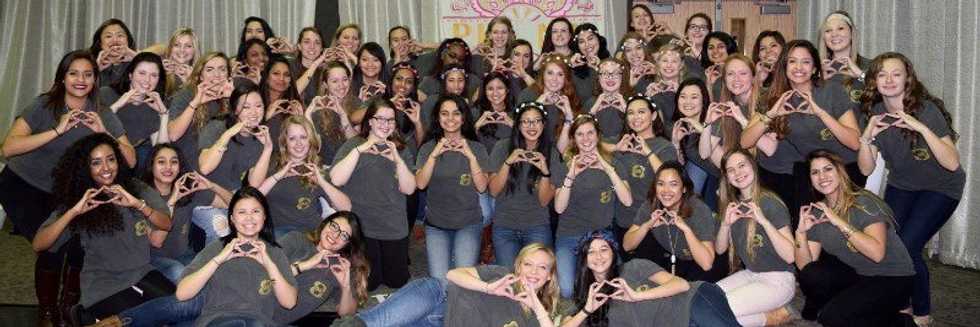
(pictured are the "non-traditional" sorority women featured in the NYT article)
While I agree that many organizations can and should do much much more for the inclusion of the underrepresented women in their ranks (including minorities and the LGBTQ+ community), saying that the feminist saviors of Greek organizations are going to be a certain type of woman is not a feminist statement. I don't think it is a good application of feminism to portray that the feminist salvation of sororities will only come at the hands of non-traditional sorority women.
What does this article say about the traditional image of a sorority woman? Can a woman not wear letters and also be passionate about her gender studies class? Can she not go to a frat party and then to a feminist leadership conference? Everyone knows the image and stereotype of a Greek woman. Blonde, tall, beautiful, rich, just there to get an MRS degree. But implying that a woman who is all of those things is not a feminist is as bad as saying that a person who is not those things can't join a sorority.
It is just as damaging to assume that traditional "sorority types" cannot be feminists as it is that a feminist cannot also be a sorority woman. Being a sorority woman means much more than just blowing glitter for a recruitment video, drinking with fraternities or dressing in matching outfits. In defense of the traditional sorority type of woman, sororities have always held feminist ideals.
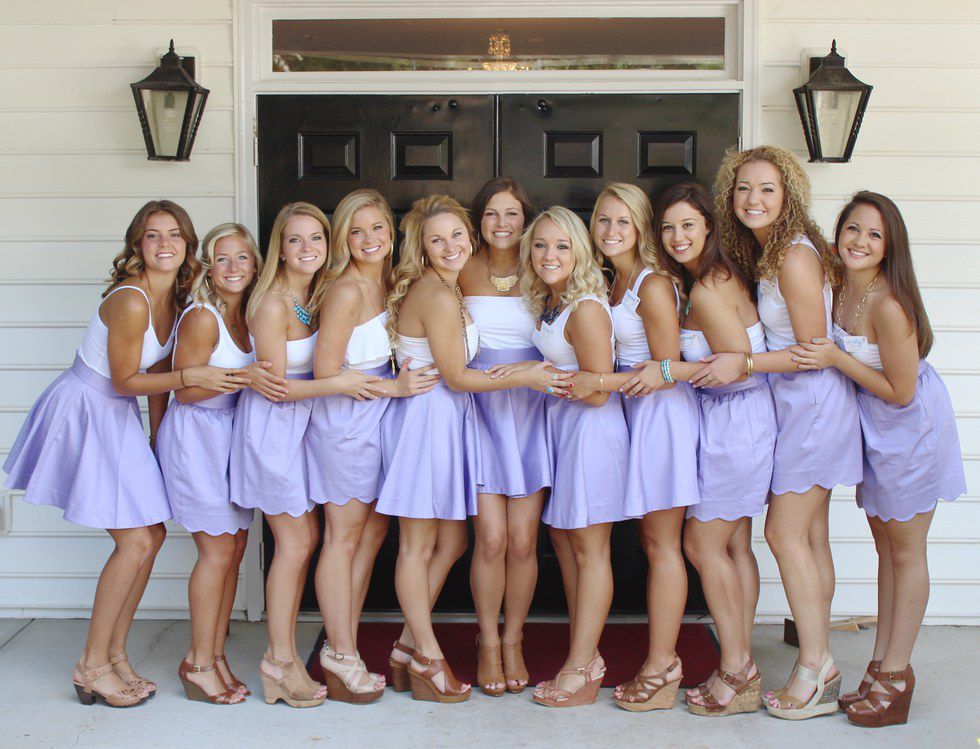
Sororities promote education for women. My chapter began as a literary society for women, and was one of the two first "fraternities" for women, formed in 1851 and 1852 at Wesleyan College, the first school in the country to award bachelor's degrees to women. More Greek organizations were formed at institutes for higher learning where female students were few and far between. In the mid-to-late 1800s, women were often asked to sit in the back of lectures, addressed as "Mr." by their male professors or ignored completely. These secret societies were created in response to the overwhelming odds stacked against women as they tried to navigate through the male-dominated world of higher education. Sororities were created by women to support other women. They created support networks between driven women who were passionate about their studies. In the group they found strength in the face of overt sexism and they found power in their femininity.
Feminism and sororities go hand in hand. Many Greek women participated heavily in the suffrage movement and women's liberation movements and many of today's sorority women are self-identifying feminists.
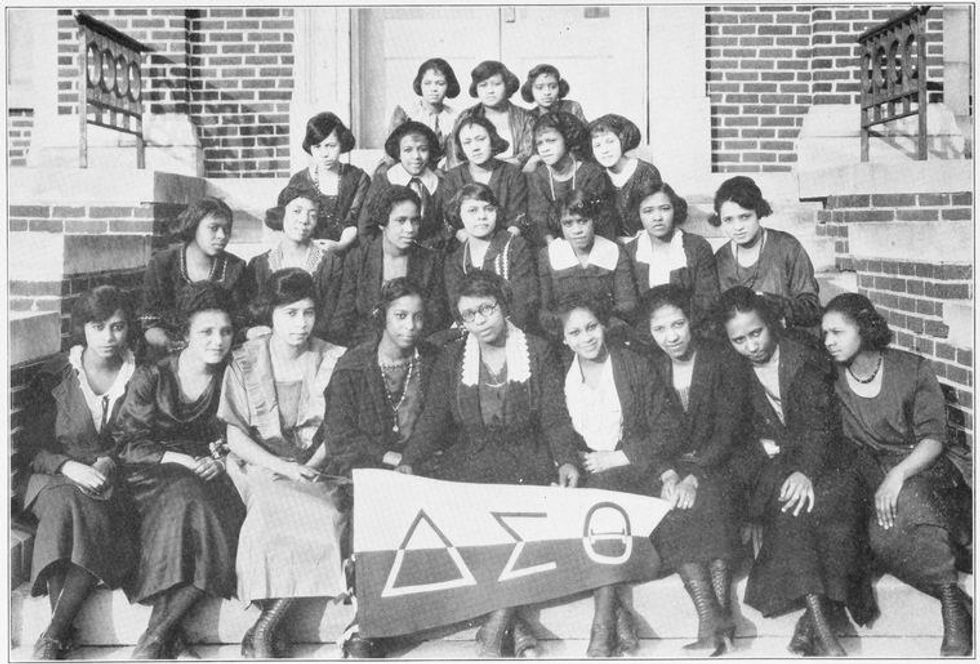
(Pictured are members of Delta Sigma Theta in 1922. In 1913, just two months after their formation they marched with their banner at the historic 1913 Women Suffrage March in Washington, D.C.; their first political activist event.)
Greek organizations bring women together and provide them with an automatic support system. Young women enter these organizations as freshman and then the sisterhood and the organizations are with them every step of the way in their college years and for the rest of their life. Listening to my sisters reflect on their time in my chapter, the common theme was that the organization and their sisters were always there for them, whether it be the motivation to take on a leadership role in the chapter, to crush an interview, to take the MCATs, to get into med, law or grad school, to study abroad or just to get up on time for class.
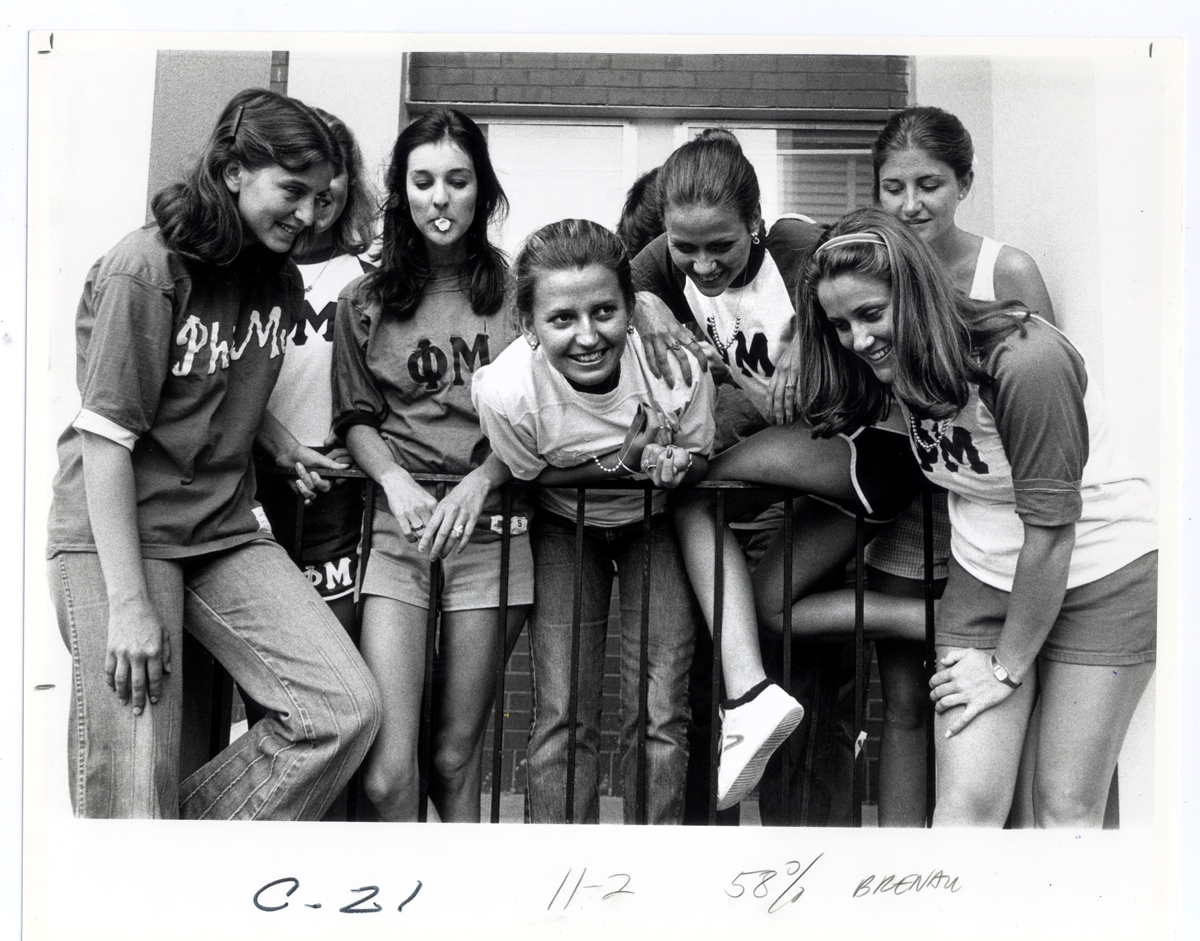
Sororities have always been, at their core, feminist organizations. If feminism wants to treat women equally, this expectation should apply even to women who take pride in a traditional role, whether it be a career as a nurse, being a stay-at-home mom, wearing traditional religious clothing, not having sex, shaving, wearing makeup or being in a sorority. It is damaging for women to constantly be compared. The "in a world of Kardashians, be a Marilyn" mindset is not fair to women. The competition and constant comparisons between Greek and non-Greek woman is girl-on-girl crime and is not something that I want to be a part of.
Just because you do some stereotypical sorority girl things doesn't mean you can't support gender equality and on the flip side, just because you are a feminist and not the "sorority type" doesn't mean you can't rush.
















