
Feminism. One word, eight letters, and a million different ways to (mis)interpret and (mis)understand it. Lately, it has come to be referred to as “the new f-word”. But why, exactly? Why should we equate a movement for gender equality and female empowerment with curse words that intend to offend?
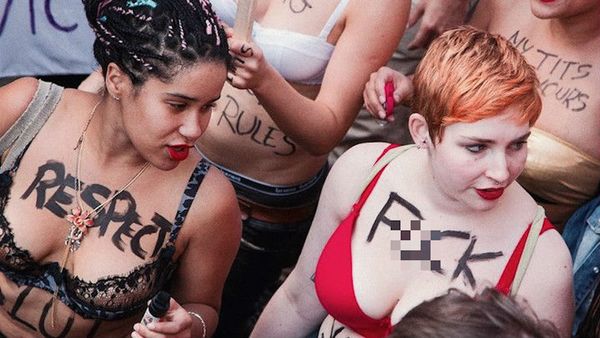
The reason is, in recent years, feminism has developed into something that has strayed far from the definition of true feminism. It has become demonized, a flawed theory whose followers and supporters are “Feminazis”. It has become a perpetrator of man-bashing that has manifested in overcompensation. It has become a movement that is worthy of being mocked (check out this satirical countermovement, “meninism”, here). Above all, it has become an idea that no longer achieves the original goal that it has set out to achieve: to champion equality, and empowerment, for women.
I hesitate to even call myself a feminist because of the recent negative connotations associated with the term. I make sure to emphasize that I am for gender equality instead, because when people hear feminism, they think of women burning bras and not shaving their armpits. They think of women insulting men and their innate misogyny. They think of women as being even less equal as a result of the movement. So I would like to shed some light on what I believe true feminism to be – and how, somewhere along the way and throughout all the progress we’ve made, we seem to have lost this sentiment.
One of the main issues I see with this movement is that it has created overcompensation. Many supposed “feminists” seek to tear men down in order to lift women up, and insist that women are better than men. This is not how we are going to achieve equality; just as we cannot point out others’ insecurities to hide our own, we cannot discredit another gender to make ours superior. And maybe this isn’t entirely our fault. The 19th Amendment, which gave women the right to vote, wasn’t ratified and implemented until 1920. We have been voting for less than a century. So perhaps this is our way of playing catch-up; and while portraying females as superior certainly isn’t the solution, it is undeniable that men have had a head start.
This headstart manifests itself in the gender wage gap. One of the most often used statistics that proponents of feminism cite is that women make, on average, 78 cents to the dollar that men make. On the surface level, this is a clear indicator that misogyny and discrimination are still alive and well. While women and men often work in very different professions, which can add to wage disparity (women are more likely to be schoolteachers, or nurses, for example, while men tend to work more in business and finance), the reality of the wage gap is that is exists across career fields. And in fact the higher the pay, the wider the gap. Meaning: female surgeons make less than male surgeons. Why are men more likely to gravitate towards these fields? According to Fortune, as of June 2015, 23 of the top 500 CEOs in the country are women (or 4.6 percent). But this large discrepancy is not due to neither a lack of qualified females nor, conversely, too many misogynistic males.
Women may have gained the right to vote in 1920, but they didn’t enter the workforce in large numbers until about 1940, at the start of World War II. While their husbands were fighting overseas, women had to fill their spots in the industrial workforce and aircraft industries. This led to an increase in female employment from 27 percent to 37 percent in a short five-year span. But by 1950, the men had all returned to work, and the most common job for a woman to hold was as a secretary or typist. This still remains true today, in 2015. It is, quite simply and rather unfortunately, not in our history to have been in positions of power and greater authority. And while the glass ceiling has begun to crack recently, I would argue that this is not the main problem that women and feminists (who should really be synonymous) are facing. The problem lies within the implicit, unconscious influences and biases that shape us in everyday life.
As a female, I have never personally experienced explicit misogyny or discrimination towards me because of my gender. But I still see it everyday. I see it in the way that I tense up every time I’m walking home alone late at night. I see it in the way that straightforward and blunt women are portrayed as “bossy” or “bitchy.” I see it in the way that I myself view a girl as “airheaded” or “shallow,” but I see a boy of equal intellect as just “simple” or “average.” I see it in the way that we often degrade each other and swap petty insults – because everything seems to be a competition. We’re already in second place, and we continue to kick each other while we’re down. And this needs to stop.
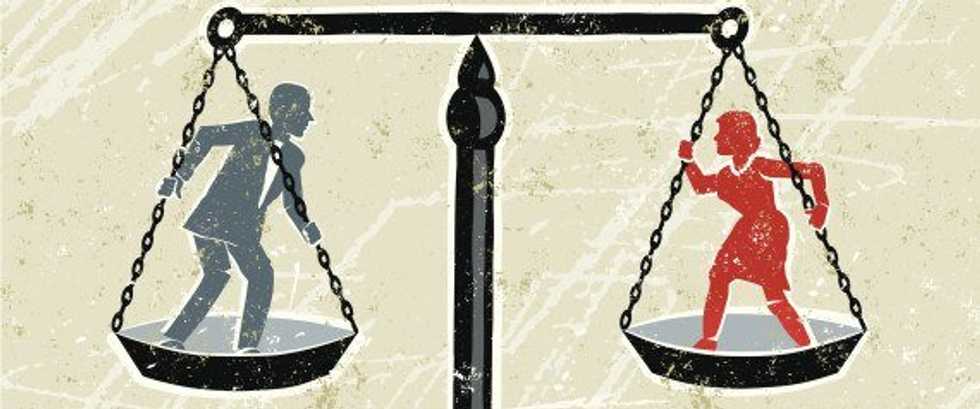
We, as women, need to recognize that we all need feminism – not because we are inferior or superior to men, but because we are equal. And we can’t have it both ways. So stop using your looks to get yourself a free drink at the bar. Don’t be afraid to split the check. Wear whatever you want to wear, and portray yourself however you like. Change your rhetoric, and abolish any words that are used to degrade women from your vocabulary. And follow your passion, regardless of whether it’s in an arena that is largely male-dominated. If we can work to fight these implicit biases and stereotypes that are holding us back, we can achieve anything we set our minds to. And it won’t be in spite of, or because of, our gender – it will be because of our character.