
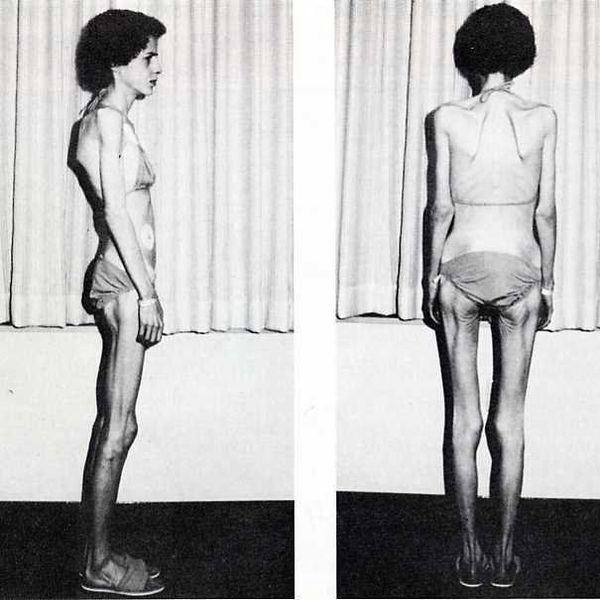

Eating disorders are complex mental health conditions which are notoriously hard to detect and treat. These conditions are often the result of a “perfect storm," as there is an interaction of biologic and psycho-social factors that lead one to engage in full-blown eating disorder behavior. The normalization of disordered eating and popularization of a thin ideal are aspects of modern society that can negatively impact one’s self-perception and wellbeing. These factors can trigger those with a certain genetic predisposition to engage in eating disorder behavior.
While many people go on sporadic or short-term diets, a person who is genetically predisposed to develop an eating disorder will likely take dieting to an extreme. Anxiety about food and weight become all-consuming. Pre-existing anxiety disorder or OCD are common among eating disorder sufferers and explain the obsessive nature of the condition and ritualistic behavior. Perfectionism and low self-esteem are also common traits.
Certain experiences can make individuals vulnerable as well. Eating disorders can occur as a reaction to sexual abuse or trauma. Harsh experiences can lead to a variety of maladaptive responses and mental illnesses, yet eating disorders can be triggered by common experiences.
In fact, eating disorders often arise during periods of life transition or rites of passage. For example, many people develop eating disorders during their transition from high school to college. Since many students struggle to adapt to the new college environment, many adopt unhealthy ways of coping.
An eating disorder is a kind of coping mechanism, for it is a response to a presumably threatening situation. It often gives individuals a sense of control, allowing them to deal with overwhelming emotions, stress, and insecurity. Eating disorders are, therefore, the tip of the iceberg. They are a compilation of symptoms that represent a host of underlying issues and motives.
The traditional approach to treatment seeks to normalize behavior and eradicate symptomatology. Newer approaches, though, place additional focus on unearthing the underlying issues and enhancing self-esteem. Currently, as noted by the National Association for Anorexia and Related Disorders, only 10%of eating disorder sufferers get treatment. People are hesitant to get help, often due to their fear of potential stigma. Male sufferers are less likely than women to seek treatment, for there is a common misconception that eating disorders only effect women.
While both men and women develop eating disorders, women comprise the majority of sufferers. The social values of being skinny and vanity are directed, particularly, toward women. Superficial values have moved us away from focusing on what really matters. Health, wellbeing, community, and growth allow for a full experience of life; however, these values are being downplayed.
Eating disorders are like canaries in a coal mine, for they are the early warning sign of a toxic environment. Modern society is toxic in many ways, encouraging us to push ourselves to our limit. Our performance at work or at school have become our priority. Even as we strive to accomplish and achieve, demonstrating our competence to others, we also need to prioritize self-care. Many who suffer from eating disorders seek to be accepted by others, but are unable to accept themselves.
Ultimately, we need to vie for reciprocity and balance. Friends, family, medical and mental health professionals comprise the supportive network that can enable one to recovery. By reaching out and supporting one another, we can start to reconnect with what really matters. Authentic relationships and connection can heal us all, motivate us to take better care of ourselves and each other.