
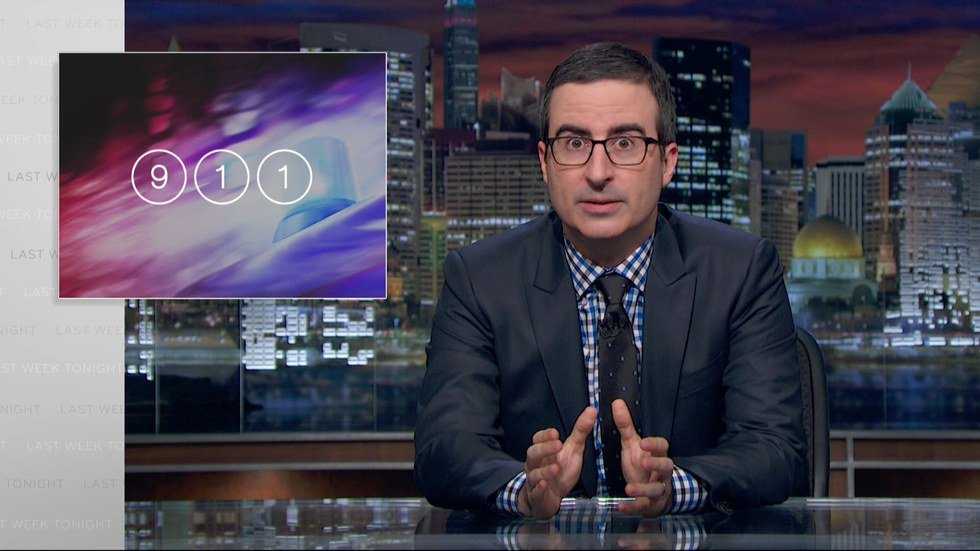
On Last Week Tonight with John Oliver, the comedian took a stance on how 9-1-1 call centers can be more efficient. The responders are being paid well, but it is the fact that most call centers lack the technology and the staffing to be efficient. Oliver is right to criticize this service, because in some cases a respondent can be the difference between life and death. The real problems come when 9-1-1 centers are not able to correctly tract where the call is coming from, and the issue of ratio of calls into a center verses the staff on hand. 9-1-1 centers do not have the proper technology to accurately find callers mostly when they call using their cell phones. As stated in the story by Oliver, that type of technology does not exist and we are five-to-six-years away from developing it. Also, understaffed 9-1-1 centers would have to put callers on hold if the volume of calls were too high. It is inefficiencies like this that can lead to first responders reacting too late. While talking about the respondent to call ratio, Oliver encourages his audience to look up the viewer’s own local 9-1-1 center to show the consistency of problems across the country.
On Long Island, the 9-1-1 center is located in Nassau County. 911dispatcheredu.com stated that in Nassau County there are 38 dispatchers who on average take 2,000 to 4,000 calls a day. A normal day for a dispatcher on Long Island consists of answering anywhere between 50 to 105 calls per day. The requirements to apply seem very simple. 2 years of “satisfactory work,” 2 years of formal college education or 2 years of military service can qualify towards being a dispatcher. Lack of motivation can come from the large number of calls, or from the anxiety of not knowing if the caller’s situation turned out alright. Many centers are understaffed due to 9-1-1 service fees on phone bills being allocated elsewhere.

Now, not every call is a serious emergency. Many people “butt-dial” or even unnecessarily use the service, but these dispatchers are trained for anything from intruders to mothers birthing. 9-1-1 services have never been more literal to the term “life or death.” Although the technology to accurately locate a call isn’t up to par, applications like Smart911 are trying to bridge the gap. Smart911 uses people’s personal information to help dispatchers locate the call. By creating an account and entering personal data, time won’t be wasted and the responder can have a general idea of where the caller is. The website also allows users to enter in information, such as medical conditions and personal preferences.
“Whether this is medical notes, photos of family members, address details, access points, or emergency contacts, the citizen is providing much more information than is currently available when their call is answered,” Jessica Rose the Community Marketing Manager of Smart911 said. “Essentially, a citizen is answering a dispatcher’s questions, before they are answered.” The Smart911 services was launched by Nassau County in March of 2015.
Smart911 may not be the answer to the problem, but it is a step in the right direction. Problems that arise in the 911 service should be recognized and be considered a top priority. This is a system put in place to save lives, without the funding to update software it is no doubt less efficient than it should be. An increase in the funding of this service will decrease the amount of people who unfortunately died due to a long wait from responders. 911 centers need a long overdue update, in doing so, the system will save more lives and better serve the emergencies of the public.