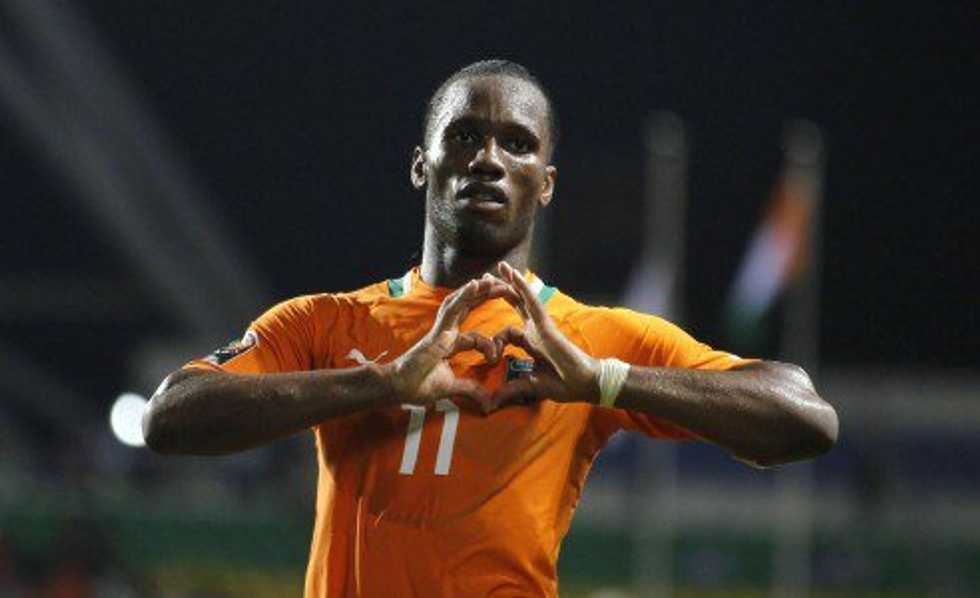
The villagers from one of the suburban areas of Abidjan, Ivory Coast, stood united. The new sign that Mr. Augustin N’Guessan Kouassi, the unofficial mayor, was about to hang up was a popular decision. “Welcome to Drogbakro,” it read, honoring the national soccer team captain, Didier Drogba.
If renaming a village after a soccer player strikes as a surprising shock to some, the ongoing zealous worship of the powerful striker did not start there and then, nor does it seem to come to an end any time soon.
In fact, plenty of roads, rivers, restaurants and nightclubs are all named after the big striker. So is the bestselling beer, because of its similar traits to the strong target forward. If you wish to get a haircut, you may visit the saloon that only cuts Drogba-style. There is even a special dance inspired by his moves, called Drogbacité.
How come people worship a soccer player like fanatics? Well, in a nation in need of icons, Drogba has showed leadership both on and off the pitch, whether inspiring his teammates in the locker room before an important game, or being the spokesperson for the population in times of conflict.
During the qualifications for the 2006 World Cup in Germany, the Ivory Coast faced a civil war, as different clans did not get along. Ultimately, the national team played for more than just a ticket to the playoffs in Germany. Who took responsibility and preached for an end to the killings, if not Didier?
Once the team succeeded to qualify, Drogba lead his teammates with mixed ethnicity to pray for peace on national TV.
A year later, Drogba forced the population to put any differences aside once again. He set up a friendly game in the country’s rebel area, where the resistance movement had its strongest nest. To people’s amazement, the rebel leader and the President managed to watch the game together, everything as a result of the captain’s work, according to vanityfair.com.
“When I saw the President and the rebel leader standing side-by-side and sing the national anthem I felt like my life started all over again,” Drogba said after the game. “Then I knew that the war was really over.”
While athletes from all over the globe act role models and inspiration for many youngsters today, hardly ever does the athlete grow greater than its own life. Didier Drogba, on the other hand, has done just that. First, he brought peace back to the Ivory Coast, and now he intends to build the country up again.
What ideology makes him so popular amongst Ivorians? The answer is as simple as it is complex. Truth is, no ideology matches his type of leadership. Drogba is not known to be a political man, but seems to attract popularity solely with his own story of success.
And success there has been. The robust striker scored 65 goals in his now retired International career for the nation, and has registered almost 300 throughout the clubs he’s played for since his debut in 1998 — 164 of those came in the blue jersey of last year’s BPL Champions Chelsea FC, according to mlssoccer.com.
Now, Drogba has indeed admitted the possibility to re-path his coming-to-an-end soccer career into a political agenda after he is done scoring goals for the Montreal Impact. But perhaps the 37-year-old is better off without involvement in a future presidential race?
“Today my situation is good because when I speak everybody will listen,” Drogba told The Telegraph in 2013. “If I decide to do politics only half of the country will listen. Am I more powerful the way I am? Maybe.”