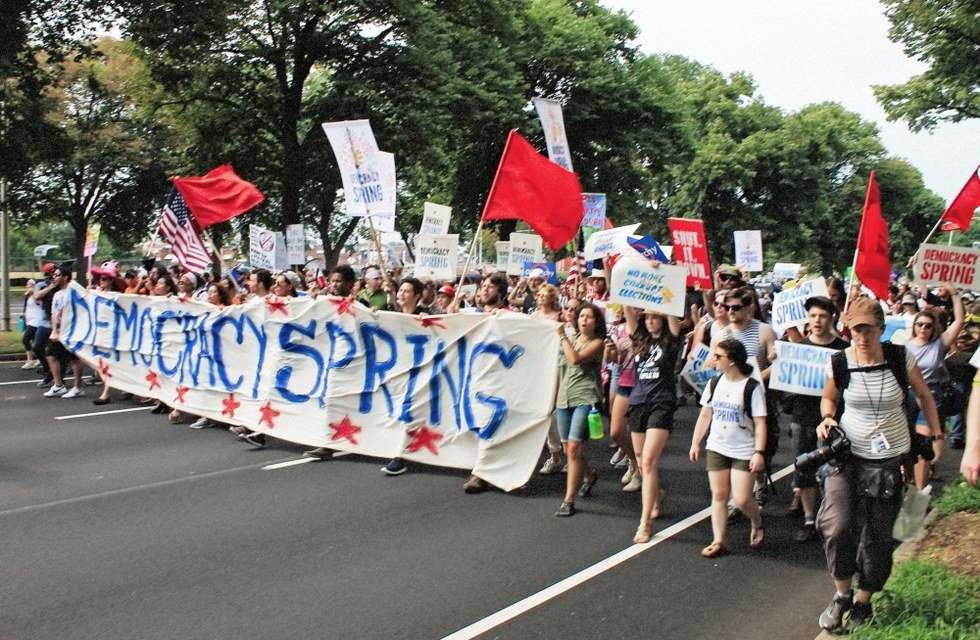
The Democratic Party held their National Convention in Philadelphia last week, but many Democracy Spring activists, including myself, tried to do all that we could to tell the party to live up to its name.
Getting rid of superdelegates, protecting every American’s right to vote and perhaps most importantly, overturning the Citizens United Supreme Court decision, are three key ways to improve our country’s democracy.
Democracy Spring, a non-partisan movement, came to the Democratic National Convention to make these demands heard. We did so in one of the most politically powerful ways American citizens can: civil disobedience.
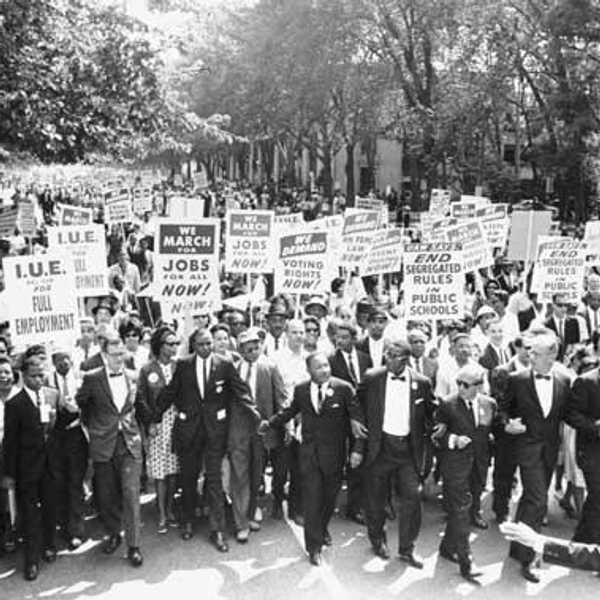
Gandhi led thousands of Indians on Salt Marches, an act of civil disobedience that helped break England’s colonial rule. Martin Luther King, J.r’s many non-violent resistances played an important role in ending segregation.
These movements are taught in American schools, the people admired for courageously breaking laws for a morally righteous cause. Every day before a civil disobedience in Philadelphia, Democracy Spring held a three to four hour training session in a church where these historic actions were discussed, analyzed and internalized.
During these sessions we discussed the common themes of morality, unity and love for humanity. In order to fix this immoral reality of money buying our elections, we needed to peacefully act out, even if it meant breaking the law.
We needed to be deeply united to overcome the physical hardship of police brutality that we could potentially face during our action.
We needed to remember our love for humanity, why we wanted to end this undemocratic injustice that brought us all together in the first place.
This sense of community grew as we marched around the church chanting things like “Democracy Spring, corporations aren’t people” and “Yo DNC don’t give us no sass, y’all been taking orders from the donor class.”
Our unity was cemented when we closed out the night by holding hands and singing a song that goes as follows:
“Courage my friend, you do not walk alone.
We will walk with you, and sing your spirit home.”
Day One: Setting the Stage
On the first day of the convention, our goal was to march through a delegate entrance on Broad Street and make it as far as we could to make our voices heard.
As a group of over 150 of us marched close to the entrance, police lined their bikes up to block our path. We sat down for nearly two hours, continuing to chant while we one-by-one jumped a three-foot tall metal barricade that had been set up.
After hopping the barricade, we were handcuffed with zip-ties and bused to the police station, where we were cited and released for “disorderly conduct” and given a $50 fine.
We portrayed our pro-democracy disobedience as patriotic. As some waved American flags, we sang the "National Anthem" and "This Land Is Your Land."
We also did our best to respect law enforcement. Everyone was completely peaceful and many people thanked police for their service. In a show of solidarity, we regularly chanted “Cops are the 99 percent.”
The first day of civil disobedience resulted in 55 citations, already surpassing the around 20 arrests the Republican National Convention had the whole week.
Though some mainstream media sources covered us, most didn’t. Even the ones that did talk about us did so briefly or misreported us.
CNN was covering our sit-in live before abruptly cutting away to cover the R&B group Boyz II Men. A CBS News New York affiliate said that over 50 people were cited "in a show of anger over Bernie Sanders' treatment," in reference to us, but that's not why we were there. The article doesn't mention Democracy Spring or our purpose once.
We needed to step up our level of disobedience up a notch to get the attention we deserved.
Or so we thought.
Day Two: One Step Closer
After taking a break from civil disobedience on Tuesday to stand in solidarity with the Black Lives Matter movement and train more people, Wednesday presented us with the opportunity to get beyond the Wells Fargo Center's first line of security.
Thirty-nine Democracy Spring activists used Uber to get past the first credentialed checkpoint, while others marched through FDR Park to distract police and media. Though not inside the convention, those willing to risk arrest were surrounded by delegates and media.
One activist pulled a large banner saying “One Person, One vote” out of a duffel bag and all 39 of them held it blocking a path into the convention for about an hour.
The delegates found a way past them, but many heard the protesters loud and clear. Plenty of media were there taking pictures and video, but the coverage was even lighter than the day before.
A New York Times journalist posted a live-stream on her Facebook, but there was no article about the incident from the news source. A CNN article was written mentioning the 39 Democracy Spring activists cited, but it sandwiched them between protesters scaling the fence and anarchists burning flags.
Nearly 100 Democracy Spring protesters were cited for their civil disobedience in just two days of actions and we even made it past a security checkpoint, but still the media was marginalizing us.
We needed to think big if we wanted to be taken seriously. We needed to make it inside the convention.
Or so we thought, again.
Day Three: Inside Mission Complete
It was publicly known that Democracy Spring was having their “Next Step” training at 3 p.m. Thursday, but nobody knew about any planned civil disobedience.
During the training, we discussed Democracy Spring’s mission plan, built camaraderie and helped form local groups for the next few hours. As the day went on and the church attendance finally thinned, we were told about the night’s civil disobedience.
It was the most serious one yet.
An organizer knew somebody who could sneak us some credentials to get into the Democratic National Convention. Two cars full of protesters were already organized and now they needed four more people to fill the third car of activists willing to risk arrest.
They were going to be interrupting Hillary Clinton during her nomination acceptance speech, but there was one condition: you had to be dressed up enough to be a believable convention attendee.
This took me and a few others out of the running, but we were still ecstatic about the possibility of our pro-democracy movement reaching the inside of the convention. Surely that would give us the publicity we needed to reach a mainstream audience, right?
Hillary Clinton’s nomination speech came and went, yet we heard no mention of Democracy Spring. We thought this meant the night’s big plan were unsuccessful, that our good friends had been caught before going through with their action.
Then a Facebook video appeared on the Democracy Spring page showing them interrupting from the inside during Hillary Clinton’s speech.
People surrounded organizer Kai Newkirk, taking pictures and videos as he explained our group’s purpose, but no media covered it.
Our most serious civil disobedience of the week, sneaking three cars full of people into the convention itself, is virtually unknown by most of the population.
The media has proven to be the biggest barrier to Democracy Spring’s success.
April’s sit-in in front of the Capitol received some news coverage, but not as much as you’d expect from 1,400 people getting arrested in a week. About 100 were cited at the Democratic National Convention, with many actually getting passed an intense amount of security, and still there was barely any coverage.
This media coverage, or lack thereof, demonstrates just how serious the issue of money in politics is. Why would the corporate media cover a movement that will take away their political power?
We need a mass civil disobedience reminiscent of the Civil Rights movement to bring real change.
We need so many people involved that the media will not be able to ignore us anymore.
We need to stand up and stand together in order to give America the real democracy it’s always claimed to have.