The NFL draft is this Friday, and with that comes speculating what quarterback is going to be a bust. Luckily (I'll explain soon), the top two quarterbacks projected to go are Carson Wentz out of North Dakota State and Jared Goff of Cal. North Dakota is part of the little known Missouri Valley Football Conference, and Cal is part of the Pac-12 conference. This sounds arbitrary, but the conference that they're in are going to determine if they're going to bust. Lucky for the teams about to draft them, they are not part of the Big 12.
The Big 12 has been a powerhouse conference for what seems like ever. Schools like Oklahoma and Texas are almost perennially in the championship discussion, and half of the conference last year scored over an average of 27 points per game, according to Big 12 Sports. This sounds like a great conference for potential NFL quarterbacks. However, I tell you this now, NFL Owners, if you're reading this, do not draft another Big 12 Quarterback again, ever (or at least for the time being). I'll explain.
Since 2006, six quarterbacks have been drafted into the NFL in the first round, including one third pick and one first overall pick. You can't think of many of them now, right? Let's go over them.
Vince Young (Third pick from Tennessee, 2006)
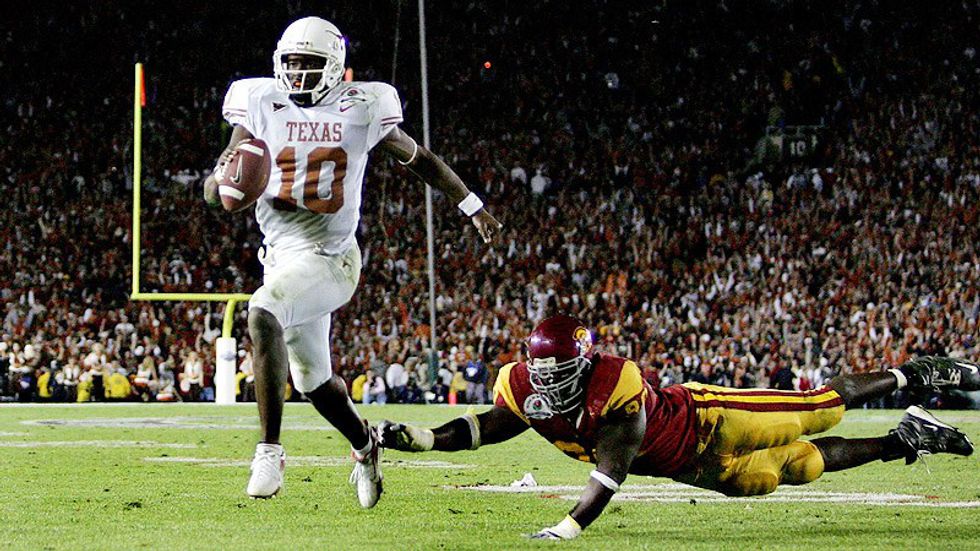
NFL Career: Rookie of the Year Award, 60 Games in eight seasons, 46 Touchdowns, 51 Interceptions, 0 playoff wins
What he's doing now: In 2014, ESPN reported that Young was hired by the University of Texas to work for its Division of Diversity and Community Engagement.
Josh Freeman (17th pick from Kansas State in 2009)
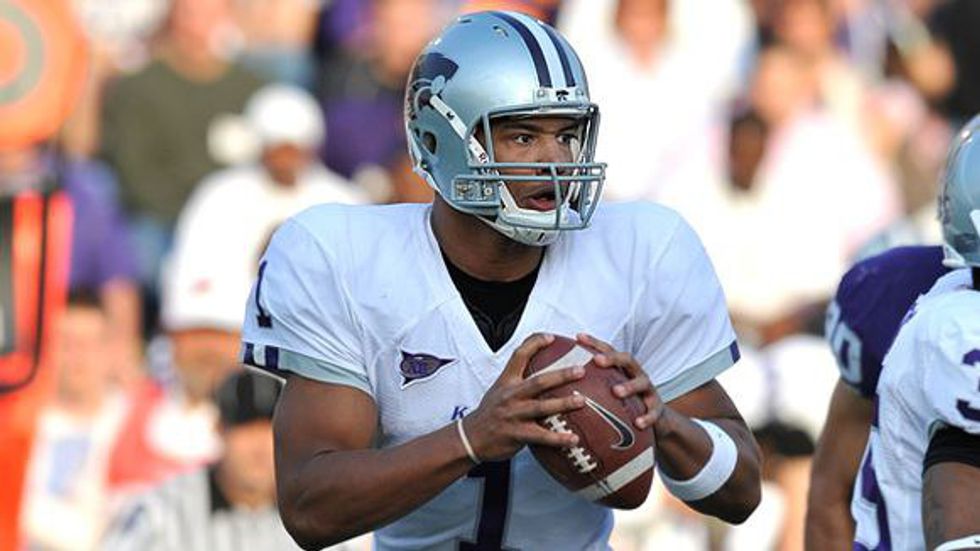
NFL Career: 62 games in seven seasons so far, 81 touchdowns, 68 interceptions, 0 playoff wins
What he's doing now: After bouncing between teams after being released by the Buccaneers in 2013, the Colts released Freeman in March, making him a free agent.
Sam Bradford (First pick from Oklahoma in 2010)
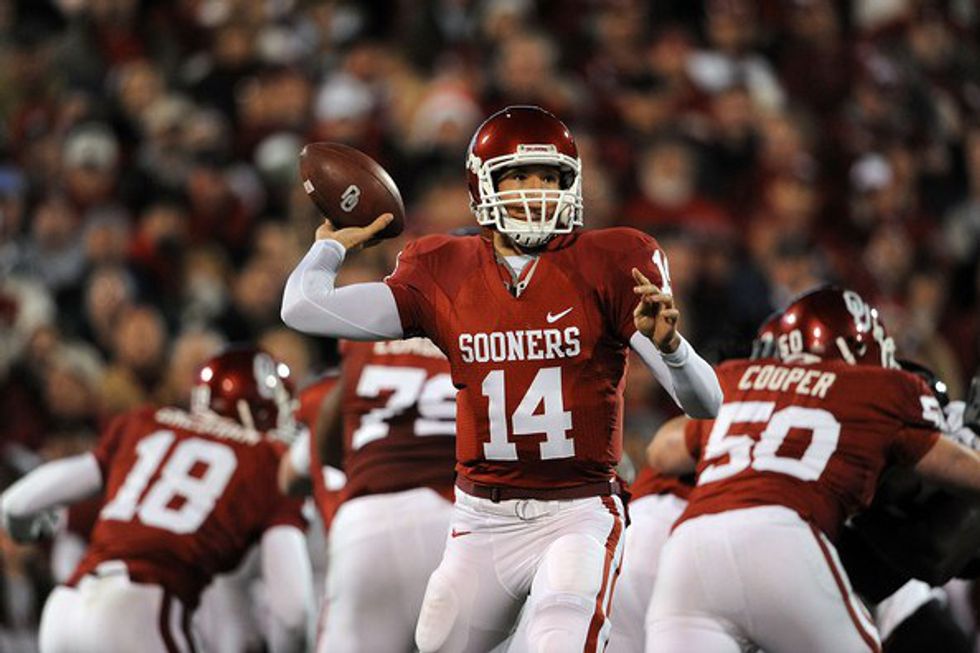
NFL Career: Rookie of the Year Award, 63 games in five seasons so far, 78 touchdowns, 52 interceptions, 0 playoff wins
What he's doing now: Sam Bradford is currently starting on the Philadelphia Eagles who had a 7-9 record in 2015.
Blaine Gabbert (10th pick from Missouri in 2011)
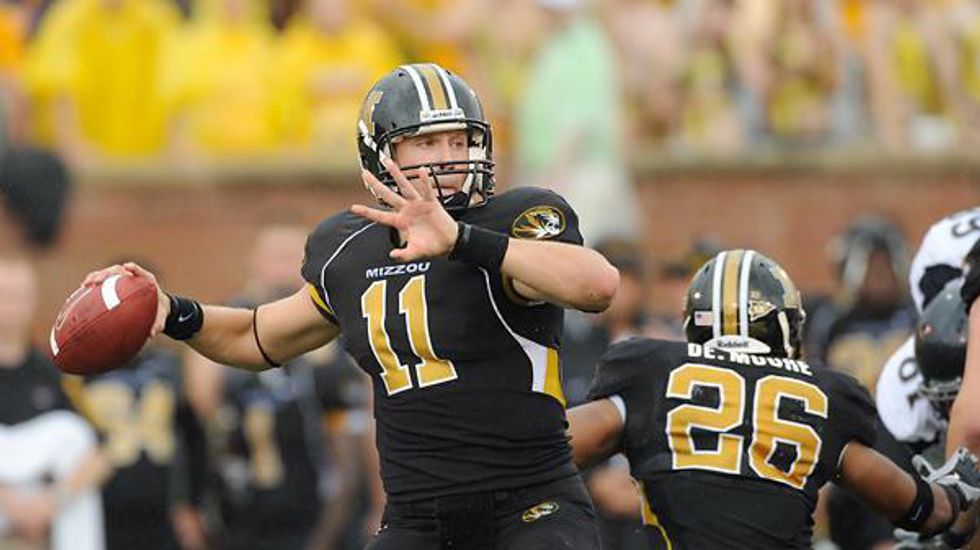
NFL Career: 37 games in five seasons so far, 33 touchdowns, 31 interceptions, 0 playoff wins
What he's doing now: Gabbert is currently battling Colin Kaepernick for the starting position of the San Fransisco 49ers. The team went 5-11 last year.
Brandon Weeden (22th pick from Oklahoma State in 2012)
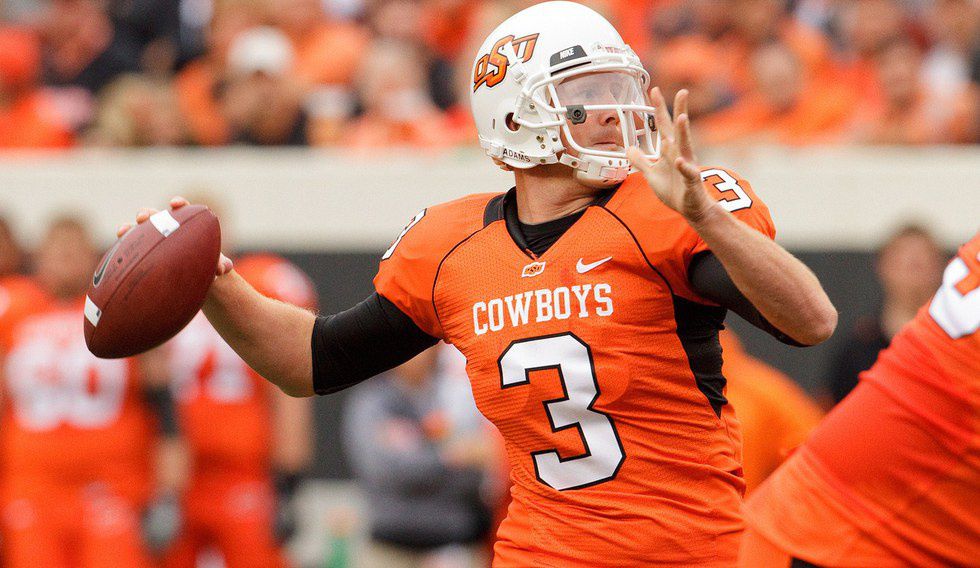
NFL Career: 34 games in 5 seasons so far, 31 touchdowns, 30 interceptions, 0 playoff wins)
What he's doing now: Weeden is currently the third-string quarterback for the Houston Texans.
Robert Griffin III(2nd pick from Baylor in 2012)
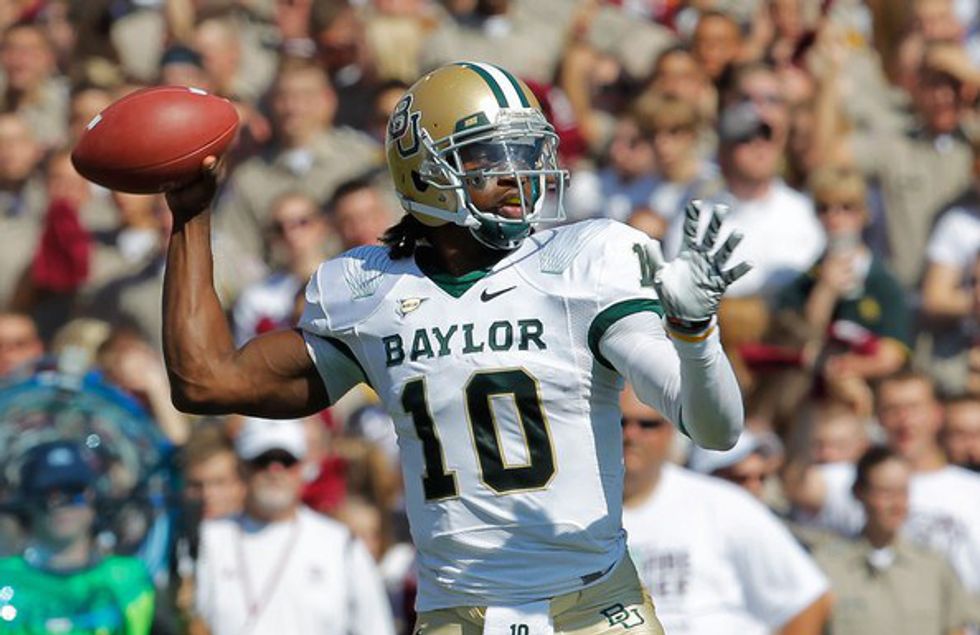
NFL Career: Rookie of the Year Award, 37 games in 4 seasons so far, 40 Touchdowns, 21 Interceptions, 0 playoff wins)
What he's doing now: Griffin III, after a couple of years of being sidelined by injuries, is currently splitting first team repetitions with the Cleveland Browns in hopes of being the starter.
Quick roundup: One starter, two people fighting for starter, one third stringer, one free agent, one retired, and zero playoff wins. These players had so much promise, and here they are now. It's been established that the Big 12 does not produce NFL-ready quarterbacks, but why? It might just be the scoring.
If the SEC has its defense, the Big 12 certainly has its offense. If you see a high scoring game in College Football, more likely than not it will be a Big 12 game. And with this prioritization on offense, there will be a greater chance of the quarterbacks racking up hearty numbers. However, going up against NFL defenses, they just can't compete.
One statistic does stand out, however: three of the six quarterbacks did earn Rookie of the Year awards, but have fallen short of promise. Why so? We'll go player by player.
Although Vince Young did receive the Rookie of the Year award, he did have more interceptions (16) than he had touchdowns (15.) His real saving grace was his rushing stats, 552 of which he would accumulate that year. The next year, however, he only had nine touchdown passes as apposed to 17 interceptions and 395 rushing yards, even with ten more attempts than the previous year. It was downhill from there as, in 2008, following a thumb injury and being benched, Young went on an emotional tirade.
Sam Bradford has done well in almost every season he's played in, averaging a 60.1 completion percentage and has accumulated 26 more touchdowns than he has interceptions. However, injuries have plagued in, as, in his six years in the league, he has not played all 16 games two years in a row, and the last time he played 16 games was in the 2012 season.
It's an even more extreme case for Robert Griffin III, who has an even better completion percentage (63.9) and has thrown 40 touchdowns opposed to 23 interceptions, an almost 2:1 ratio. He also brings in some Vince Young qualities, having being a running quarterback, too. However, injuries have plagued Griffin III, and, after declining games played since his rookie year, he hasn't played since the 2014 season.
So how did these players fall from their glory? One inclination is that all of these players suffered from injuries caused by NFL defenses, and each one suffered greatly from them. RGIII hasn't played since 2014, Bradford hasn't played two full seasons in a row, and Vince Young's thumb injury indirectly has affected him, as it led to his meltdown. One can deduce from this that NFL defenses are much tougher than Big 12 defenses. And while it can be argued that three players being injured isn't enough, it should be pointed out that these are the three players that have had the most exposure when they were healthy. If someone like Brandon Weeden started every year, especially with the old timer body, it would be a matter of time before an NFL defensemen, in harsh terms, showed him that "these are the big leagues, now", or, in an ideal world, that "you aren't playing baseball anymore."
If the Big 12 can't produce good, long-term quarterbacks, which conference can? Using this Wikipedia list of starting quarterbacks — except for Josh Freeman, because he was released, I've made a list of how many starting quarterbacks came out of each conference:
SEC: 9
Big 10: 5
ACC: 3
MWC: 3
Big 12: 2
Pac 12: 2
USA: 1
AAC: 1
Big East: 1
Ivy League: 1
Mid-American: 1
That's right. There are more quarterbacks from the Mountain West Conference than there are from the Big 12. There are a few things you can take from this list, that the Pac 12 is also not too prevalent, that the Big East and AAC are on the same list, and that "Mid-American" is actually a conference, but the other big standout, in my opinion, is the dominance that the SEC has in the Superbowl.
But Brent, you ask, didn't you just say that the defense to the SEC is the offense to the BIG 12? You are absolutely correct. Being a quarterback in the SEC is tough, not only as the toughest defensive conference, but also the toughest conference period. Having to go against these defenses will improve your skills, but won't necessarily give you the highest caliber stats. In fact, while the SEC has produced seven quarterbacks in the first round as apposed to the Big 12's six, it still triples the current starting quarterback tally.
So, NFL, don't go for Big 12 quarterbacks. Go for SEC, or, if you're looking for a bargain, at least go for a Mountain West quarterback. And, while I have you, can you please get Alabama graduate Greg McElroy out of retirement and playing again?