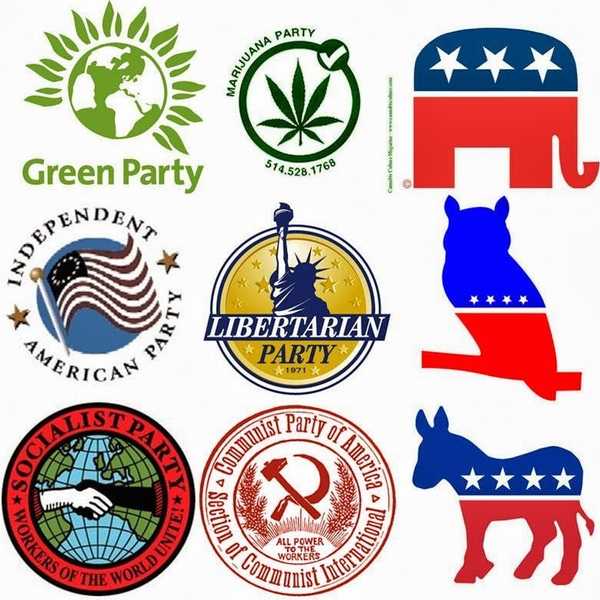


As a citizen of the United States, one has the right to vote. But in this election, in particular, it's becoming clear that many do not want to vote because they don't like either candidate. People call Trump a racist and Clinton a liar, and just shake their heads in disgust rather than find an alternative. That alternative is called voting third party.
If you are eligible to vote, you should -- no excuses. And although many argue that voting third party is "throwing away your vote," that is not necessarily the case. A poll taken about a month ago in Utah showed third party candidate Gary Johnson getting almost the same amount of votes as both Clinton and Trump. While this is just one state, it shows that yes although the party isn't one of the big two, it's message is still being heard. It's very understandable as to why so many are now voting third party; Clinton is considered very left wing, and Trump is dominating with America's most conservative individuals. Now if one didn't identify with either of these extremes, the third party often offers a middle ground or even a totally different view from the two major parties.
While it's important to vote, it's perhaps even more important to vote with one's conscience. It is now incredibly popular for young voters to base their political opinions on their parents.' Although this is understandable, after all, they do grow up with certain morals and ideals, it's ignorant to base one's political beliefs just because of their parents. You vote as an individual and your opinions should be solely yours. There are certainly instances where one's opinion is the same as their parents, and that's completely alright, as long as it's an informed opinion. It's easy to just identify as a party and just call it a day, but it's vital for you to have an opinion, not to just identify with a crowd. It's not uncommon for people who identify as a certain party to not support many of the party's ideals. They assume that since they identify mainly with this party, then they should just go ahead and vote for it. However, it's important to look at all of your options. Politics isn't really black and white, so there is always a middle area where you might identify yourself. Rather than assuming or just following other people's leads, one should be informed and research. This research allows one to decide if they belong in a certain party, or if their conflicting opinions make them more suited for another path, such as the third party, or if they're right where they should be.
The issue lies a lot in where people believe their third party vote is going. While the third party makes up only a small population of the country, it can impact a state's electoral votes in certain cases. Here's a hypothetical example: to begin, both Democrats and Republicans have third parties. So if during an election many find the Democrat candidate to be too liberal, they may vote for a Democratic third party. So say 27% vote third party, 24% vote Democrat and 40% vote Republican. If these 27% had chosen to vote Democrat instead of third party, the Democratic Party would have gained the electoral votes for that state, since 51>40. However, in this case, because the people disagreed with some of the Democratic ideas and potentially chose to go the more moderate route, the Republican party took the votes. So while voting third party doesn't mean that the nominee will hold the White House, in certain cases, it can be extremely important towards an election. Politics involves a lot of tactics and careful thinking, so it's important to really think it through and research. And as the 2000 Presidential Election ballots in Florida show, every vote counts.
Also, you can think about it in a different way. If you don't like either candidate and don't want to vote for one and have it be a disaster, you could always vote third party and say you knew it was coming.

And at the end of the day, it's important to remember one more thing: