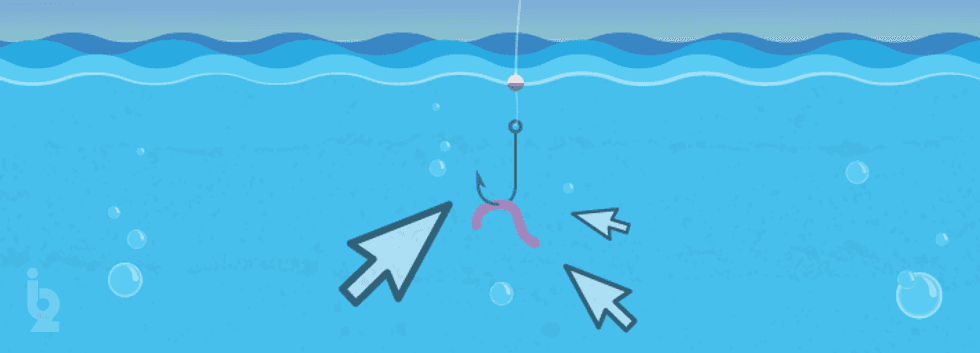
Personally, I'm getting pretty sick of headlines filled with superlatives, numbers, and the other benchmarks of online clickbait. Every headline is designed to snatch away our attention away from our newsfeeds just long enough to bait us into clicking it. "12 Life Hacks You Need In Your Life"—sound familiar? Because they are the first impressions that we form for any article, headlines lead us to subconsciously form judgments about the article, so journalists craft their headlines using the most eye-catching and arousing words to win attention. All that these writers want is a click or a unique visitor to their site, and not necessarily a satisfied visitor, so content isn't really a priority for them. This transformation from content-driven to headline-driven media is why you will always find yourself clicking on links, only to question that same decision a few seconds later.
Ads are simultaneously fueling and ruining online journalism. The Huffington Post, an exclusively online journal, generated $146 million last year in total revenue that comprised of almost entirely digital ad revenue, but that was still not enough as they failed to overturn a profit, suggesting that they are finding new ways to effectively advertise and monetize that aspect of their business. In fact, every publication is trying too. Standard clickbait ads—the annoying pop-ups on the bottom of the screen that you never click on intentionally—are making a comeback. Publications are combating declining click-rates on these display ads by simply adding more of them. Of course, it makes a lot of sense to enhance the features that people hate and continue to monetize a deteriorating product. I mean, that's what Apple does and it's clearly working because people still freak out over "new" iPhone's every year. However, what might be more daunting is the rise of native ads, which could further blur—essentially erase—the line between ad and content, because the article itself is just an ad. In other words, after sifting through all of the display adds you just get to another, better disguised one. Not even the New York Times, one of the most prestigious news publications, can be exonerated of this crime. Soon, our ads will be our content and everything that we're reading will be a product that is being shoved down our throats. Frankly, the only thing that I like being shoved down my throat is a breakfast sandwich on a Sunday morning, so I'm not exactly thrilled about this.
Complicated algorithms behind the scenes determine what kind of content is best suited for us based on what we've viewed in the past, keeping us in our respective mental bubbles and limiting our world views. Selective exposure is and has always been a big phenomenon in psychology. It's the reason why Democrats go to Democratic rallies and Republicans go to Republican rallies. We naturally seek information that confirms, instead of challenges, our beliefs. The growing platform of online media only facilitates this. We search only for the things that we agree with and effectively filter out anything outside our mental comfort zones. So, like college tuition, ignorance is only increasing. Furthermore, most of this selection process is hidden from us. Just like how Amazon wants to optimize your shopping experience by suggesting items similar to the ones that you've just looked at, the Washington Post suggests articles similar to the ones that you've just read. While this sounds like a convenience in theory, this separates us from the content that could challenge our perspectives and broaden our horizons.
With six companies owning 90 percent of the media, the integrity of online journalism today is, at best, a joke tainted by political agendas and vested interests. Since 1983, the majority of media ownership has dropped from 500 companies to 6 media giants: GE, NewsCorp, Disney, Viacom, Time Warner, and CBS. Needless to say, these companies control a huge portion of what we see every day. They have a huge sway in events like elections, based solely on the way that they report information. CNN was caught manipulating poll data after the first democratic debate last year to paint the picture that Hillary Clinton won, even when online polls indicated that a majority of people thought that Bernie Sanders had won. In addition, democratic presidential candidates Senator Sanders and Governor Martin O'Malley have accused ABC of hosting the third Democratic debate at an obscure time when viewership was predicted it would be at the lowest: 8:00 p.m. on a Saturday before Christmas, when everyone is traveling to get home for the holiday. They suspect that the DNC, along with big media giants, are trying to protect Hillary from losing further voters by limiting her public appearances. That doesn't seem at all far-fetched, given that Hillary's top campaign donors include Time Warner and 21st Century Fox. Clearly something's up, but it's not Hillary's poll numbers.
Although as a writer it may have become easier for me to write and have my voice heard on bigger platforms, as a reader it's becoming increasingly harder to read. Beyond all of the reasons that I've listed above, I feel like I've lost my sense as a reader. In the new age of digital communication, it's easy to feel overwhelmed and angered by all of the flashy banners and headlines being thrown at you. That's not to mention Donald Trump, the reason why I might be moving to Canada next year and declaring a profession in Zamboni driving. Everything that he says is a waste of time, yet online journalism outlets can't get enough of it and that's mainly because the general public can't either. Seeing articles about another Kardashian failing to adhere to a diet being called journalism while thousands of real and important issues facing millions of people everyday—income inequality, institutional racism, climate change—receive little to no attention sickens me. With every glance at what's trending on Facebook, I lose a little faith for humanity and my own dignity as a reader.
All in all, be mindful of the information that you're taking in and its source. The news is never just the news nowadays. It's always laced with a little fluff here and there, sometimes to extent of entire poll results indicating a different winner. If all else fails, take a break from the media. Even the idea that we need to get the news as it happens is arguably a construct created by the media corporations. If it's truly important, it'll eventually make it's way to you, so don't fret. Otherwise, stay informed and stay aware.