

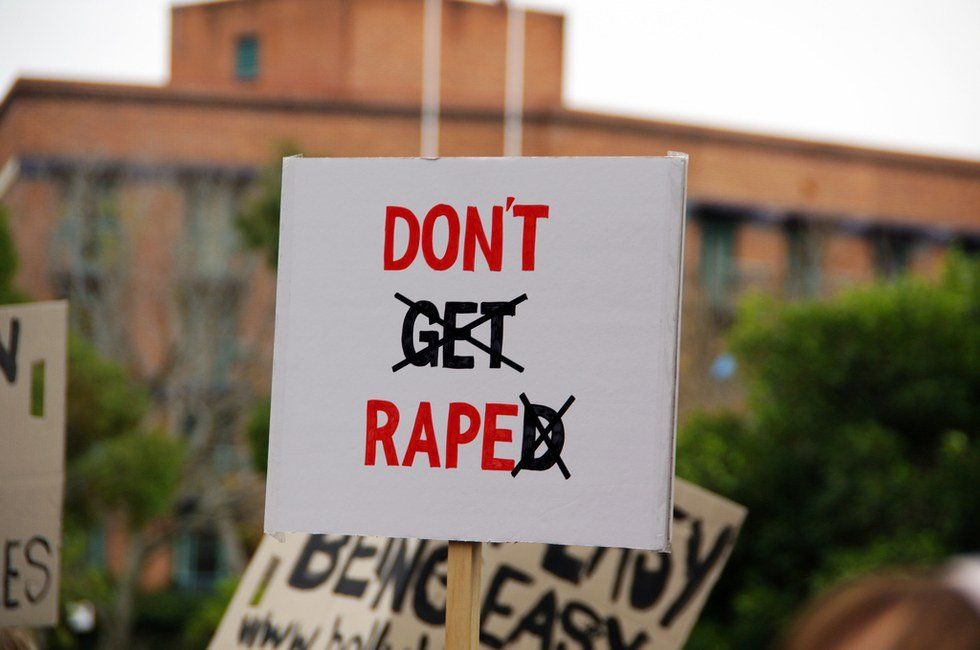
I mentioned in my article about comprehensive sex education that some topics of conversation have become taboo to talk about, having a stigma of shame and silence attached to them. Unmentioned in the list were rape and rape culture. These topics are of high importance to me (not unlike the aforementioned few) and I believed that they required their own article.
This past summer, when a Stanford swimmer raped an unconscious woman, I continually noticed that people would refrain from using the word “rape”. Instead, the words “violate” and “assault” took its place. I was extremely puzzled by the switch, especially because the words are not perfect synonyms, especially in that context. Assault could mean something as small as spitting on someone passing by- nowhere near the severity of having sex with someone by force. The replacement of the word “rape” seemed to be an attempt to dull down the severity of his action, something that completely baffled me.
I spent some time thinking about the word switch and why some thought that it was not only suitable but preferable. While I understand that rape is not the favorite topic of conversation for most, it is an important one, especially for those who have the power to make a change. Uncomfortable conversation points are often talked around or completely avoided, leaving them to only be confronted when an issue has occurred. Rape being at the top of that list, should not be on it at all.
When most people talk about rape, they discuss it in soft, apologetic, almost ashamed-to-be-talking-about-it tones. “Rape” is not a bad word. It should not be bleeped over on television or in our minds. It should not be replaced with the phrase “unfortunate occurrence” or “bad experience”. Rape is rape and “rape” needs to be said. It needs to be talked about. It needs to be fought. 1 in 4 college women* (1 in 17 college men) will be raped. Rape needs to be discussed not only for the victims, but for those around them, who are also affected by it. Talk about rape because rape is still misunderstood, even by victims.
Surrounding the hushed conversation and displacement of “rape”, rape culture has become prominent, especially over social media. Rape culture is an environment in which rape is prevalent and in which sexual violence is normalized and excused in media and pop culture. Rape culture survives through the use of misogynistic language, female objectification, and the glamorization of sexual violence.
To first understand rape culture, it’s important to recognize that it’s not a society that outwardly promotes rape. When discussing rape culture, we are talking about something implicit- cultural practices that excuse or tolerate sexual violence. For example, pop music that tells women “you know you want it” because the lines of consent are “blurred”, supporting athletes charged with rape and sorrowing over their ended careers, and people who believe that girls allow themselves to be raped, to name a few.
Rape culture has become such a part of our culture that many people do not recognize it or know of its existence. Things like rape jokes, programs focusing on how to prevent rape, and victim-blaming, are all things that have become woven into our media stream regarding rape.
As an incoming college freshman, I have been confronted with rape culture more frequently and forcefully than ever before. (I first noticed when one of my graduation presents was a self-defense class and a can of pepper spray.) College campuses have become a hotspot for the growth of rape culture. In 2010, a Yale University fraternity marched around campus shouting “No means yes!” as part of a pledge event. Fortunately, some universities are taking charge in ending the stigma behind rape and rape culture. My university has a blue light system stretching the entire campus and spent a large portion of orientation defining consent and giving new students the resources they need in case of a rape.
The truth is, we want rape to be something foreign to us, because if we knew that it’s not just committed by a man in a ski mask holding a knife, what would we do? Many want to think that it only happens to drunk girls or people who were “somewhere they shouldn’t have been”, because the alternative is knowing that it can happen to anyone.
Talking about rape casually, like in an everyday conversation, is not favored. It is not a polite topic to discuss like the weather or celebrity gossip, and understandably so. Rape is not pretty and most would rather not acknowledge it. Pretending that rape doesn’t happen, or tiptoeing around it, or using a different word to describe it, does not change the fact that it can happen, does happen, frequently, to anyone.
I encourage you to talk about rape out loud because it is not a topic to be quiet about. Do not lower your voice when defending the security of others. In a society where 25% of women experiences sexual assault, not talking about it is the silence that furthers the stigma. Stop the stigma and start talking.
Resources:
What is the "Rape Culture"?: Marshall University Women's Center
25 Everyday Examples of Rape Culture: Shannon Ridgway