

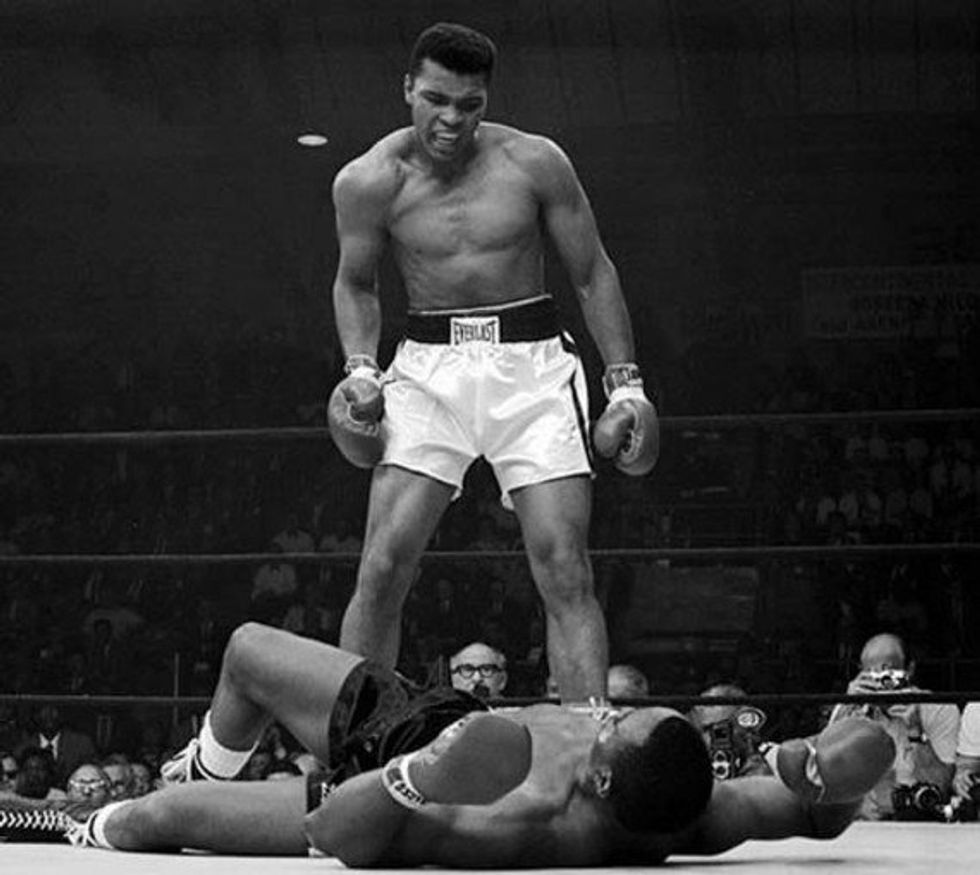
On June 3, 2016, Muhammad Ali passed away surrounded by family. He is the only three-time lineal heavyweight champion in professional boxing history, beating Sonny Liston in 1964, George Foreman in ‘74, and Leon Spinks in ‘78. Ali was the Olympic Champion in the 1960 Rome Games for the United States. The outspoken voice of his people, Muhammad Ali was one of the greatest human beings of our time.
While Ali’s out-of-the-ring actions put him at odds with the “system” in terms of politics and religion during the civil rights era, his legacy includes a philosophy that has touched many athletes on a personal level. He was a master of mind-games. His sport of choice, boxing, related to the idea of a fight, something which everybody must have in order to overcome struggle.
Champion
What is a champion? Put simply, it is the 1st-place finisher, the gold medalist, the title holder. The winner. Despite the push for a participation medal culture, our society still places a premium on the champion. Ali was undoubtedly a champion, as shown by being a multiple time boxing champion on the highest levels. Through his life, “the Greatest” came to define for the masses what a champion is and ought to be and what it means to be one.
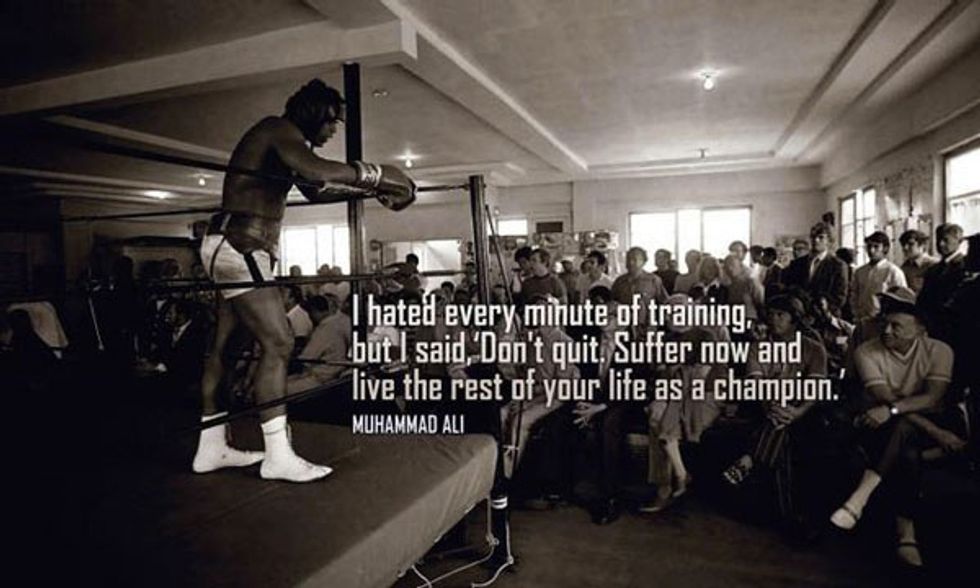
The first point that defines a champion we get here: it is one who suffers and endures through trials. A champion is often celebrated because it is someone who does what most others could only dream of doing. It is also someone who pushes on where others quit.
When No One Is Watching
A big part of a champion (that many competitive athletes come to realize during their own individual pursuits of greatness) is the hours put in behind the scenes, when nobody's watching. The hours at the gym when only the gym owner is present, the miles ran in the night, and the countless repetitions all add up to build an athlete into who they are. These are the hours that get put on display during competition, which spectators marvel at in performance but don’t experience first-hand.
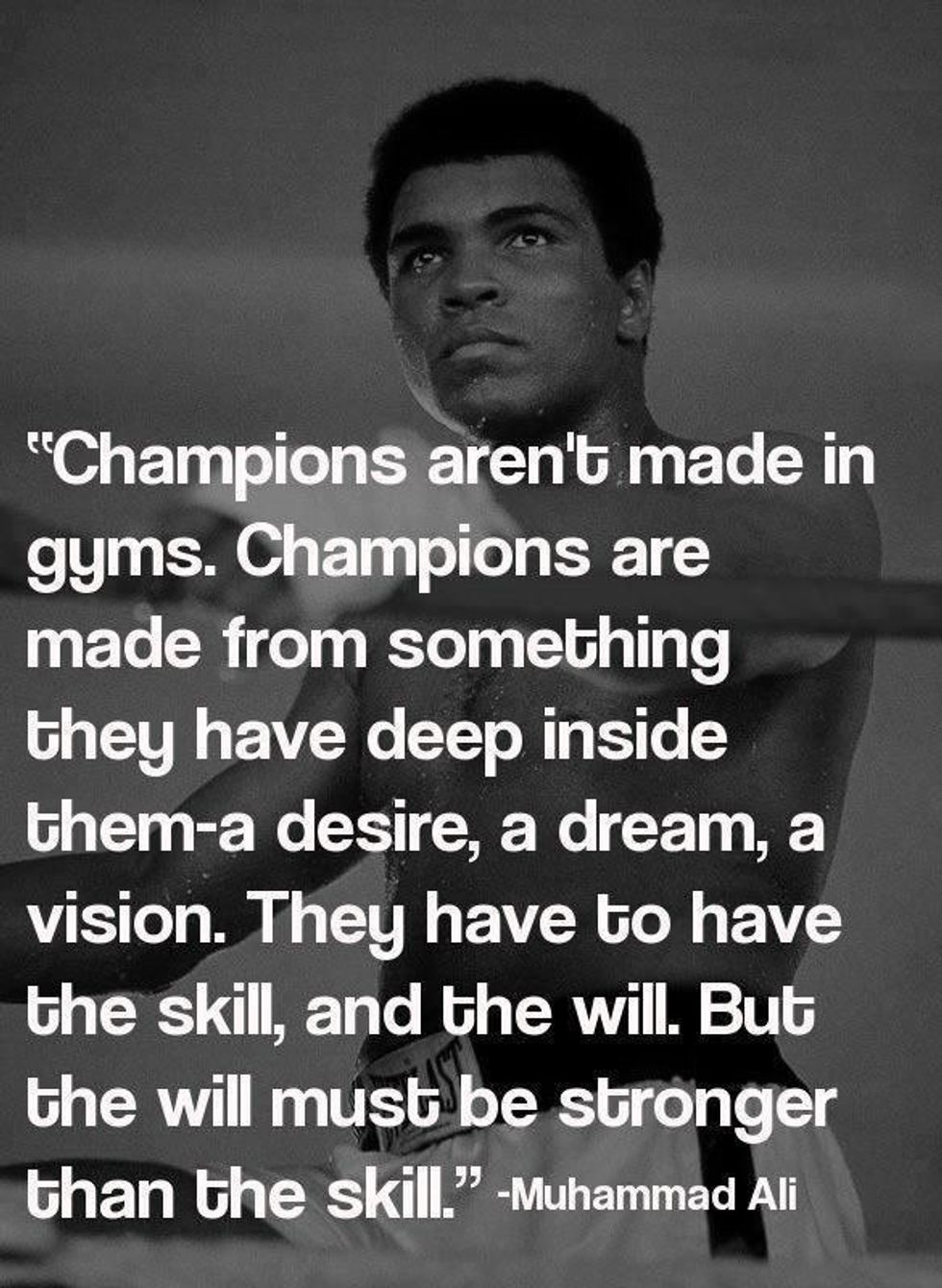
Ali posits that even deeper than the hours of perfecting your craft is the internal drive and fire that gets one out of bed in the morning. It’s a dream that becomes a vision, a vision that becomes reality. This is an idea I’ve heard in many different ways in the sport of wrestling. The idea of visualizing the success and achievement that one desires. You have to “see yourself” on top of the podium.
Self-Belief and the Mental Edge
One of the biggest parts of Muhammad Ali’s aura was his larger-than-life interviews that captivated audiences. What Ali made clear was that self-belief and positive cognitions were of huge importance to success. It is walking fine-lines between confidence and cockiness and between fantasy and reality. In college wrestling, Kyle Dake’s mindset is reflective of the confidence Ali had whilst seeking greatness. Recently, Conor McGregor in the UFC employed the mental strategy Ali had made famous, in which both overwhelmed their opponents with outlandish statements that planted seeds of doubt. While “the talk” is potentially unsavory for certain people, the self-belief and confidence required to pull-off such a strategy speaks to what is required to be elite. In many ways, talk is a way to psyche yourself up for moments of immense pressure. There is a big pay off if all goes as planned, but the risk is the foolishness one is left is if it fails. This “fear of failure,” as Arnold Schwarzenegger puts it, is what holds a vast majority of people back in their endeavors. The ability to express your goals and dreams publicly is a testament to one’s confidence and faith in the hours of work put in.
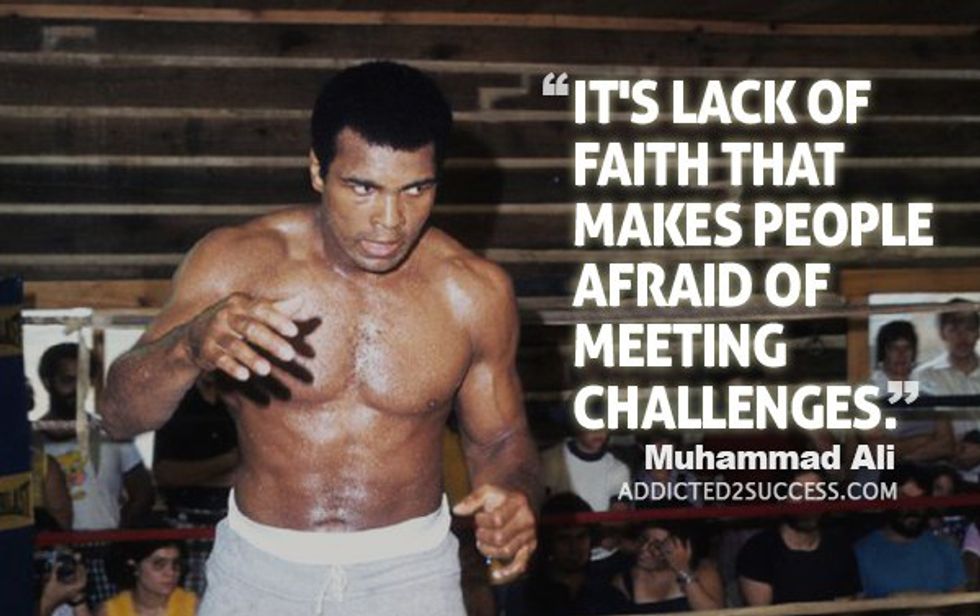
The final piece of the “champion” puzzle is heart. In his final moments, Ali (as recounted by his daughter Hana) passed, but his heart continued to beat for 30 minutes after his body had failed. Even in death, Ali exemplified the heart of a champion. The former UFC lightweight champion Frankie Edgar has been in wars in the Octagon, exemplifying the heart of a champion fighting in some of the most memorable fights in UFC history. Beyond the heart necessary in competition, though, is the heart Ali had outside of the ring. Ali was a hero for many and he treated the common man with laudable respect.
His famous KO “loss” to the young child, the talking down of a suicidal man, and his defense of his (and others’) civil rights made Ali a man of the people. Executive Director of the Georgetown politics program, Mo Elleithee, shared a beautiful artifact of Muhammad Ali’s impact on his life, with a letter Elleithee had written Ali when Elleithee was only 10 years old. In reply to the young Elleithee’s letter, Ali wrote, among other things:
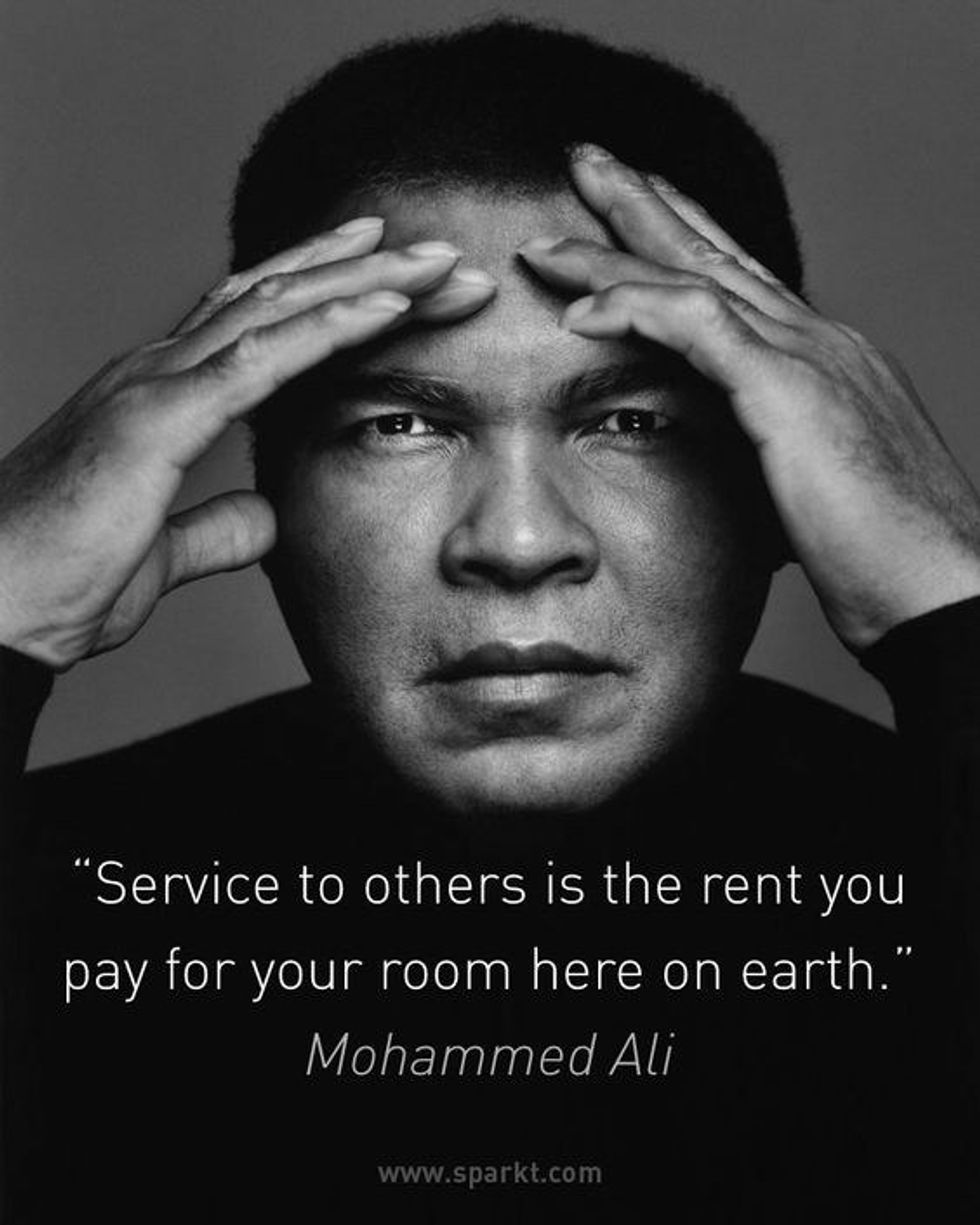
Heart is what allows a person to persevere when their backs are to a corner and they can barely muster the strength to stand on their feet. It is also the origin of the humility that allows a person to be a champion of the people. It is understanding the position of a role-model, the example of overcoming adversity and achieving goals. Ali was a champion in life, beyond the sport of boxing. He dared to be great. His philosophy transcends his career and leaves a lasting mark on the definition of a “champion.”
















10 Annoying Comments That Make Every Horseback Rider Chomp At The Bit