

A van rolls down dusty roads until the target is spotted and a quick stop is made in front of farmhouse or barn. Binoculars are whipped out to confirm it’s the right suspect, not just a dove on a wire.
The ornithologists lay a caged mouse by the road and back away in their lab-on-wheels. All that’s left is to hold their breath and hope to out outwit the predator.
Research
Kestrels have proven a tricky study specimen for Alma’s team this winter. The dove-sized and shaped birds of prey are wary predators and prey, larger birds like red-tailed hawks can take them down if they're desperate for food. Still, the small raptor will try and pester larger birds away from their territory.
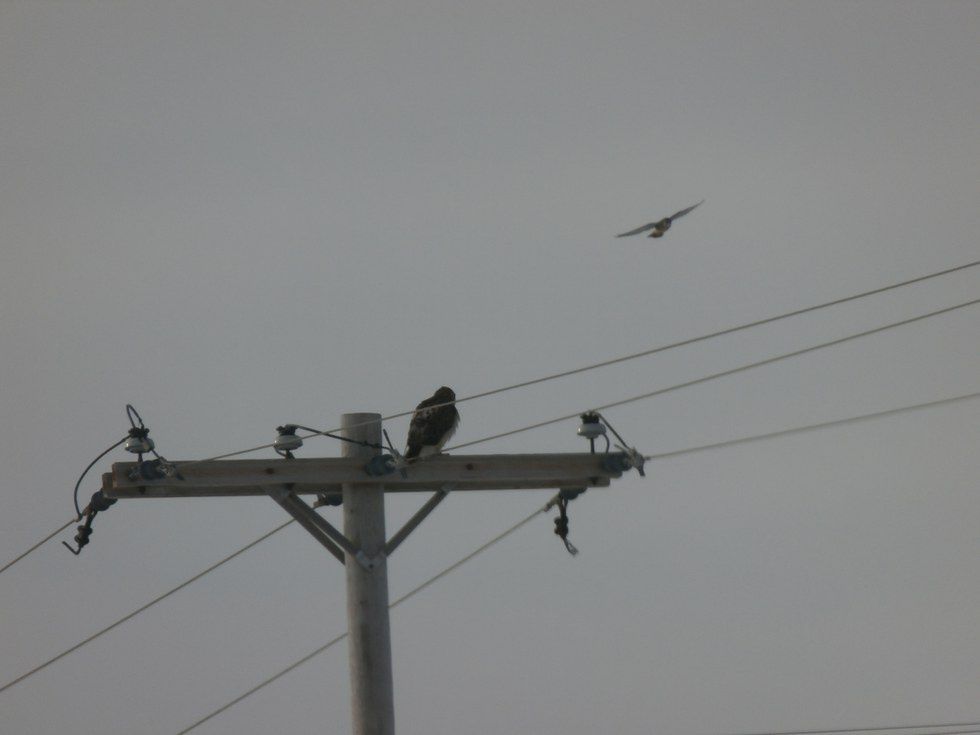
A kestrel tries warding off a red-tailed hawk from its hunting grounds.
Though we “Kestrel Kommandos” spent half our Saturdays for a couple months searching out the bird and laying down traps for at least a dozen kestrels, we only caught one. Had they already eaten? Are albino lab mice not their cup of tea? Were they too smart for the trap?
These are questions we hope to explore in coming years. Our instructor and professional ornithologist Mike Bishop hadn’t experienced so much trouble with the trapping aspect in his decade of conducting these studies. We could develop a radio controlled, closing trap and compare its effectiveness to our current fishing line tied to a cage mechanism, which is meant to entangle the raptor’s leg, in coming years.
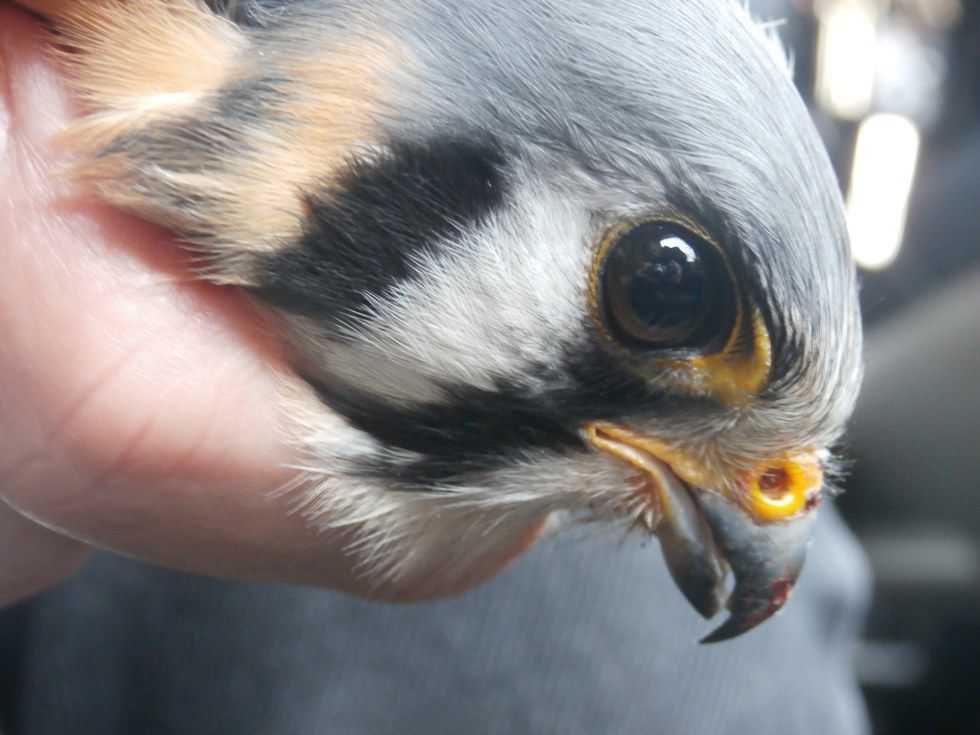
Some of the kestrel's latest meal can still be seen on his beak.
The American Kestrel is the smallest bird of prey in the country. Mid-Michigan is the northernmost part of their winter range and Bishop has experienced our crop of birds behave differently than what literature on their territorial tendencies portray. Instead of the larger females protecting their hunting grounds, we’ve experienced both male and female kestrels frequenting the same fields at the same time (and avoiding countless traps).
How to find a Kestrel
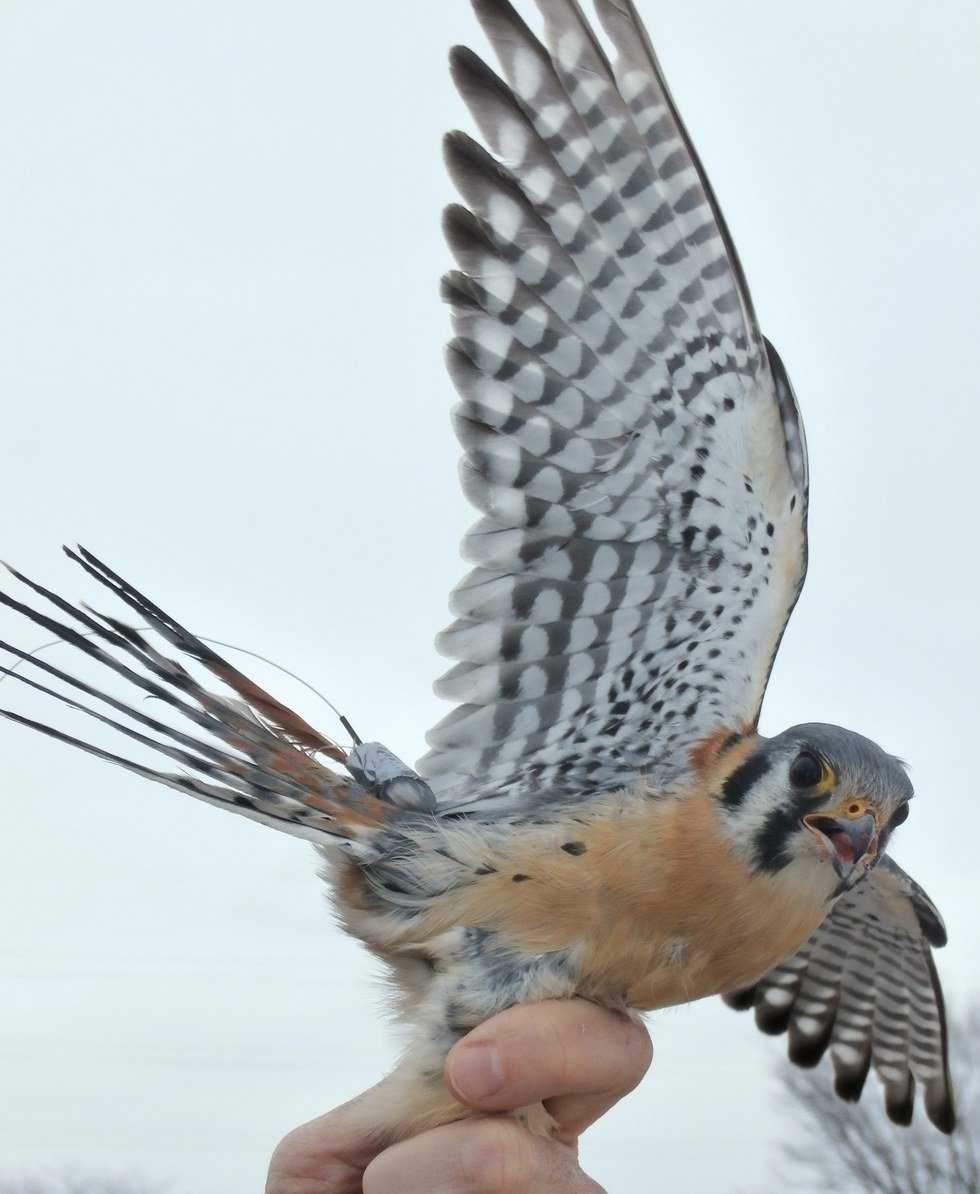
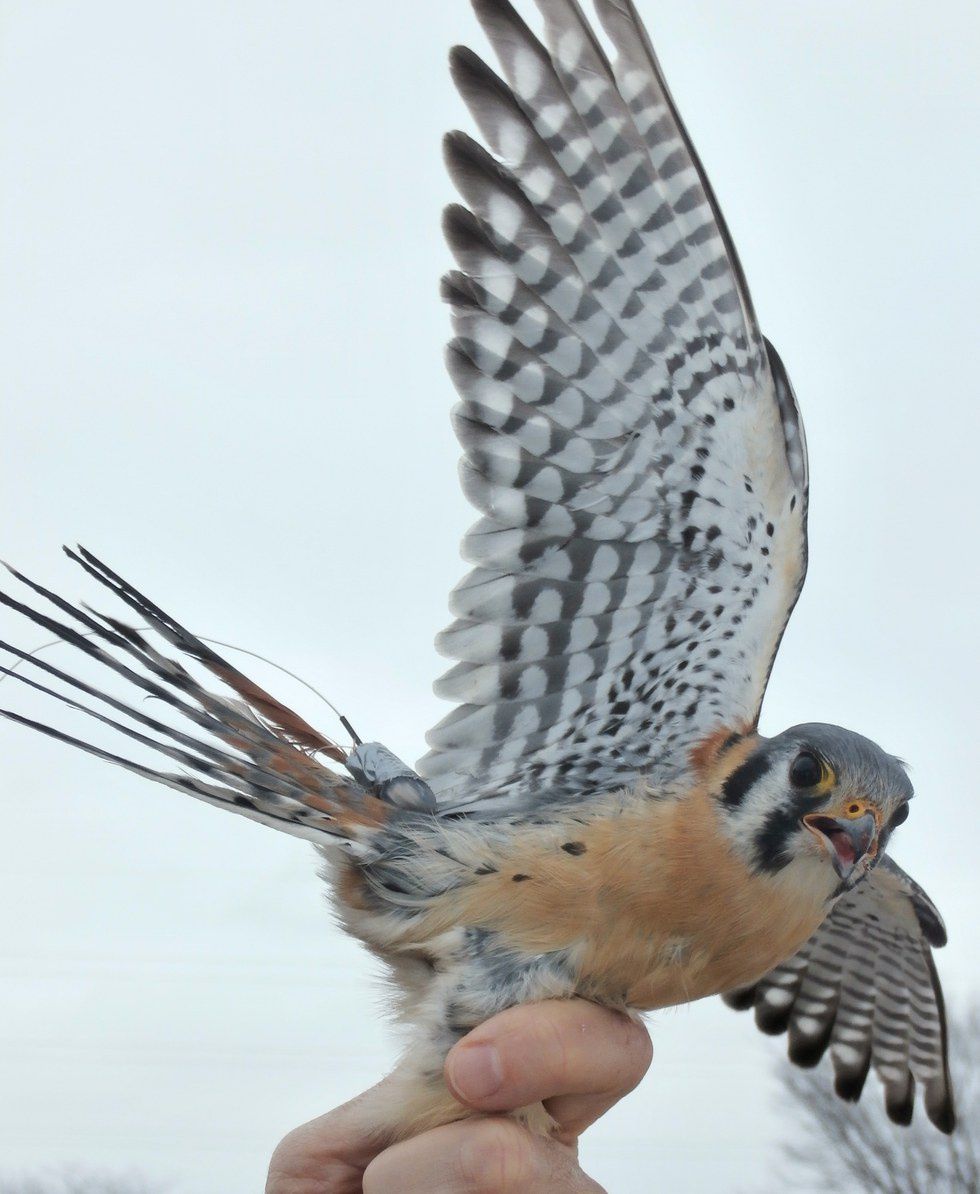
Once caught, the kestrel is brought into the van to be measured and examined by Bishop. Depending on the bird’s size we’ll attach a radio tracker or a satellite tracker. Generally, only females can bear the weight of the satellite tracker that is heavier, but allows us to keep tabs on flight and location throughout the year. The radio birds can only be followed while in their wintering grounds and when in range of our receiver. Once we're done, the kestrel is set free but we can study its movements and territories.
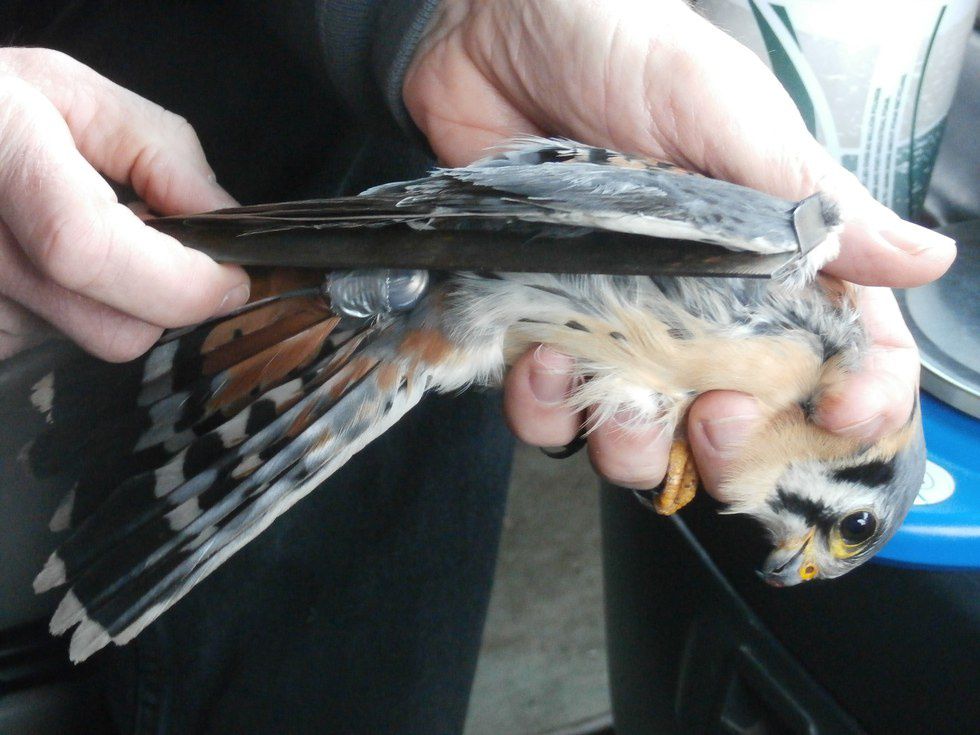
Bishop measures the wing chord (length) of the male kestrel.
Our kestrel this year is a male with a special feather extension on his tail; the radio tracker is attached with high-tech duct tape. When we approach the location of the kestrel, the receiver switches from static to emitting high pitched beeps. Recently the kestrel seems to have snipped the antenna of his tracker, making it more difficult to receive a signal and spy the bird. Still, he hasn’t outmaneuvered us yet and we’ve had a few sightings since.
Other winged things
Though there are days and hours without kestrel sightings, it’s hard to go without seeing some sort of wildlife. This independent study has allowed me to check the snowy owl, northern harrier and sharp-shinned hawk off my bird list.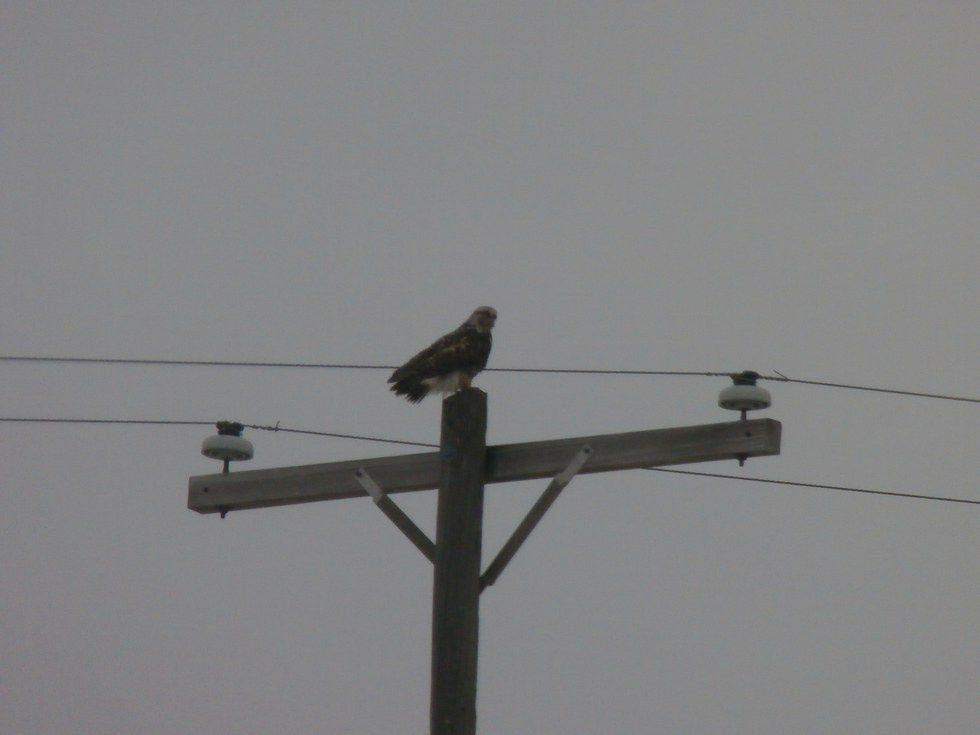
A sharp-shinned hawk perches on a telephone pole.
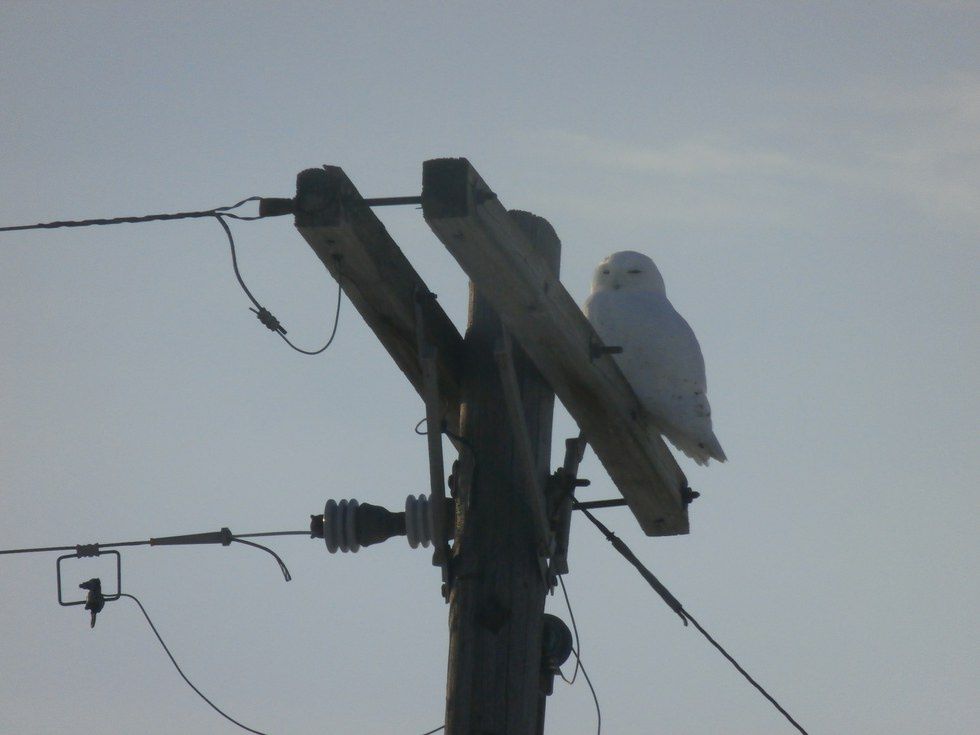
A snowy owl perches on a telephone pole.
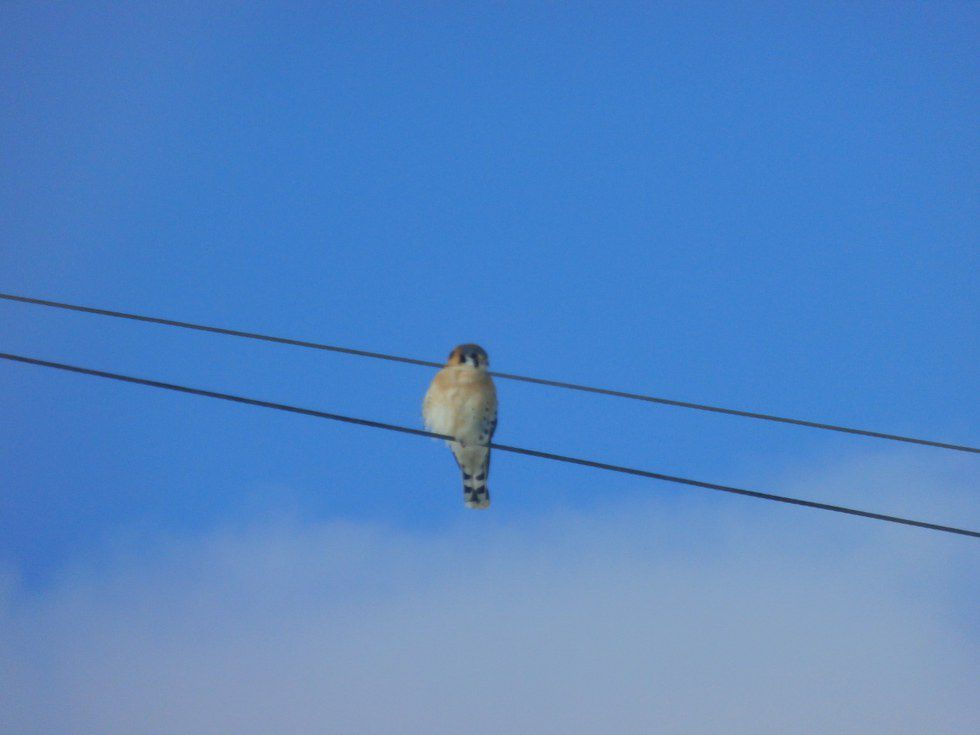
A kestrel perches on a telephone line, where they can often be spotted.