In my suburban heaven of Shoreline, Washington, sexual assault isn’t really talked about. It hangs in the air as parent-teacher conferences, school board hearings, PTA committees and sexual education classes let it slip by without mention. The first time I ever heard the words “sexual assault” I was 13, and I was in New York.
A woman, donned in dirty rags and haphazard shoes, was screaming at a Subway passerby about the mystery of sexual assault, and how it’s impossible to tell if anyone was right. I’ve been following stories about sexual assault ever since.
When I began my college journey, I quickly learned that sexual assault was considered taboo. It was whispered on the lips of students and staff; people were afraid to even utter the words “rape” or “sexual assault” in case a lawsuit followed. My campus, Washington State University, went under investigation in 2014 because of an alleged Title IX violation. I began to tune into the news every once in a while; why was my college being investigated? What were colleges doing wrong in regards to sexual assault?
When I came to New York City in May to begin my editorial internship with The Odyssey, I quickly realized how naïve I was in regards to sexual assault charges on college campuses. I thought that colleges were doing everything they could – giving survivors hearings, listening to both sides, punishing those found guilty. It wasn’t until my Managing Editor took me to a screening of VICE on HBO that my preconceived notions were flipped upside down.
June 3, 2015 VICE on HBO screened “Campus Cover-up” in a small theater in New York City. The film is about the issues surrounding higher education’s ability (or inability) to deal with the increasing volume of reported sexual assaults on campuses across the country. The atmosphere surrounding the film was intriguing. Not only did they host the screening on a college campus, but one of the spotlit college campuses for this issue: Columbia University.
“It wasn’t a coincidence,” said VICE on HBO Correspondent Gianna Tobani.
“Listen, Columbia has basically sparked this issue in the last year. It’s been the one university that’s been in the media more than any other one. It was an important place to hold the screening because students are obviously very outspoken about this issue and obviously care about it a lot."
The air in the auditorium was thick with piqued curiosity as the students were looking for solace in the company of like-minded activists. The faculty was intrigued with the promise of intellectual stimulation, and the media reporters were fidgety with impatience for the event to commence.
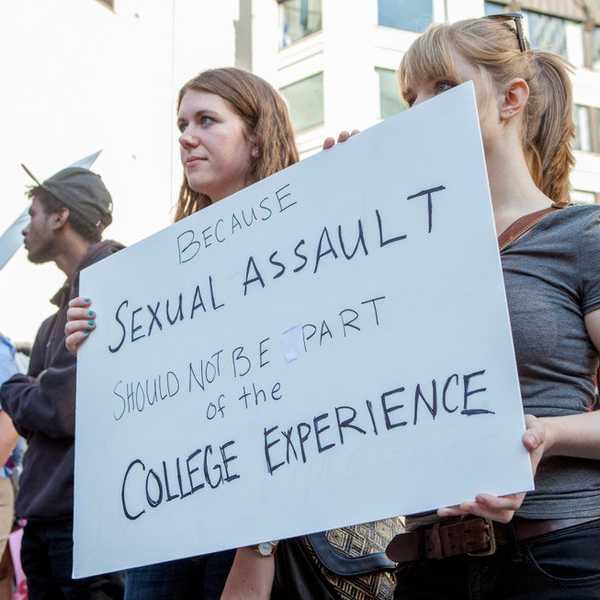
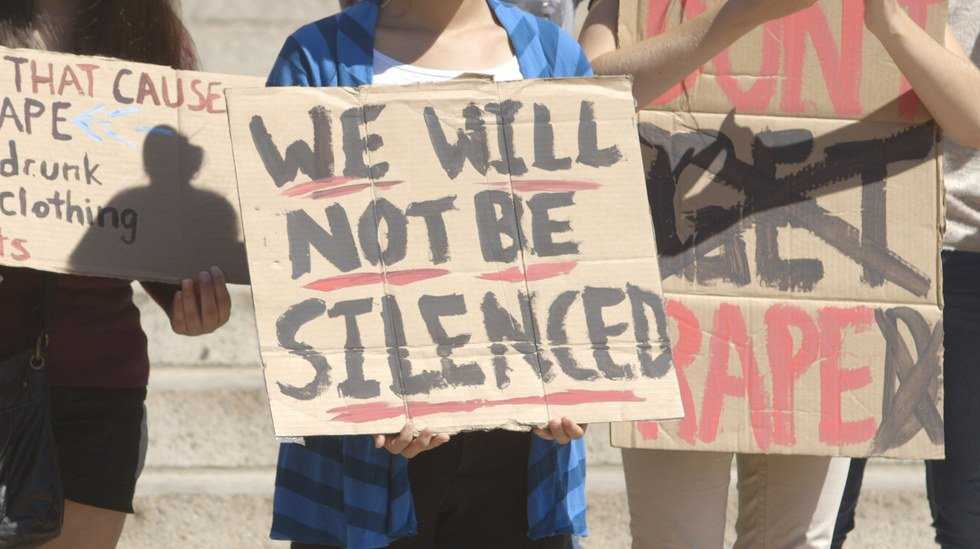
The preface of the film is the rising percentage of people coming forward to denounce sexual assault in public protests witnessed through largely publicized acts of demonstration. One of the more publicized examples of this is Emma Sulkowicz, a Columbia student who dragged her mattress across the Columbia campus during graduation. Her public statement soon went viral. Her simple, and highly visible message was a clarion call to change campus regulations, policies and procedures for sexual assault survivors.
The film demonstrated the urgency of the issue. As esteemed journalist John Hockenberry put it, “the question of what a sexual event is has transformed” in the last 5-7 years. We have seen a shift in public sensitivities and language around sexual assault and aggressive sexual behavior. Why? There are many reasons - the new “hook up” culture of social media, violence against women in television and movies, even video games.
The focus of the film is a new bill, the Campus Accountability and Safety Act, being pushed forward by Senators Kirsten Gillibrand and Claire McCaskill. The bill calls for a bi-annual “climate survey” among colleges campuses, requiring all universities to administer a questionnaire that asks students about their respective university’s policies and responses in regard to sexual assault. After the results are tallied and recorded, the statistics must be posted on the university's website. As Tobani puts it, “It’s a direct incentive for colleges to clean up their act.”
The film also follows the story of Elle, an underclassman survivor of sexual assault. Her journey through the hearing process is filmed by hidden cameras, showing the world what transpires behind closed doors between survivors and campus panelists.
As part of a Title IX initiative, campuses are required to assemble “trained” panels to hold hearings for survivors and perpetrators. One of the problems with the system is an inherent lack of stable regulation around what “training” is required. The standardized information taught to college panelists is broad, uses inappropriate language, and often leads to an unhelpfully diverse group of panelists -- a mix of students, faculty, and random university staff -- who enact subpar sentences.
For example, during Elle’s hearing, her panelists grilled her with questions such as “‘No reported bruising on your arms or any other part of your body other than your pubic region . . . is that true?’” and “were you, indeed, forced?”
College women across the country have been trying to speak out about this process. One woman in particular, when recalling her own experience, said the panelists demeanor was disinterested, “Here’s some tissues.” Furthermore, the perpetrator in her alleged case received no punishment. “He’ll wave at me sometimes.”
Today, we see a growing number of acts of student protest and condemnation and it has paved the way for more reports to surface. It has also, however, created a need for stringent regulations regarding Title IX and campus protocol.
“We need to adjudicate these crimes with stricter regulation,” says Tobani. “It’s a culture that has been built on rapists.”
Toboni discussed the cracks that have developed in the university judicial system. University hearings for sexual events are conducted by ill-trained, randomized staff who propagate the issue and illicit anger among the student population. As Senator McCaskill elaborates, “I think there are many cases where a school would rather cover up a rape or a sexual assault than endure the bad press or be known as a rape school. And any time you have an institutional bias where it prefers to protect the institution over the individual, that’s when justice is not possible.”
When the lights came up after the film, the air hung heavy with silence. With the audience entrenched in thought, I sat in the seats of the auditorium, my interview notes felt like a heavy rock in my lap and my mind was a whirling mess of questions. I felt an overwhelming need to stand up and scream “Why is this happening?”
When the Q&A started between Tobani and veteran journalist John Hockenberry, I started to think about how I didn’t understand why this issue was still happening. Didn’t people realize how serious it was? How did people not grasp that people, all over the world, are hurting?
That’s when a man in the audience raised his hand to pose a comment to Tobani.
“Women can fight back against their attackers. That is something not mentioned in the media. That is part of equality - women can choose to fight back against their attacker.”
Dumbfounded by the outburst, Tobani replies: “If a woman could fight back against her attacker, I don’t think that this would be an issue.”
I simply stared at the man, listening to him argue on behalf of misogynists and chauvinists. I didn’t really understand how far this issue has reached – how many it has already affected and how many people haven't truly grasped the issue. When I started packing up my things and getting ready to leave, the woman to my right – whom I had been conversing with throughout the night – looked at me and said “I was raped at age 14 at a New Year's Eve party.”
I stared at her, stunned silent. This woman, whom I had come to know over the course of two hours, whom I quite liked, was a survivor herself. That’s when I realized that women all around the world are carrying this secret burden on their shoulders, heavy with the memories of violence.