
Muhammad Ali once said, “Float like a butterfly, sting like a bee.” Generally a butterfly symbolizes gracefulness, elegance, and smoothness -- although gracefulness, elegance, and smoothness are qualities that the butterfly stroke doesn’t come with naturally.
Butterfly is the newest of the four strokes (freestyle, backstroke, breaststroke, and butterfly) used in swimming competition. Butterfly started as variant of breaststroke in the 1930s before being officially recognized by the Fédération Internationale de Natationas (FINA) as separate event in 1952.
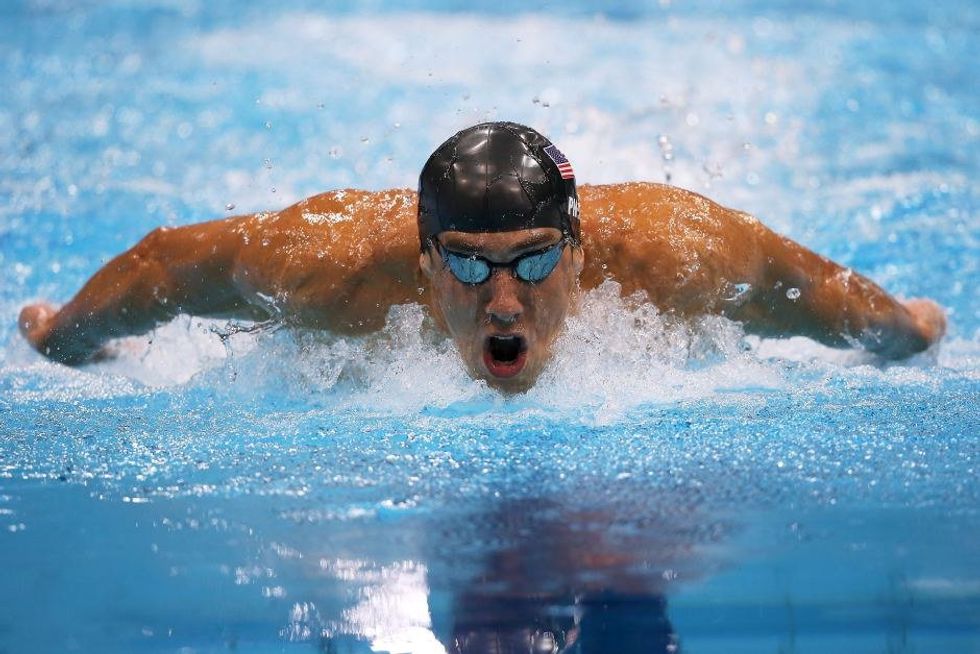
While its origins are from breaststroke, butterfly also shares a lot of characteristics with freestyle. Butterfly is essentially the (unneeded) love-child of the two strokes. Butterfly borrows the mirrored arms and legs motion from breaststroke, so they’re done in a way where when one hand moves, the other does the same movement at the same time, just on the other side of the body. Breathing is done by raising your head vertically, and in sync, with the pull of your arms. Techniques taken from freestyle include the strokes range of motion, which is a long reach forward with a complete pull back near the hips, followed by an over-the-water recovery. The kick used is referred to as dolphin kick. Some people even steal side breathing from freestyle and implement it in butterfly.
Butterfly does include its own unique traits as well, such as when your hands are recovering over the water they should be upside-down, so your palms are up, thumbs back, and (being the fancy stroke that it is) your pinkies should be forward. Also, since the kick begins in your abs, it is higher than other kicks. You want your abs to have a wave-like motion that will continue to swell down your legs and exit from the tips of your toes.
In terms of technique and legality, butterfly isn’t the hardest stroke to swim. That title is rightly reserved for breaststroke, where the direction your toes are pointing could disqualify you. However, it is safe to say that butterfly is arguably the most physically challenging stroke in competitive swimming. One of the most common butterfly events done is the 100 butterfly, which typically consists of four lengths of a 25-yard or meter pool. This event is best broken down into these four stages -- length one, butterfly; length two, butterwhy; length three, buttercry, and length four, butterdie.
Summon your inner Phelps, add some torture along the way, go hop in a pool and give the butterfly a try.