What on Earth is a Brexit?
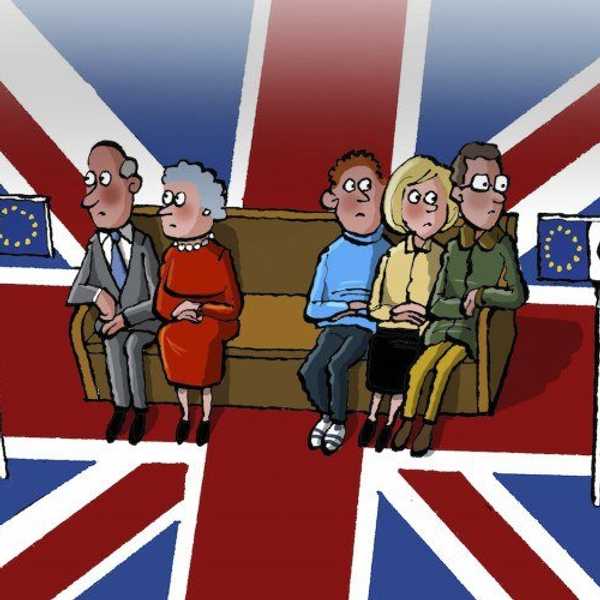
This term refers to the referendum put in place by (now former) British Prime Minister, David Cameron. The referendum, voted upon last Thursday, asked whether Britain ought to remain in the European Union or leave. The polling results came in, and by a relatively thin margin, Great Britain (which includes England, Northern Ireland and Scotland) voted to leave the EU.
Why leave? The main point for those wanting to leave was the issue of sovereignty. Under the EU, Britain was forced to comply with certain EU laws in order to trade freely with other EU member nations. Many were upset by this, especially in light of the fact that the court voting on said laws was not representative, meaning none of the judges or representatives were voted upon. Another issue was border control. As Europe struggles with the desperate refugee crisis, some Brits, notably those adhering to more conservative, right wing ideology, were upset at possible job losses due to mass immigration, as well as a lack of a so called ‘secure’ border.
Who voted to leave? The majority of those who voted to leave were older, more conservative citizens, typically clustered in the North of the country. Many with lower levels of education (no university training) voted to leave. The Welsh voted to leave as well, with the notable exception of those living around universities. It’s important to note that the parties and politicians who wanted to leave targeted said individuals with figures bent toward their fears. While both sides utilized fear mongering, it appears that the Remain campaign was the most forth coming and honest — their predictions of market fallout have proven correct.
Why remain? The reasons to remain were widely based on economics. The EU allows free borders, giving trade within the EU ease. With London considered the ‘financial heart of Europe’, much like New York City is to the United States, cutting off from the rest of the EU has proven to be financial poison, as many Remain campaigners warned. The EU was also established as a peace organization, created in the wake of many European conflicts, to promote unity and cooperation. Beyond the issue of London’s financial fate, the EU allows member nations’ citizens to pass freely, working and living without visas or fees in other member countries. This has helped England, Scotland and Northern Ireland attract students to their university system (EU students pay little to go to schools within these countries), and has helped students from the UK find jobs and start families throughout Europe. University officials fear losing EU research funding. The EU always had form and function, and for the UK, it meant being on the cutting edge financially, scientifically, and socially.
Who voted to remain? Much of London and the surrounding areas, seemingly for financial reasons. The youth vote was overwhelmingly to remain, showing a generational disconnect in desires for the countries. Scotland and Northern Ireland both were widely remain voters, leading some to speculate a split between them and England. Those voting to remain often had stakes in doing so — whether they be educated businessmen who need London’s proximity to maintain their jobs or youth hoping to live with ease in Europe, finding jobs and homes outside of the UK without losing their benefits.
What has Brexit done so far? Mostly, it’s caused panic. The stock market has suffered deeply, with French markets down eight percent and German markets down seven percent. The finance minister of Japan has expressed concern over the negative impact of Brexit on the global economy. The English Pound has dropped in value, and is going toward parity with the American dollar. For reference, the Pound before Brexit was approximately 1.5 to the American dollar. The Pound has since hit a 30 year low. While these may not sound like huge consequences, they are, and this is only the tip of the potential downfalls.
How is the public reacting? Those adhering to the leave campaign have been celebrating. The rest of the UK and much of Europe, are grieving, fearing for the repercussions of this decision. David Cameron, a supporter of remain, has resigned as Prime Minister. Ironically, the number one Google search in England has been, “What happens if we leave the EU,” with the number two search being, “What is the EU.” It’s clear that many Britons, Scots and Northern Ireland residents are wondering, “What on earth just happened?
What comes next? The UK will move forward with separation from the EU. Markets are in a freefall, and whether they stabilize or not is anyone’s guess. England will soon have a new election in the wake of Cameron’s resignation. Beyond that, much is unclear. How will the leave impact the stocks? How will the leave impact the refugees? Will Scotland and/or Northern Ireland vote to leave England and rejoin the EU? Most of all, will other EU nations follow?