Social media outlets such as Twitter, Facebook, Instagram, etc., have technologically advanced the world as we know it so much that one can literally observe the daily lives of people and current events happening around the globe within seconds. In a world of social media that is centered around how many "likes" or "shares" you can get on a photo or status posted, a lot of self-comparison can orchestrate in the minds and form the ideals of many. When you start to compare yourself to others, a lot of negative connotation can come about.
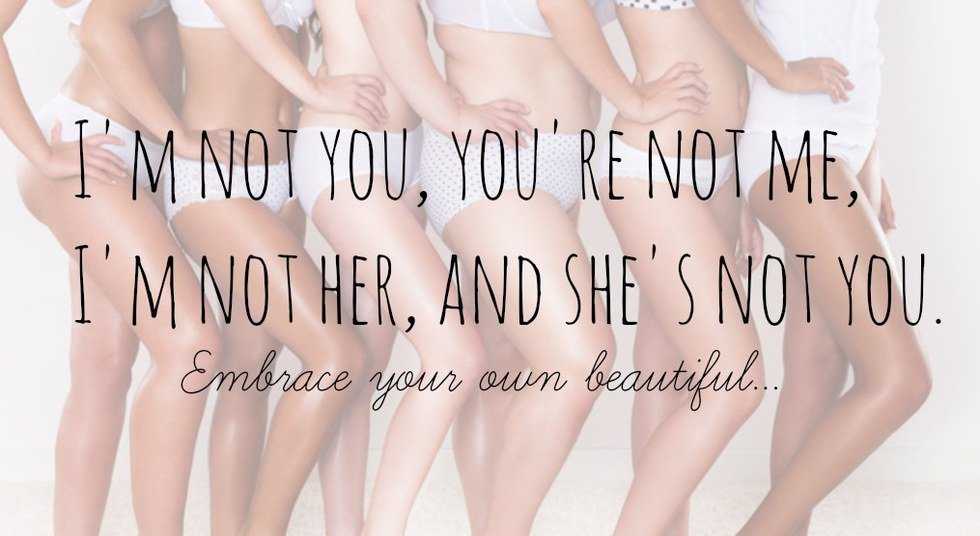
One of the most negatively perceived ideals that is catalyzed by the ever-so popular social media is the idea of the "perfect" body type. With this integration of cultures via social media, comes a warped perception of how the body should look.
According to Tina Fey in her novel Bossypants, "...every girl is expected to have Caucasian blue eyes, full Spanish lips, a classic button nose, hairless Asian skin with a California tan, a Jamaican dance hall ass, long Swedish legs, small Japanese feet, the abs of a lesbian gym owner, the hips of a nine-year-old boy, the arms of Michelle Obama, and doll tits.” Well said Tina, well said.
Despite her satirical tone due to her comedic nature, what Fey said is exactly true. If one does not attain the "hips of a nine-year-old boy" or the "abs of a lesbian gym owner", self-body shaming can come into play. And thanks to the wonderful world of social media, body shaming of others is consequently inevitable.
As defined by authoritynutrition.com, fat shaming is "the act of criticizing one about their body type in order to get them to feel negatively about themselves." Whether the intentions of the one who is doing the shaming are for good purposes only or solely for the purpose of bullying a person, shaming one about their body type has a reverse effect on a person and makes them feel worse about themselves– naturally.
Coming from personal experience, being told you need to lose weight is not the best feeling in the world. When you're being told in an extremely negative tone implying that your body isn't good enough and that you need to change it to conform to society, you feel vulnerable and helpless– in your own body. That's exactly the problem that is causing eating and depressive disorders in young individuals just because their stomach isn't "flat" or they haven't achieved a "thigh gap."
Activists today are always talking about equality to create a sense of inclusion in society, but the issue of weight hasn't been dissected enough and that it's an extremely prevalent issue in society. Someone shouldn't be told that they shouldn't wear extremely short shorts or a form fitting shirt; if that's how you want to express yourself that day, then you do you girl. Or boy, because this issue isn't just all encompassing of girls, which most seem to believe.
When or if you ever feel the unquenchable need to tell someone your personal opinion about how their body isn't ideal, instead of saying something along the lines of "starve yourself," ask about their dietary habits or workout routines because they could not have an ideal body but eat like a health nut and workout every day. Believe it or not, it may be genetically impossible for someone to be society's definition of "thin." Wow, who would've thought that?
If we really want a world that lives harmoniously together, we need to create a society of inclusion of all aspects of human diversity. Race, religion, and many other factors that have spurred controversy about equality are being constantly talked about, which is fantastic. Now, weight and body image should be a major factor in the inclusive practice of accepting everyone.
At the end of the day, we all have a heart, a brain, skin and bones. Just some of us may have larger fatty cells on our bodies than others.