
According to USA Swimming, nearly 70% of African American children have low or no swim ability compared to 40% of Caucasians. The history of pools and black people in America can explain why.
Dr. Jeff Wiltse, an associate professor of History at the University of Montana and the author of "Contested Waters: A Social History of Swimming Pools in America,” unearthed an unspoken correlation between black people and pools. He talked about how within the pool building spree of the 1920s and 1930s, large outdoor, resort-like pools were provided for white residents while black Americans were given (if they were given any at all) small indoor pools. Furthermore the high end pools were segregated in two ways: official segregation and violence. Black people who tried to access the better pools were oftentimes beat and dunked and punched in the water.
These racial tensions arose from two beliefs. One is the myth that black people are dirtier than white people. The idea that black people had communicable diseases caused white people to take violent measures to ensure that they would not be “infected.” The second coincides with gender integration in pools. Most whites did not want black men to touch or view or even come near white women in such an intimate space.
Then when public pools were finally desegregated, many white people stopped using them. Instead, they created private club pools or at-home residential pools to segregate themselves. During the 1920s, '30s and '40s, pools were a very high public priority, but currently they are not and anyone who wants access to private pools can gain access. This favors middle- and upper-class Americans. However, public pools are being closed down rapidly even though they're not being replaced. So relatively poor people, especially people living in large inner cities, have much less access to swimming pools than Americans have at any time during the last, say, hundred years, confirms, Dr. Wiltse.
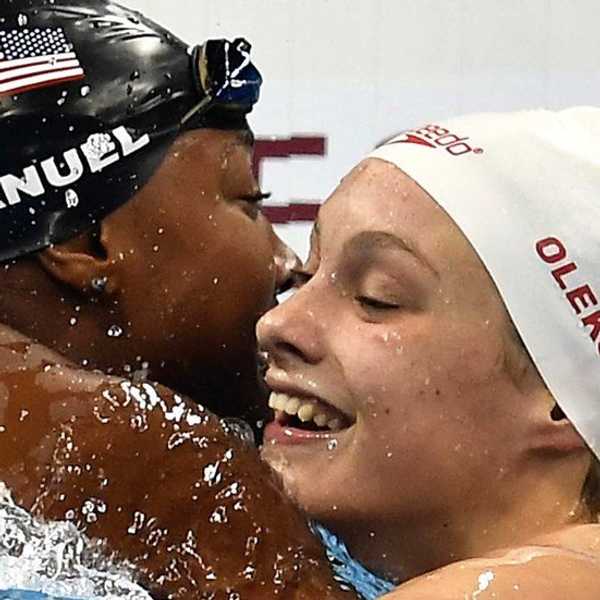
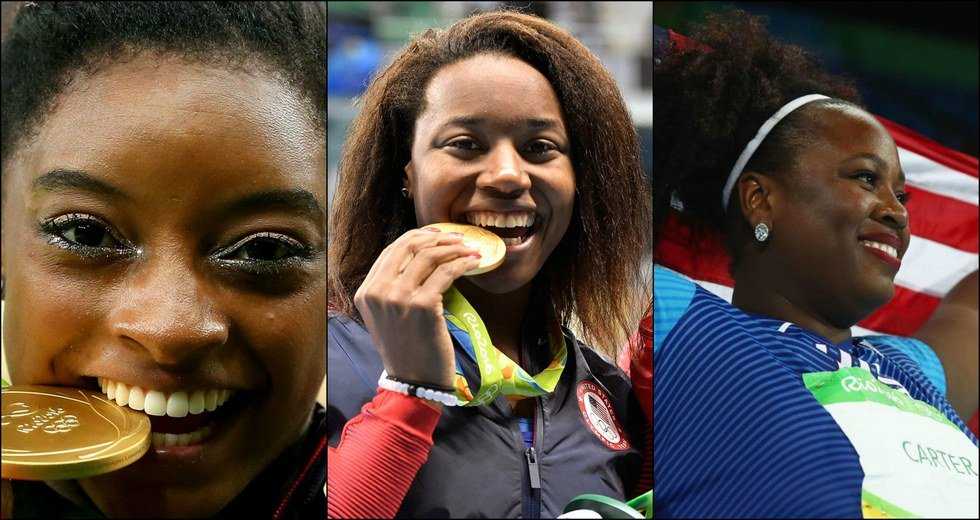
It’s astonishing that we live in an era where the “First African American” is still a phrase in use. I believe that America’s racial history can’t be denied because it is written within those few words. For years and still today, black people do not have all of the opportunities that white people have. Yet opportunity is all it takes for black people to excel. Turning to the 2016 Olympics, we can see the embodiment of this. Not only did Simone Manuel become the first African American woman to win a gold medal in an individual swimming event for the United States, she also set an Olympic record, AND she gave the US their first gold in 100m free since 1984. But the black girl magic does not stop there.
Simone Biles is an indomitable force in gymnastics. Biles did not win by a tenth or a few tenths as is typical in gymnastics, she won the gold by two whole points. She’s definitely not a three-time world champion AND the best gymnast in the world for nothing. But black women aren't limited to just gymnastics or swimming. Michelle Carter, with her powerful throw, became the first US woman to win an olympic gold in shot put.
This is black excellence on the rise. And this is what Viola Davis meant in her speech at the Emmy awards--“Let me tell you something: the only thing that separates women of color from anyone else is opportunity.” This, America, is only the beginning.