Two months ago, I bared my heart and soul for the world to read, leaving myself completely vulnerable. When you write something so candid and so personal, it is difficult to imagine what people will say about it. Will this become an elephant in the room? Will people reject it? Will people be supportive, or will they mock me and see it as nothing more than a desperate cry for attention? People warned me not to publish it, saying that it would only bring about negative feedback. However, I knew in my heart that the reason I wanted to write about my struggle with Obsessive Compulsive Disorder was to help people gain a better understanding of what living with a mental illness truly entails. So often people would nonchalantly joke about OCD, and I realized that it was because of the lack of understanding surrounding OCD and similar illnesses. Despite the fear of rejection, I took it upon myself to try and eliminate the stigma surrounding OCD in hopes that people who were struggling would be able to find the courage to get help without feeling embarrassed or ashamed.
Following its publication, the reaction to my article about my struggle with Obsessive Compulsive Disorder was far greater than I could have ever imagined. Distant friends reached out, telling me to "stay strong" and wishing me luck as I fought against the thoughts inhabiting my mind. People I knew only by name messaged me on Facebook to share their support, telling me how my article had changed the way they view OCD. I was told that I "deserve all the happiness in the world" by someone I had never spoken to before, making my eyes well with tears; the simple fact that people who did not even know me could be so kind and supportive gave me a new appreciation for the power of writing and the effect it could have on complete strangers.
Despite the support from those who I knew, it was the many strangers that touched me the most. People from Australia, Europe, Canada, and all across the United States reached out, sharing words of encouragement and thanks. They confided that I was able to verbalize and articulate what they had been internally suffering from for decades, giving them hope and encouragement to fight against their obsessions and compulsions. Many said that they shared my article with their loved ones, who had never before understood what it meant to suffer from OCD. Parents reached out, expressing their appreciation for being able to understand what their children go through on a daily basis. Others asked for advice on how to act around people with OCD, or what they could do to help their children, friends, or family members. Some even credited me with being their inspiration and motivation to finally get help.
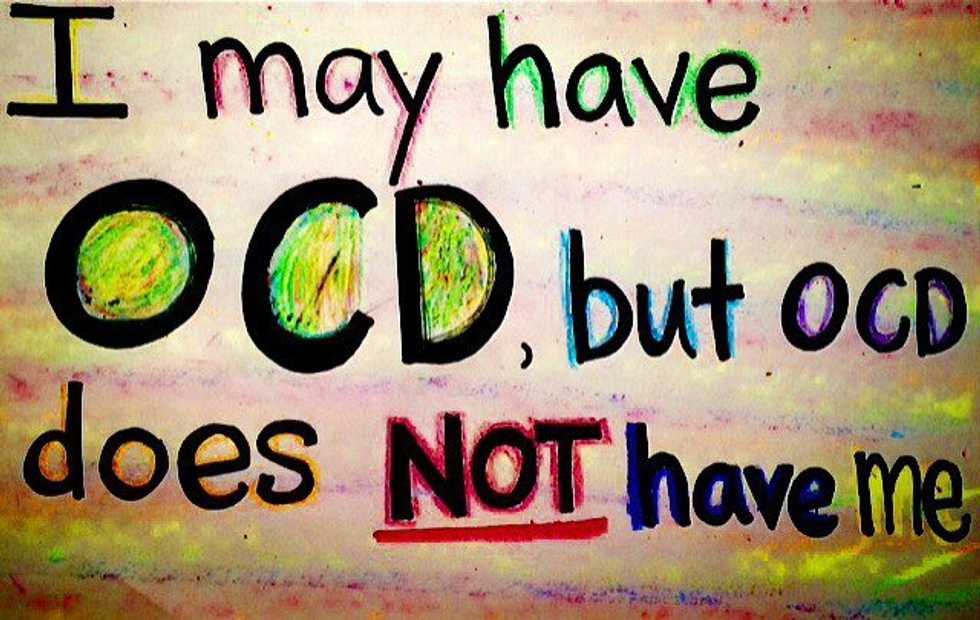
I reminded people that despite what others say, we are not OCD; we have OCD, but that does not define us.
While reading through the comments and messages, I felt a sense of pride in knowing that people were motivated to get help because of what I wrote. They were taking their mental illness by the reins and following the advice that I preached. During this time, however, I realized that I wasn't taking my own advice. I wasn't making an effort to fight against my obsessions or compulsions, and I let them consume me. In stressful times I would allow them to dominate my every thought and action, simply giving in to, as I called it in my college essay, the "wicked voice imprisoned in my mind, torturing me and making my life a tumultuous series of pressures."
With the newfound support that surrounded me, I found that I was working harder to control my obsessions and compulsions. I felt that if so many others were striving to free themselves from the grasp of OCD, then I should too. I found myself wanting to overcome them, because each time I did, it would be a small moment of internal victory.
One girl who reached out asking for advice had a particularly strong impact on me because we completely understood one another. We are only one year apart in age, and have many of the same symptoms. I have told her things about my case of Obsessive Compulsive Disorder that no one else in the entire world knows, because she completely understands what I feel. I have never felt comfortable to tell someone as much as I have told her about my OCD because she understands exactly what I feel. We relate over how preposterous it would sound to tell other people what went through our minds, and how being a teenaged girl with OCD brings about struggles on an entirely different level.
Through baring my heart and soul in a public piece, I have commenced my journey to completely overcoming Obsessive Compulsive Disorder. By inspiring others to fight against their OCD, I have been motivated by the hundreds of people whose lives I helped make even a little bit better. The occasional updates on their progress give me the motivation to better myself, and this experience has helped me realize that despite having OCD, I do deserve happiness, and that happiness first comes from within. Leaving myself completely vulnerable allowed me to understand the impact that words of hope can have on others, helping me to remind myself that, no matter what anyone says, I can, and eventually will, overcome Obsessive Compulsive Disorder one small victory at a time.