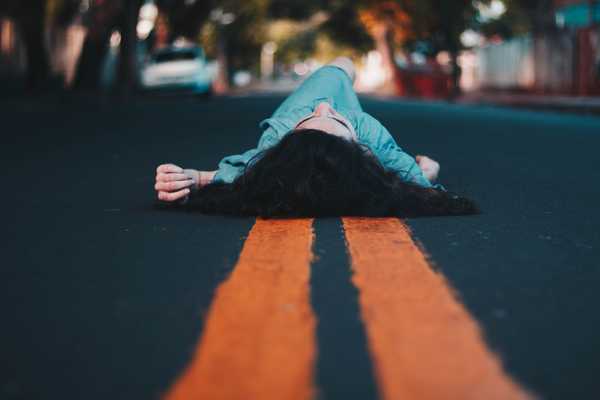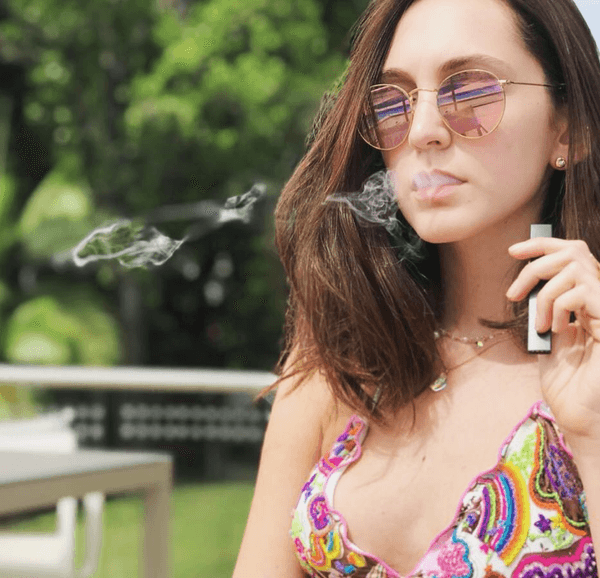

Mental illness is very pervasive in Western society, and so is the stigma attached to it. Part of the reason this stigma exists is because there is a lack of understanding among the general public of how it feels to suffer from a mental health problem. Some artists have seen this and taken it upon themselves to show the world what it is like through their work.
The Broken Light Collective is an online photo gallery for people affected by mental illness. The photos on the site are submitted by individuals all over, and each one demonstrates an individual's story. Below are images from the site.
Distant (One photo from the series)

Photos taken by contributor Jennifer, a photographer in her twenties from Jacksonville, Florida. Jennifer suffers from post-traumatic stress disorder. Her photography is influenced by her PTSD, and anxiety in general. Her work tends to center on the themes of longing, nostalgia, and occasionally hope. She especially enjoys creating and photographing miniature scenes. While art has always been her passion, since developing PTSD, it has also come to serve as an outlet and a form of therapy. Jennifer uses art to process who she is and who she wants to be, one day at a time.
About these photos: “Originally part of my series, ‘Melancholy’, these pieces have now been broken off to form their own series. ‘Distant’ features the dollhouse figure in the white dress, while ‘Melancholy’ features the dollhouse figure in the blue dress.
In the same way, while ‘Melancholy’ is about depression, anxiety flowing free and discovering fleeting bits of hope, ‘Distant’ is about longing, reaching, discovery – depression and anxiety in their ebb – and the moments that bring you back down.”
Find more from Jennifer on her website.
Caught in Her Own Chaos

Photo taken by contributor Samantha Pugsley, a conceptual fine art photographer in her twenties from Charlotte, North Carolina. She first picked up a camera during her junior year of college. This was right around the time when she was diagnosed with Generalized Anxiety Disorder. Things that were once easy became impossible for her. Getting dressed in the morning, shopping at the grocery store, driving her car…just living, was a panic attack waiting to happen. Photography helped her heal. With her camera she could start a conversation about what was going on in her head. She could say things with her images that she didn’t know how to say out loud.
About this photo: “On the days where my anxiety is really bad, it’s impossible for me to see anything but the dread and worry. I decided to be as literal as I could be while creating this. In this image, the woman wears a beautiful dress and holds a beautiful bouquet but she can’t see them to experience their beauty. She is caught in her own chaos, oblivious to everything around her.”
Desolate: A Conceptual Self-Portrait

Photo taken by contributor Jaeda DeWalt, a conceptual self-portrait artist in her forties from Seattle, Washington. Her battles with mental illness hearken back to her earliest memories, at age 4, when she became obsessed with the number four and performed exhaustive rituals in patterns of four. During her teen years, she began noticing extreme mood swings, manic one moment and depressed the next, and in her late 20’s she finally sought treatment and was diagnosed with Bipolar, OCD, PTSD, Anxiety, and ADHD. Her doctors told her they believed the mental illness was brought on by a severe concussion she sustained at age two, along with the trauma of being sexually abused as a child into her young adult years. Her life was filled with self-destructive coping methods until she went full force into creating, in her mid-twenties. The process of creating and putting herself in front of the camera felt cathartic, liberating and healing. The photographic medium opened up a new world to her and ignited a kind of passion within that she didn’t even know she was capable of experiencing. She has been on an ever-evolving, healing journey, ever since.
About this photo: “The images of my legs and face were photographed in my studio. The curved wall was taken from the interior of an office. The background was photographed while on visit to Ocean Shores, Washington. Then all images were layered and combined in Adobe Photoshop CS.
DESOLATE – SELF PORTRAIT
The downward spiral brings with it
A vast emotional void
Desolate, barren
Faces that will not reveal
Mouths that will not speak
Of this sad and isolated place
The origins are unclear
The duration unknown
Quicksand for the soul”
Find more from Jaeda at Facebook, Twitter and YouTube.
Dissociation

Photo taken by Hayley, a photography and new media student who has suffered from anorexia and anxiety. Her passions include adventure, traveling, music, art, and the outdoors.
About this photo: “Dissociation describes my current self. I have been overwhelmed with stress, anxiety and grief. All these factors have made me feel detached from my body, nothing feels real. It’s as though everything is a dream and this also makes my dreams feel more real as they are too similar to my waking life. The image is a self portraiture showing how I feel as a person going through grief at this moment.”
Haunting Beauty (One photo from the series)

Photos taken by Anastasia, a 25-year-old Greek architect who has lived in Athens, Greece for the past 7 years. Photography has become her way to preserve moments and enhance memory. Through her projects she strives to awaken feelings that nourish and expand imagination. Mental health issues, such as severe depression, have affected many people who she cares for deeply, including close family and friends, and it has influenced her a lot in the way she deals with situations in everyday life. She thinks that everyone’s story can be interpreted through imagery, and values highly visual stimuli that evoke nostalgia, or “emotional deja-vu.” She believes through this process someone can discover himself anew, readjust the past and move forward, explore and conquer or let go.
About these photos: “These photographs are from a series I call “Inhabit” that explores the theme of traveling back through emotions. It is a story unfolding in three parts: First part, Intrusion, which includes these photos. The exploration begins. A spirit comes across a house, a trip down memory lane. Second part, Contemplation. The little spirit can’t decide if it should stay here or leave this empty shell… where to go? Enter part three, Escape. Things may end, things will go away. Faint footprints spirits leave, and to be captured can mean freedom when fragility forms strength.”
Escape

Photo taken by a contributor with Major Depressive Disorder and Agoraphobia to varying degrees. She is getting out more than she was a year ago, so hopefully things will keep heading in that direction.
About this photo: “Depression has left me treading the waters of a murky sea for a long time. Thankfully, I am starting to emerge. I even went to a beach recently and a pool. Instead of focusing on my intrusive negative thoughts, I tried to focus on the calming nature of the water, and the vast beauty and potential of the world. A Rumi quote came to mind. It is one of those easier said than done phrases, but it’s beautiful, and one that I am trying to embrace more and more…
‘Don’t sit and wait. Get out there, feel life. Touch the sun, and immerse in the sea.’ ”
Multiple Personalities (All photos from the series)


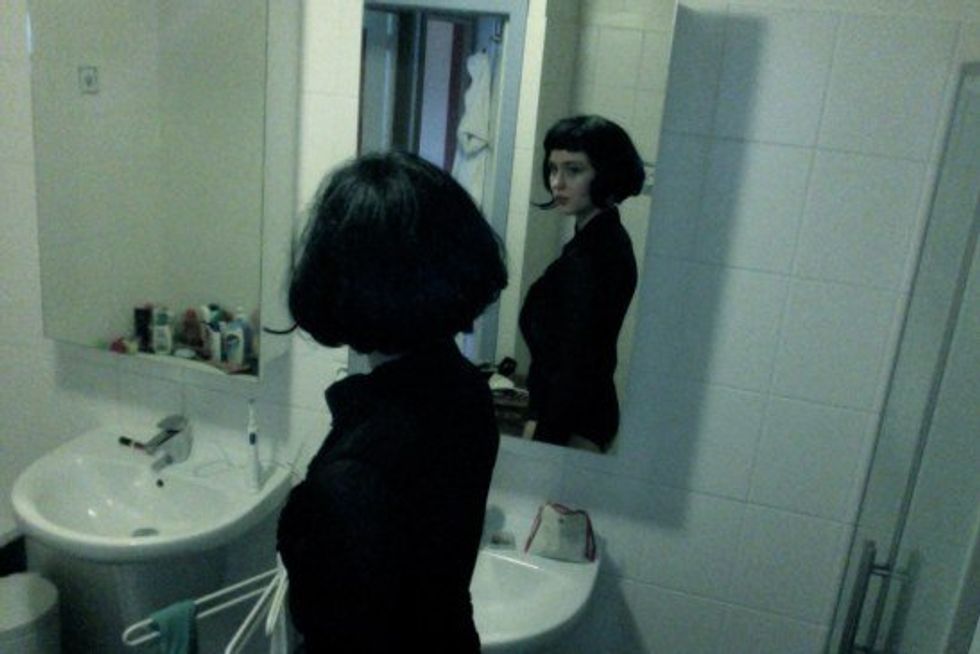
Photos taken by Quantumphysica. In her words: “Last year was a hectic time for me, I got incarcerated (twice) and have been diagnosed with schizophrenia, malignant narcissism and mild DID (Dissociative Identity Disorder or Multiple Personality Disorder). The schizophrenia is most likely a hereditary condition, as there are more cases on my mother’s side of the family… as for the narcissism… I think I have always been like that. I share my head with a woman who refers to herself as The Riemann Hypothesis. I don’t know what she does, but apparently she does know everything I do. It is a confusing situation. I also study History of Art at the moment, but I used to be a Physics student. My psychosis turned my life upside down, and I had to abandon those dreams. Despite that, I will always love Physics. I still live at home and that’s not the easiest of situations for me, but I try to cope as good as I can.”
About these photos: “This first photo is me and Riemann, or Riemann and herself, I don’t know. I am not in my own eyes, it is odd to see that on a photo. We converse with each other at times, Riemann and I.
The second one… Sometimes I don’t recognize my own reflection.”
Self Portrait #5

Photo taken by contributor Heidi Spitzig, a 37-year-old woman from the Finger Lakes region of New York. Heidi is a survivor of childhood sexual, physical, emotional, and spiritual abuse and lives with anxiety, depression, PTSD, and DID. She believes in the healing power of the creative process and uses photography as a way to remain present and connected to the beauty found in the natural world. Heidi also enjoys writing, painting, drawing, and many other forms of creative self-expression. She has a Masters degree in Psychology and works as a teacher and an expressive arts facilitator.
About this photo: “I took this photo when I was at the bottom of a pretty intense depressive episode. Depression can reek havoc on the way I think, which then clouds my perception. People and places can seem inaccessible, like I don’t have the right to take up space. Before I took this picture, I felt an overwhelming sense of shame that left me isolated to the point of believing I was completely alone. I needed to feel connected to something, so I went into the woods with my camera. I wasn’t really sure what I was going to do, but I found myself kind of watch myself take a series of self-portraits. I say “watch myself” because that’s how it felt to take the pictures — I felt too vulnerable to be a part of it, so I watched myself go through the process in a pretty detached/dissociated way. It wasn’t until I got home and began editing the photos that I realized I was trying to send a message to myself. Once I understood what that message was, my perception began to shift from a reality filled with heavy darkness to a reality that was a bit brighter and bit lighter in its clarity.”
See more from Heidi at her website or blog.
Body Dysmorphia

Photo taken by contributor Samantha Pugsley, a 24-year-old conceptual fine art photographer from Charlotte, North Carolina. She first picked up a camera during her junior year of college. This was right around the time when she was diagnosed with Generalized Anxiety Disorder. Things that were once easy became impossible for her. Getting dressed in the morning, shopping at the grocery story, driving her car…just living, was a panic attack waiting to happen. Photography helped her heal. With her camera she could start a conversation about what was going on in her head. She could say things with her images that she didn’t know how to say out loud. She still struggles with anxiety but making art helps her talk about it and manage it. She started a 365 photography project to ensure that she’d be doing what brings her joy every single day. She has noticed that her anxiety level is much lower if she spends time with her camera every day.
About this photo: “This photograph was very emotional for me. I suffer from body dysmorphic disorder. I’ve always seen my body as something to hate. Since I started taking self portraits, I’ve been learning to see my body as art instead of as my enemy. Shooting this image wasn’t as difficult as I expected, but when I opened it up on my computer to edit it, I felt compelled to alter my body and make it look thinner. I scrapped the first edited version because looking at the final product felt wrong. This concept demanded honesty and bravery. I overcame my body dysmorphia and left my body alone.”
Find more from Samantha on her website or flickr page.
Melting Point

Photo taken by Anna Jordan from England, who has Borderline Personality Disorder. She has been struggling with depression, anxiety and weight problems since her early teens. Creating art helps her to release the negative emotions and turn them into something positive and productive. She says that helps her to lead a normal life without restricting herself or being restricted by her health.
About this photo: "In this image, I felt inspired by the beauty of frost. I wanted to convey my internal conflict of what can only be described as a kind of ‘mania’. This feeling is clearly unnatural to my personality, but it gives me a sense of invincibility or/and power. Clear minded, focused, completely in control. Despite this drastic change in mood my appearance stays the same; I imagine that if I were a cartoon super hero feeling like this, the only way you’d know I was in this mood is that my hair would blow in an imaginary breeze. This feeling is often the state in which I find my next art idea from."
Photos and descriptions via the Broken Light Collective.