I watched as my mom’s face quickly darted through the crowd back to her car in the rain as I sat on the yellow school bus. I was 11 years old and heading off to sleep away camp for the first time. I didn’t know it yet, but I was about to have a panic attack. I lasted 24 hours at the place that was supposed to be camp, but was just a renovated religious retreat center in the middle of nowhere Maryland. Family members still to this day make fun of me for only lasting that long, claiming I just missed my parents too much. The real issue, though? Separation anxiety.
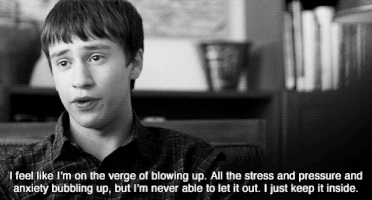
I would face this again 7 years later as I finished my senior year in high school. I went through the college process too hastily. I felt pressure as soon as the middle of April came around to suddenly pick a school because that's what everyone else was doing. So that's exactly what I did, picked a school because they accepted me and had the urban setting that I wanted. The panic set in as soon as I went to orientation. I was fine the first day, but as I lay in bed the next morning I felt the familiar feeling of the panic attack. With shaking fingers, I texted a close family friend saying what was wrong but they just said it was nerves. No one could understand what I was going through. I thought I would cry any minute, my stomach aching and my head spinning. No one knew me.
According to the Anxiety and Depression Association of America, there are 15 million other people, or 6% of the population that suffer from social anxiety just like me. “According to a 2007 ADAA survey, 36% of people with social anxiety disorder report experiencing symptoms for 10 or more years before seeking help.” That quote speaks true to me--- I didn’t identify what was going on with me until 8 years after the first time it happened. I never know how to explain to people that I have social anxiety. I usually sum it up as feeling like I am living in a constant set of headaches and my head is full of question marks. I also read that children who are undiagnosed are less likely to participate in many social experiences. I again relate to this, as my anxiety has kept me stuck in my comfort zone. I like to know exactly how things will go and the ins and outs of every experience that I am a part of beforehand. Although, I am learning to push myself out of my comfort zone as I get older and learn more about myself.
The biggest part of this disorder is learning that you can slowly push yourself further out of what comforts you. You can tell yourself that nothing bad will happen by deciding to go out with a different group of friends or by flying to a foreign country and trying new things. This disorder also rests on the people with whom you surround yourself. You need a circle of people who you can trust enough to tell exactly what is going wrong. It’s worse to hold it in and be physically pained rather than releasing it and letting someone take some of the burden away from your running mind.
Don’t let your anxiety get in the way of living your best life.