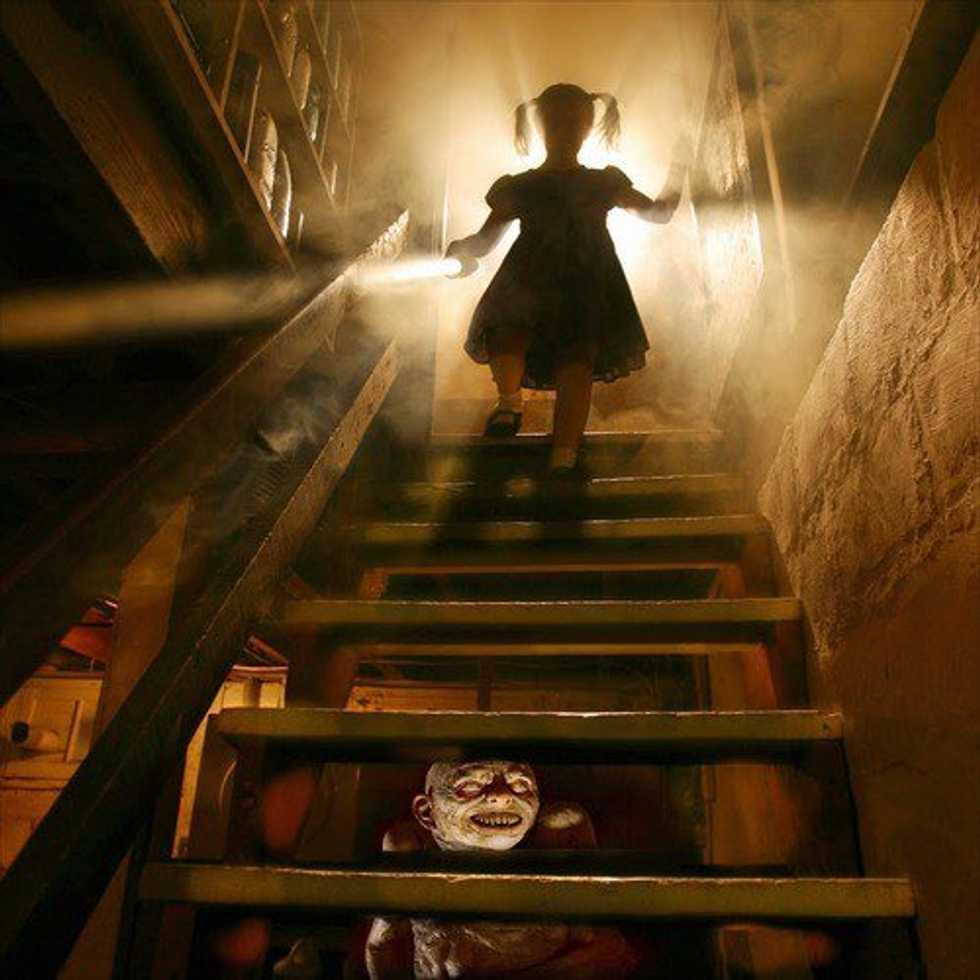
I don’t like the dark. It’s always been that way. My friends would play hide and seek with the lights off to make it more exciting, but I disliked the idea too much to play with them.
It’s strange, but being inexplicably terrified of seemingly harmless things--the attic, your closet, the empty space behind the couch, the basement--seems to be an integral part of childhood. Gradually, age brings with it the knowledge that there’s nothing under the bed except for what you shoved there, which can be terrifying in a whole new way, and that the only reason that your closet is going to suddenly burst open is that you have too many clothes in it. Once-unsettling childhood fears start to make some sense. The dark was scary because it represents the unknown. Getting lost at K-mart was awful because it meant that you were separated from Mom and Dad. Strangers made us shut down because it was hard to tell whether or not they meant harm.
Of course little children are afraid of the dark, but so are adults.
We’re still afraid of the unknown. It's just that fear of the unknown is probably no longer as simple as hesitating to walk into a dark room because you can’t see what’s in there. It manifests itself in the fear of change, of tomorrow.
The idea of abandonment no longer exists in the terms of being alone in an aisle of a grocery store. Average college-goers typically live by themselves, get around town by themselves, and certainly do their grocery shopping by themselves. They live in the real world and encounter real fears. The fear of being alone is real and it is constant. Being lost is never fun. Trying to find your way back home from an unfamiliar place is easily on top of the list of things that nobody wants to do. For argument’s sake, let’s say that you have a great sense of direction and just don’t get lost. The fear of losing your way is absent, but what about getting lost in the crowd, or losing yourself? What does the thought of waking up with amnesia do for you?
It's agreed that most of us don’t run and hide the second that we see a stranger approaching, but new people do set off some alarms. The nagging questions of what these people think of us and our work, whether or not they like us, what they thought of us when we first met, and so on occur to all of us at some point during a relationship.
So what does this mean in real-life terms? For starters, there are some physical reactions in which fear manifests. Your body initiates the fight-or-flight response. Your breathing speeds up, your heart races, and your muscles tighten. But the presence of fear in our lives is more than biological stimulus. Fear of getting hit by a car keeps you on the sidewalk. Fear of cutting yourself teaches you the right way to use a blade. Fear of failing powers you through finals week. Fear of an uncertain tomorrow makes you want to build one for yourself, fear of losing your loved ones urges you to keep them close, and the fear of getting lost in the crowd makes you fight to stand out.
Fear can be motivation, proof of attachment, and a survival skill. It tells you that there are things that are important to you. That’s the point. This doesn’t mean that you become brave by giving up everything that could mean anything to you. Moving to a city where nobody knows you and trying to change that is brave. Owning up to your faults despite the risk of judgement is brave. Telling someone what they mean to you, with no knowledge of your value in their life, is brave.
Bravery is not about eliminating our fears, it’s about living with them because what excites us is more powerful than what scares us. The joy of making a new friend beats the fear of rejection. The love that you’re afraid to lose gives you more than your fear of losing it does. Anxiety for the future comes nowhere close to the satisfaction of its realization.
“Grow up. Monsters aren’t real,” we were told. But we all have our monsters and we face them every day. That's OK. Being afraid to lose something means that you have something to lose. It’s great to have fears and it’s even greater to make it through those fears.
So the next time that the Boogeyman grabs your leg from under your bed, reach down, pull him out, and smack him in the face. There’s more to life than being afraid of the dark.