
On Tuesday, November 8th the United States will make one of the MOST important decision in history. Everyone in this country has an obligation to vote. Many feel that their voice isn't important or rather doesn't make a difference but that is not true! Every vote matters ! It is so IMPORTANT that you register to vote, practice your right and vote this November. Here are 8 reasons why you need to vote this fall.
1) Higher turnout makes our democracy more representative.
The consequences of ignoring congressional races can reverberate for years. In 2010, the Republican Party not only took back the House of Representatives, crippling President Barack Obama’s agenda, but it also won a majority of state legislatures at an especially decisive moment. Since the decennial census took place in 2010, those state legislatures were able to gerrymander congressional districts in a way that will likely keep the House under Republican control until after the next census in 2022.
There are many reasons, of course among them that people do not vote on economic concerns alone and big business interests have poured major resources into lobbying against it.
But at least part of the answer lies in the fact that many Americans who support those policies do not bother voting ― particularly in the midterm congressional elections, when the presidency is not at stake.
That is especially true because the groups most likely to support progressive policies like a minimum wage hike ― people of color, low-income people and young people ― turn out in particularly low numbers in midterm elections.
Local elections are also where citizens decide on the issues that can most directly affect you, including reproductive rights, public school control and discrimination laws.2) To the voters go the spoils.
Elected officials do not only respond to voters’ policy preferences, they also award a greater chunk of public resources to the people who bother to show up.A 2012 study conducted by economists from Dartmouth and Yale found that Southern state governments began transferring more funding to counties with larger black populations after the passage of the Voting Rights Act gave African-Americans the franchise in 1965. The average county where segregation-era “literacy tests” had severely limited black voting before the VRA, state funding per person increased some 12.4 percent, as even politicians who previously supported segregation sought black votes.
3) The margin of victory can be important
Let’s say you do not live in a state that is competitive in a presidential election, or one where a Senate seat is a toss-up. Perhaps the member of Congress who represents your district has a lock on the seat thanks to gerrymandering.
You still should vote in your election, because even if the candidate you loathe is destined to win in a landslide, you can make a dent in their margin of victory. That limits how much of a “mandate” they can claim once in office, encouraging them to promote more moderate policies so as not to jeopardize their re-election. Conversely, even if you know your preferred candidate will win, adding to her margin of victory can only help her advance her agenda in office.
4) Even a vote for a third party can have an impact.
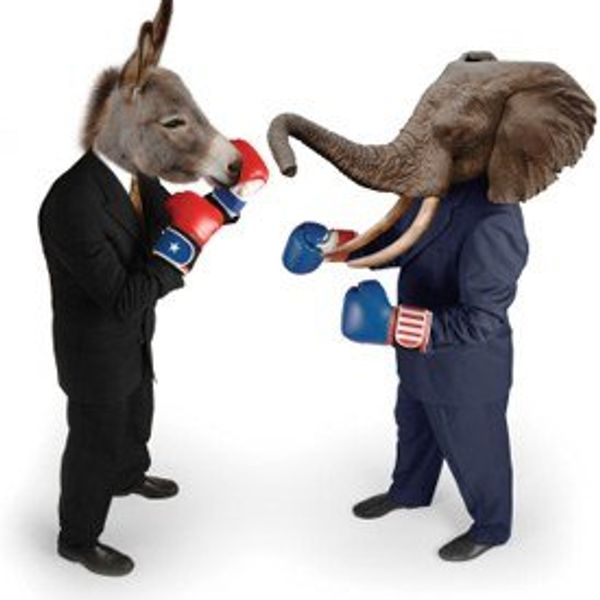
In a system designed to let two political parties ― the Democrats and the Republicans ― dominate, it is easy to conclude that voting for another party, especially in a high-stakes presidential race, is a waste. Or worse still, to view it as the de-facto empowerment of a dangerous candidate.
There is plenty of evidence to support those fears. Many liberals still lament Ralph Nader's third party bid in 2000, which they argue cost Democratic nominee Al Gore a win in Florida that would have spared the country the presidency of George W. Bush. Nowadays, progressives are warning against voting for Green Party nominee Jill Stein for similar reasons.
But if you just cannot bear the thought of voting for either of the two major parties’ presidential nominees, and you genuinely believe there is little difference between the candidates on an issue that matters to you, picking a third party is a perfectly valid option.
5) It is not just the president on the ballot.
How the next president can do depends on whether his or her party controls either the Senate or the House. The size of those parties’ majorities also makes a difference. A filibuster-proof, 60-vote supermajority in the Senate, for instance, can enable or cripple a president much more decisively than a simple majority.
And you don’t have to live in a state that is competitive in the presidential election for your vote to make a difference at the congressional level. The competitive Senate and House races may not be in presidential swing states at all.
6) Voting is a right generations of Americans struggled to win and people in other countries are still fighting for.
Citizens may take their right to vote for granted, but it wasn’t truly that long ago when entire swaths of the population ― like women ― were denied that right. Women gained suffrage in 1919, meaning the grandmothers of many not-voting millennials were alive during a time when they were prohibited from casting a ballot.
Since the era of women’s suffrage, African-Americans, Asians, Latinos and Native Americans have all faced obstacles to voting at various times.
The relative ease of voting for many citizens ― particularly wealthier white ones ― makes it easy to forget the difficulty and outright danger of voting in other countries. While U.S. voters may be deterred by a long line at the polls, voters in countries like Afghanistan contend with terrorist violence. And despite threats from the Taliban, Afghan women in 2014 turned out in record numbers ― often risking their own lives ― to cast a vote in local council and presidential elections.
7) Voting is your voice!!!!
Voting is an important, meaningful way to back the issues you care about ― and the representatives you think can best effect the changes you want to see.If nothing else, voting is a license to justifiably complain about your elected officials. Your grievances will carry more weight if you speak out as a voter trying to hold your candidates accountable for promises they made.
8) Our children are depending on us to represent their voices too!
Because our children can’t vote, we have to do it for them. That’s how we make our concerns about schools, safety, housing, and other issues heard. When we vote, we are looking out for our kids, and their future.
Please, Novemeber 8th GO VOTE !!!