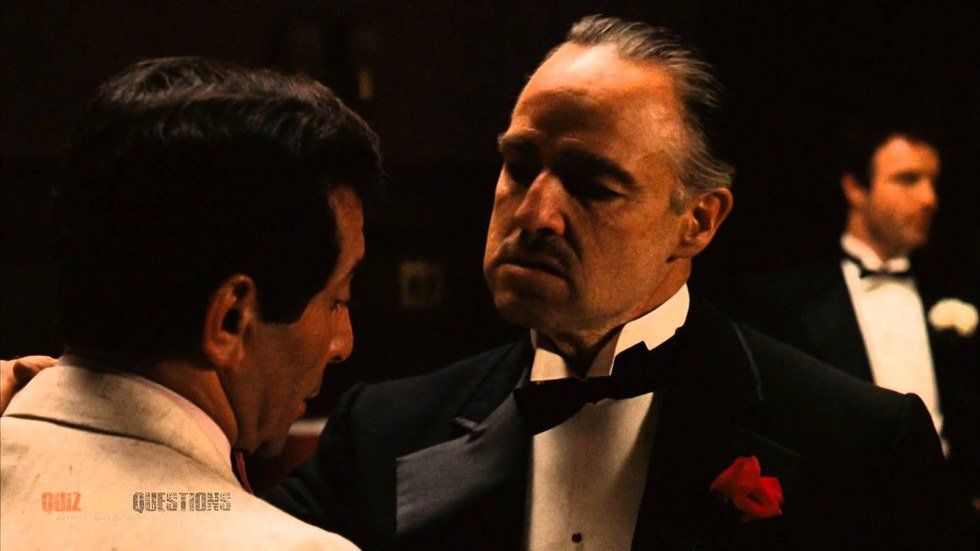
On September 28, 1970, Francis Ford Coppola was officially announced as the director for Paramount's newest project -- the film adaption of Mario Puzo's novel "The Godfather." Little did Coppola know that this position (which he turned down several times) would become one of the biggest achievements in the history of film and ultimately define his career. As one may assume, making a movie based on true accounts of organized crime is not the easiest or safest thing to do, but when you put a bunch of Italians in charge of a movie about the Italian Mafia, what else could you expect? Here's a few interesting facts about the production of (in my father's opinion) the greatest trilogy of all time.
1. It was hated before it was loved.
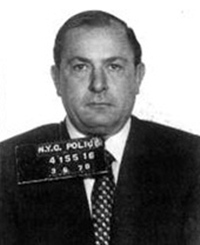
(Founder of the Italian-American Civil Rights League and notorious criminal, Joseph Colombo)
Although dubbed one of the biggest classics in the history of film, "The Godfather" series was actually widely loathed in the beginning of it's production. In the early 70s, the Italian-American Civil Rights League turned vicious in their attempts to shut down the project. Fed up with the media portraying Italians as lowlifes, thugs, and criminals, the League took to writing hateful letters, threatening production staff, and even sabotaging film equipment. Ironically, the founder of this League was none other than Joseph Colombo- one of the head honchos for the infamous Five Families of New York. After some time of ignoring the violent protesting, Paramount organized a meeting with Colombo in which they agreed that filming could continue under Colombo's one condition: the word "Mafia" would be removed from the script. Hilariously enough, whether he knew it or not, he made an offer Paramount couldn't refuse because the word only appeared once throughout the entire movie!
2. One of the mobsters became part of the production.

(Russo and Brando on set)
Having worked for Frank Costello (the notorious crime boss and inspiration for the character of Don Corleone), Gianni Russo backed Colombo in his efforts to stop production. Russo put on such an angry performance that Marlon Brando thought he was acting. Impressed, Brando made sure he was hired, and sure enough, he played the role of Don Corleone's son-in-law, Carlo Rizzi.
3. The horse head was real, and so were John Marley's screams.
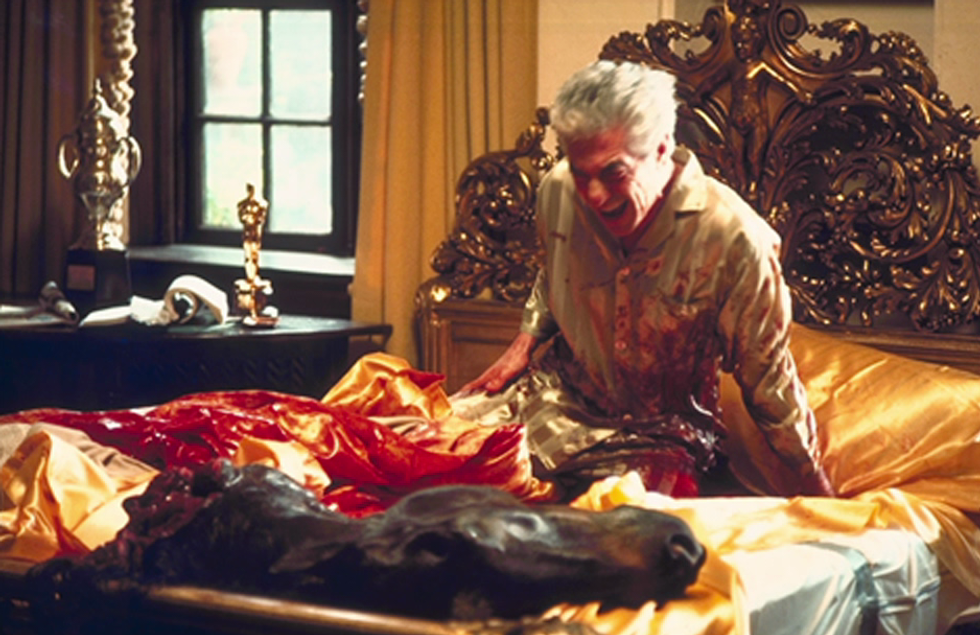
(Jack Woltz, played by John Marley, awakening to find the severed head of his prized horse)
After several takes with a fake head, director Francis Ford Coppola had it replaced with a genuine (yes, genuine), horse head from a dog food factory in New Jersey, unbeknownst to Marley. Coppola asked the factory to send it his way after (it was not slaughtered for the film), and he went up against heat from animal rights activists and was even discouraged by the studio, but he wasn't sold. Besides, a man who stood up to the actual Mafia wasn't going to give into angry protesters.
4. Marlon Brando and James Caan wore dental prosthetics.

(Marlon Brando before and after makeup)
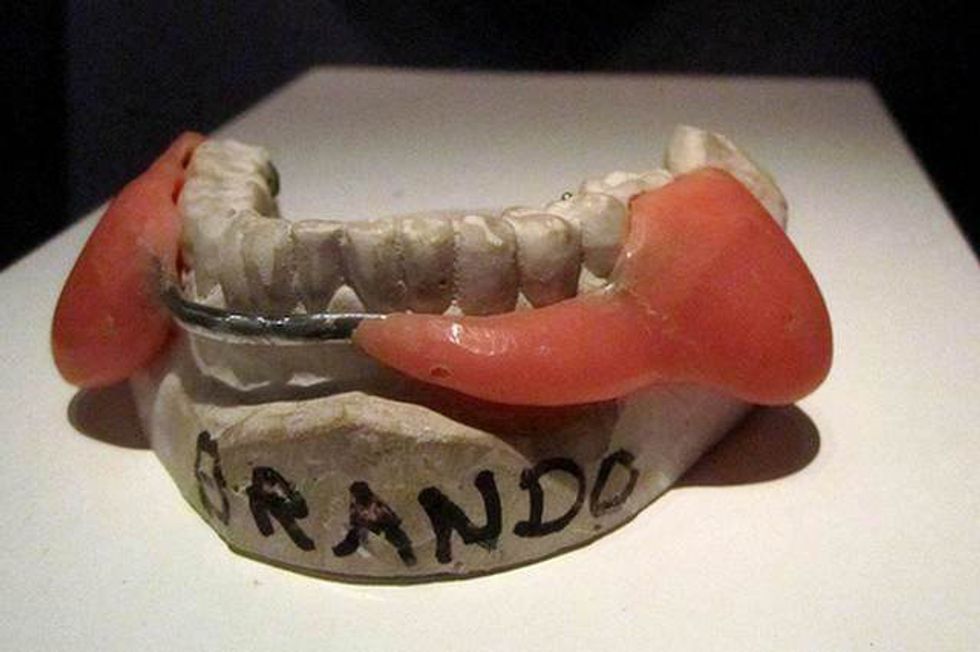
(Brando's mouthpiece on display at the Museum of the Moving Image in Queens, New York)
When it came time to audition, Marlon Brando stuffed his cheeks with cotton wool in order to give Don Corleone the desired "bulldog" appearance. A mouthpiece was constructed. Playing the role of Corleone's son, James Caan also had some prosthetic makeup done with quick-setting acrylic to make his "fangs" look a bit more animalisitc.
5. Frank Sinatra hated "The Godfather."

(Left: Mario Puzo, author of "The Godfather"; Right: Frank Sinatra, American singer, actor, and producer)
Before production even started, career-obsessed Sinatra threatened to break the legs of Mario Puzo when he realized the similarities between himself and character Johnny Fontane. He also went to Coppola and offered to play "Don Vito" (traditionally, the Italian term "don" preceded someone's first name as in the English term "uncle," but Puzo coined the idea of using it with the last name, which stuck throughout the set), but refused to work for Paramount. Unfortunately for Sinatra, he made an offer that Coppola could refuse, and his hatred for the series grew colder.
6. The set held a mooning competition.

(From left to right, James Caan as Sonny, Marlon Brando as Vito, director Francis Ford Coppola, Al Pacino as Michael, and John Cazale as Fredo)
James Caan, Marlon Brando, and Robert Duvall spent much of the production competing in a mooning contest. They would repeatedly jump in front of the camera and flash the entire set until Brando topped them all by crashing a big wedding scene. The cast agreed that there was no beating him, and he was awarded an engraved belt buckle that read, "Mighty Moon King."
7. The cat wasn't part of the script.
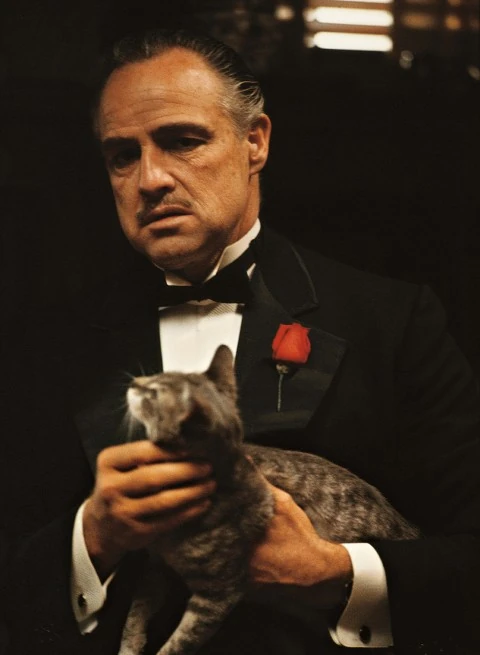
(Don Corleone and his cat)
The opening scene depicts Don Corleone stroking a cat while listening to the pleas of someone in need of his help. While a small yet powerful touch, his furry friend was a spontaneous improvisation as a stray cat walked across the set, so he picked it up and made it a part of his character. This, among several other improvisations throughout the movie, truly highlighted his outstanding talent as an actor.