You had questions, and I have answers. This article is in response to a recent article by Matthew Michaud titled "6 Questions For Bernie Sanders Supporters." As a young college-aged student myself, I can hopefully shed some light onto why your peers may be feeling the Bern, so to speak.
I am responding to these questions with a sincere hope that you wish to have them answered and to help others who have the same questions on their minds why so many people support Bernie Sanders.
You have good taste in shows, so hopefully you can see the goodness in this politician. Without further ado, here is the response.
1. "How can Bernie possibly raise minimum wage to $15?"
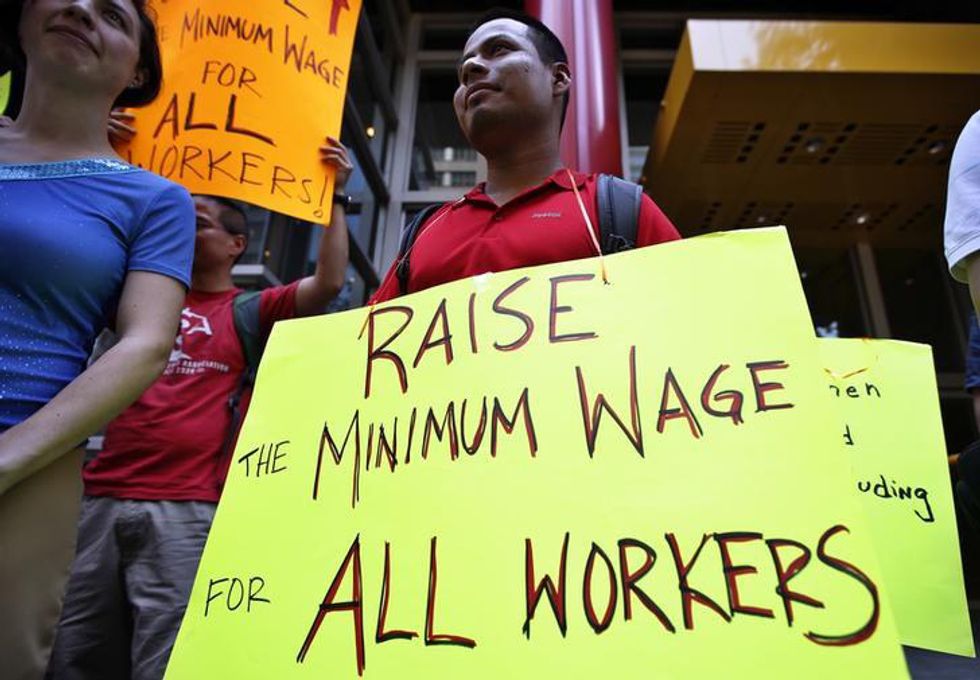
The problem with minimum wage today is that it has not been updated to account for inflation, nor has it even been upgraded at all since 2009. Our minimum wage is even lower, relative to inflation, than it was under more conservative presidents like Reagan; in 1968, the United States federal minimum wage peaked. If the minimum wage continued to increase due to inflation and the prosperity of the nation relative to the 1968 minimum wage, Americans would be paid over $26 an hour. The best part is, the country only had one minor recession in 1969, which was not even caused by that minimum wage increase; it was, rather, Nixon's budgetary cuts to the Vietnam War. Not even businesses seem to be against the minimum wage, even today. According to the Department of Labor, 60% of small business owners in the United States support an increase in minimum wage to $12; they believed it would only increase revenue for them in the long run. In what way is it $15 an hour unfeasible in our current economy?
"Money does not grow on trees and it is absolutely ludicrous that he thinks that he can raise minimum wage with the United States' current financial situation."
In our current financial situation, a minimum wage raise would actually help a lot. High wages means more money in the pockets of the people. More money means more spending, which is always fantastic for the economy.
2. "Why is socialism appealing?"
"Socialism stemmed from Marxism. Marxism is communism, so you're supporting an out branch of communism by supporting Bernie."
Socialism has no real connection to communism. Socialism was simply a system to distribute the profits of a new and seemingly miraculous industrial and technological boom caused by capitalism in the early nineteenth century. Socialism did not want to end capitalism, as they saw it as a lucrative economic system that could benefit everybody if they could put an end to the injustices within the system (such as long hours, no breaks, child workers, etc.) with national law (eight hour work days, obligatory breaks, child labor laws, truancy laws, etc.). Communism is a different system altogether. Marx saw private property as the root of all evil within society, believing it corrupted the bourgeoisie into enslaving the proletariat. As such, communism advocated for the abolition of private property (Marx, 22) and, by extension, capitalism. These two systems are clearly not the same thing. In fact, socialism came well before Marx penned his manifesto in 1848. So, at worst, I am supporting an off-branch of capitalism by supporting Bernie. Last I saw, Bernie was not advocating for the bloody slaughter of the capitalist class by a proletariat uprising.
"Socialism is not appealing at all. China is socialist."
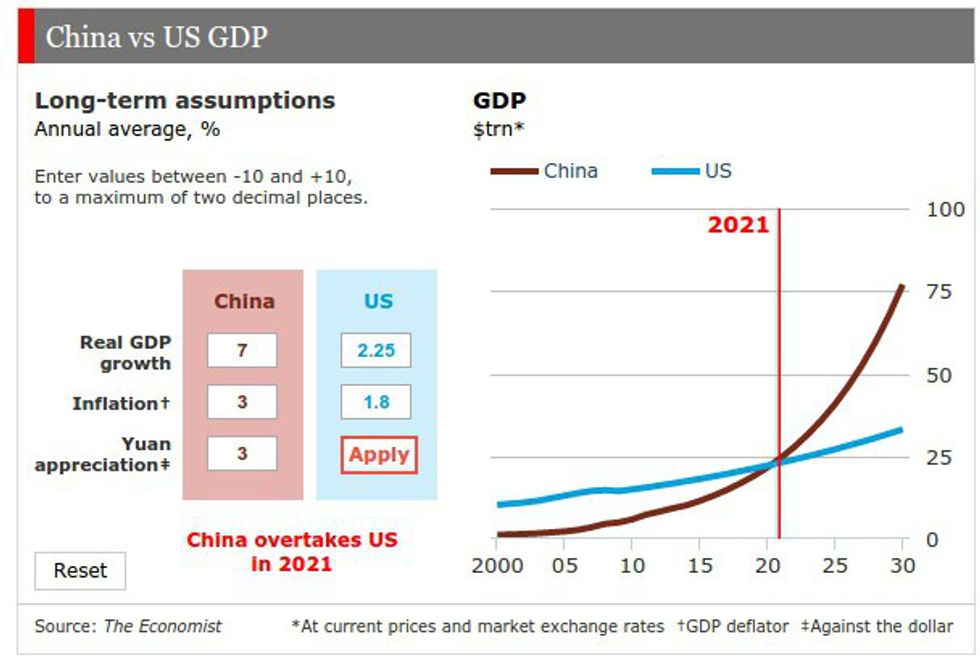
We can discuss China if you want. China has a "socialist market system," which is to say, a socialist economic system. It is not a communist system by any stretch of the imagination in spite of the power of the Communist Party, but it is accurate to consider China given its legitimate socialism. How do we reconcile that? The main problem with your argument is that it does not help your case. China's GDP is growing exponentially and is expected to surpass the United States' GDP by 2019; if China continues to grow, it will be almost 50% higher by 2050. Is that to say that I advocate for a Chinese system? No. However, I would say that you likely support socialism in many different ways. You likely support roads; public schools; police departments; fire departments; and the biggest socialist institution of all, the military. You likely support the eight hour work week, child labor laws, and the legal ability to unionize. Admit it: you're about as socialist as the rest of us.
3. "Why should the wealthy be singled out by Bernie?"
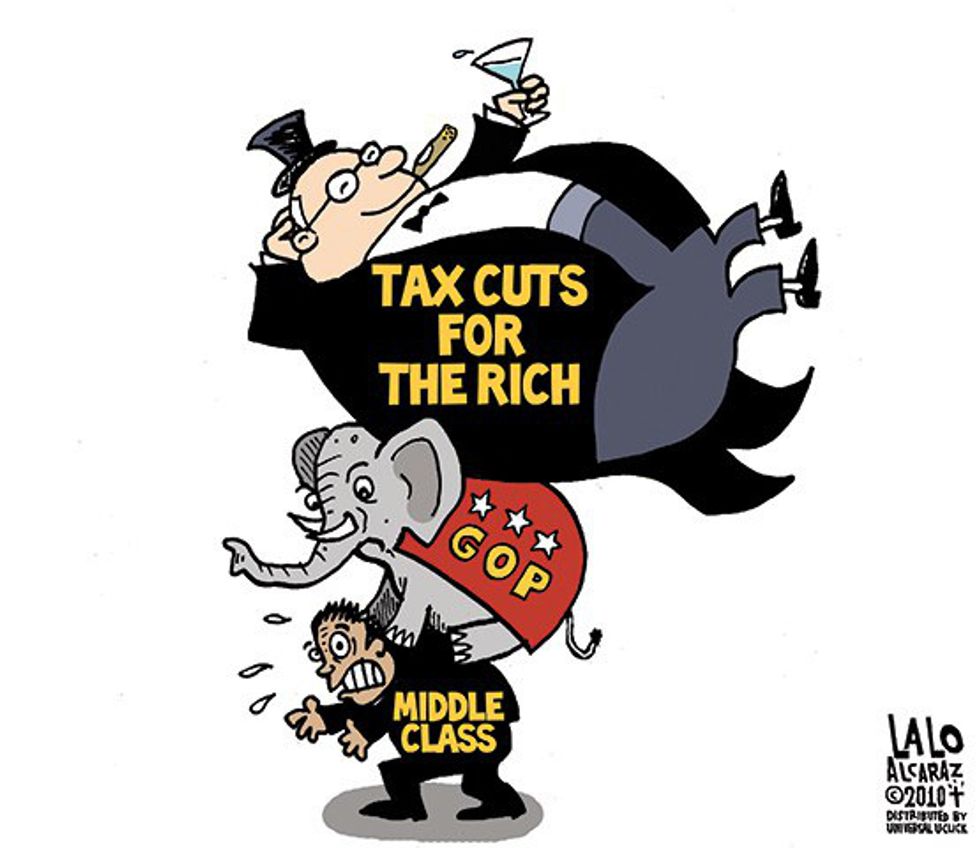
Bernie does not necessarily target the wealthy. Instead, he specifically targets Wall Street executives, who pay no taxes in spite of their over $5 quadrillion dollars worth of stocks and bonds. It is not marginalization. It is asking the Wall Street executive to pay pennies less than the family of four relative to their income brackets.
4. "Shouldn’t our future president try to mend the gap between Republicans and Democrats?"
This may be an unpopular view, but no. Our future president does not need to mend any gaps. He or she needs to stand up against those who are wrong and those who support immoral and illogical policies in spite of the criticism and the polarization that come with it. That is what integrity is.
5. "Shouldn’t our future president be well spoken?"
I think this may just be a topic we will have to agree to disagree on. I think he is a very good orator, and I think he debates quite well. This is likely down to preference, I would imagine. That said, I will just leave this here. I will also leave this here.
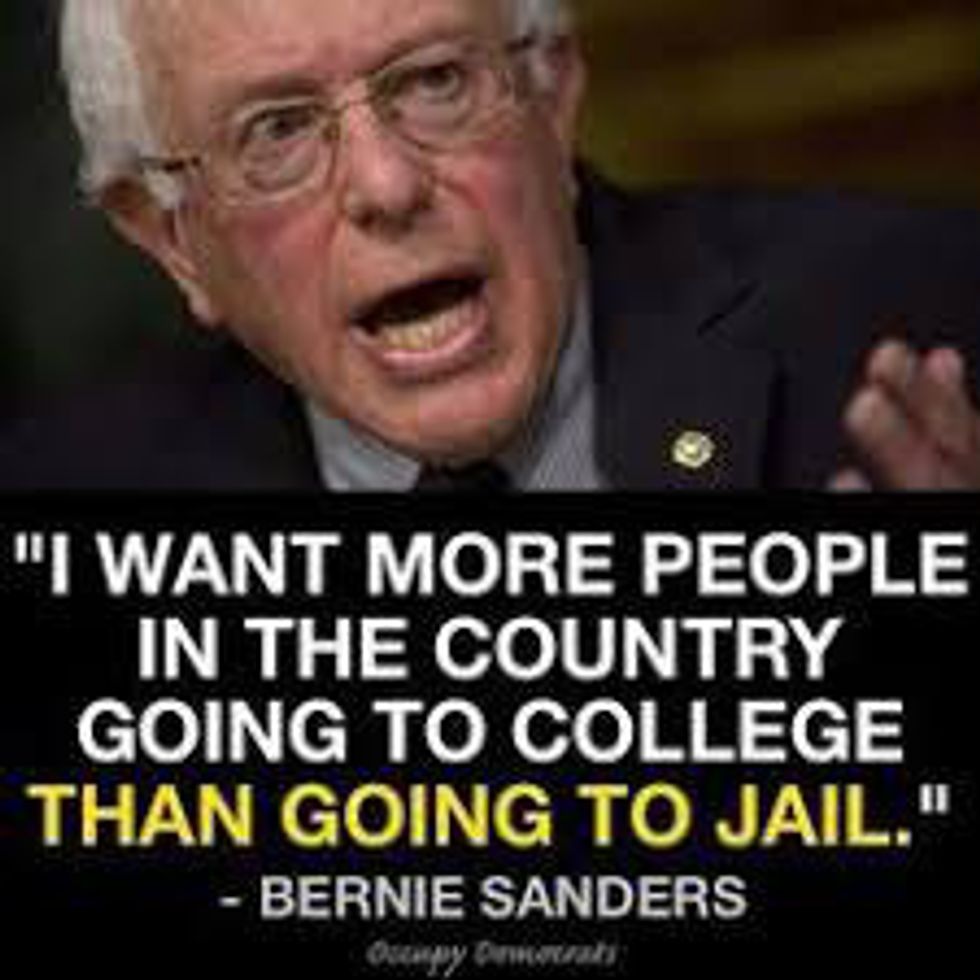
6. "How is free college even plausible?"
Very easily.
"Literally an insane idea to even consider possible in the United States."
I think the real insanity is that people have been duped into believing that tuition-free university is impossible or even expensive. There have been numerous studies done on the effects free college would have on the economy. By making tuition free for students, the government would no longer need to provide student loans and grants. In fact, by making school free instead, we would actually spend seven billion dollars less than we currently do. Even if this were untrue, Bernie Sanders intends on using the tax dollars earned by a financial transactions tax, which would effectively be a tax on Wall Street, to help pay for it.

There is nothing crazy about wanting Bernie Sanders as president. I hope these adequately answered your questions, and I hope you have a good day.