
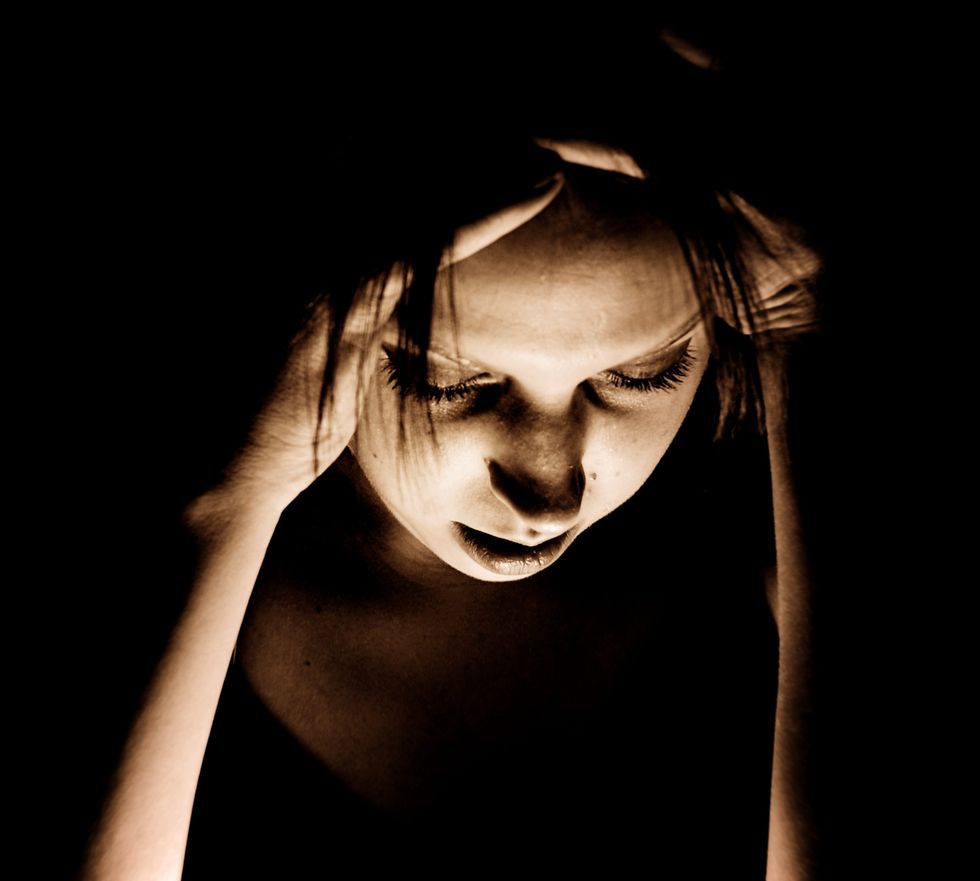
Not a lot of people know what photophobia is and the name makes it sound like a morbid fear of photography, but it really means an extreme sensitivity to light. My eyes process light differently than yours, so differently that daylight (and even nighttime) tasks that are simple for you are not so simple for me.
1. A trip to the grocery store on a sunny day is harrowing.
My extreme sensitivity to light can lead to crippling headaches and loss of detailed vision, so you can imagine that the midday sun does those of us with photophobia absolutely no favors. The bright tube lights in the store don’t help either. We go out and bring home our handfuls of groceries as quickly as we can, and then we’re done for the day, out of commission. A nap and a few more ibuprofen pills are needed before we can even think of turning on the kitchen light to cook the food we just bought. Where you can go grocery shopping on your lunch break and not think twice, it has to be the only thing we do or we suffer for it.
2. Driving is dangerous.
Think of my daylight vision as an overexposed photograph. Colors are damp, and light streaks extend far beyond their points of origins. Sunlight engulfs everything. I have to squint and shield my eyes and wiggle around to find the right angle to see a street sign or a building number. That’s extra time I have to spend not watching the road if I don’t know the area intimately. I won’t drive unless I have the exact route memorized, which means I won’t go very far.
Driving at night is, unexpectedly, even worse. The light from headlights coming at you almost takes over everything else on the road. Forget finding the right turn before the very last second. It takes a lot of intuition to drive at night with half the visibility of a normal person. In fact, I won’t even drive at night on populated roads, because if a headlight hits my eye the wrong way, I could lose control of the car or hit someone. Wearing sunglasses helps, but we all know how stupid that looks at 2 A.M..
3. 24-hour stores and jobs are your salvation, but also, your curse.
Bless the free market economy for stores that stay open all hours of the night, because suddenly, you don’t have to make constant trips to the grocery store in the ungodly hours of daylight. The perks are even better if you work at night, like me. I show up when it’s dark, and I leave at sunrise. I never have to see the harsh midday sun.
But, you have to get to that store first, which either involves brightly-lit public transit, walking a considerable distance, or driving. And we all know how I feel about driving.
4. Darkness is painful, too.
You’d think turning off all the lights and sitting in complete darkness would be heaven, but you’d be wrong. Darkness confuses my eyes. I don’t have the half vision in darkness that normal people have, where they can see nuances of objects well enough to avoid them. When everything is black, I just go bumbling forward and hope I don’t die on the way to the bathroom.
5. If you go outside without your arsenal of ibuprofen and sunglasses, you’re screwed.
Thank goodness for my 30% employee discount on over-the-counter pain medication. I have a little container full of ibuprofen on my key chain and a 500-count bottle in the medicine cabinet that will last me maybe six months. My sunglasses have a “spot” on the counter so that I will never lose them. If I forget one or both, I’m in for a great painful adventure.
The point of this isn’t to complain, because you can’t necessarily tell if somebody has photophobia and it’s hard to admit it if you do. We learn very quickly that we need to take careful measures to stay comfortable like everyone else. We don’t avoid going out to the club with you because we don’t like you or because we don’t want to—the strobe lights will probably cripple us. Having photophobia is an exercise in pain tolerance and patience.
For those living with photophobia, I feel your pain, and for those who may know someone who is, don’t take it personally when they say, “It’s too bright outside.”













