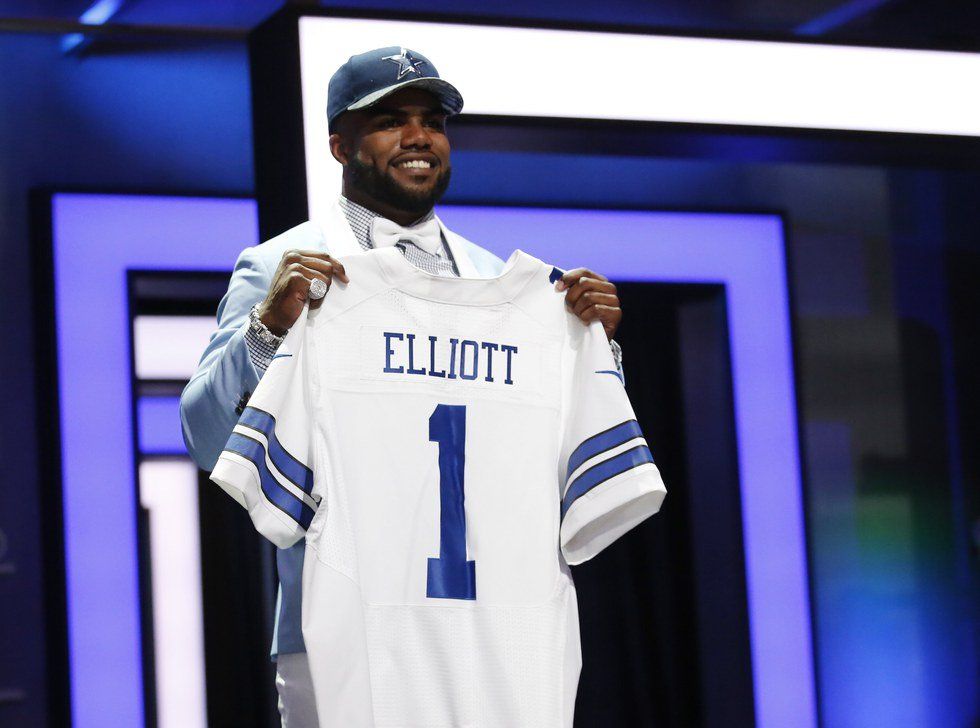
The first round of the 2016 NFL Draft was full of intrigue, as surprise and chaos were the amin motifs of the night. From Laremy Tunsil's freefall to Denver's trade for their future quarterback, headlines of all sorts can be made...but who turned the most heads? Which team had the best night? What was the worst move in round one?
Winners: Jacksonville, Washington, Minnesota, New Orleans, and Miami.
Jacksonville made the best pick in the first round, selecting defensive back Jalen Ramsey at 5th overall. Ramsey is absolutely what they need: a physical, athletic playmaker who can put in work at corner and safety. Considering that some expert scouts had him as the best prospect in the draft, the fact that the former Florida State standout was still available at 5 was nothing short of a miracle to the Jaguars. With quarterbacks going 1 and 2, the Chargers taking Joey Bosa, and the Cowboys snatching Ezekiel Elliott, it was a no-brainer. Fantastic get for a rising Jacksonville team.
Washington sat at 21 going into Thursday night, but they made a trade--a very small one. The Redskins moved back one spot, to 22, giving the Texans the chance to draft the player they were targeting. Houston, in return, sent a 2017 6th-round pick. It worked out well for Washington, as they selected wide receiver Josh Doctson. The former TCU star will fit in perfectly with the West Coast offensive scheme that Jay Gruden runs, and Doctson's length gives Kirk Cousins a reliable red zone threat.
Minnesota needs a go-to guy for Teddy Bridgewater; Stefon Diggs can't do everything in the passing game. That's exactly who they got at 23 in Laquon Treadwell. The former Ole Miss wide receiver won't wow anyone with his speed, but he is aggressive and will out-work defensive backs for every jump ball. In an offense that is primarily one-dimensional, the Vikings cashed in big time.
New Orleans needs help just about everywhere, and they made the correct pick at 12 with Sheldon Rankins. In his career at Louisville, Rankins showed that he could play every interior gap on the defensive line. He will be an instant upgrade for a defense that wasn't good at much of anything last season.
Miami owned the 13th pick in the first round, but they might as well have had the 1st pick. Minutes before the draft, a video of Laremy Tunsil smoking an unknown substance out of a gas mask went viral. That caused him to plummet down in the draft, and finally the Dolphins took a chance on him. Tunsil has arguably the best game tape of any prospect in this year's draft. The claim that the video was from a few years ago, along with the fact that Tunsil never failed a drug test at Ole Miss, leads to the assumption that Miami might have gotten the steal of the entire NFL Draft. They had a need at offensive tackle, and Tunsil will more than make up for that hole.
Losers: San Diego, Pittsburgh, and New York (Giants).
San Diego held the 3rd overall pick in the draft, and they already knew that the Rams and Eagles were going to draft a quarterback. Instead of going with Tunsil or Ramsey, the Chargers selected defensive end Joey Bosa. While Bosa is a talented player, he doesn't fit very well into San Diego's defensive scheme. It is a solid pick, but definitely not the best.
Pittsburgh desperately needed a defensive back - and they got one in Artie Burns. However, several corners with a better talent grade were still available at 25, including Mackensie Alexander, Kendall Fuller, and Xavien Howard. Time will tell as to whether the Steelers made the right choice, but from a pure skill standpoint, taking Burns did not make much sense.
Other notes:
Indianapolis took center Ryan Kelly, which was probably the safest pick in the draft. Kelly will help stop the pressure up the middle from getting into Andrew Luck's face on a consistent basis, and his leadership qualities are highly coveted.
Denver needed an answer at quarterback, so they moved up from 31 to 26 and drafted Paxton Lynch. While he is raw, Lynch has the potential to develop into a solid NFL quarterback.
San Francisco made a good pick at 7 with Buckner, but their late first round acquisition was extremely questionable. The 49ers gave up their 2nd, 4th, and 6th round picks to move back into the first round at 28, selecting offensive guard Joshua Garnett. Garnett was likely to be available halfway through the 2nd round, and trading away 3 draft picks to get him was not a good idea.